
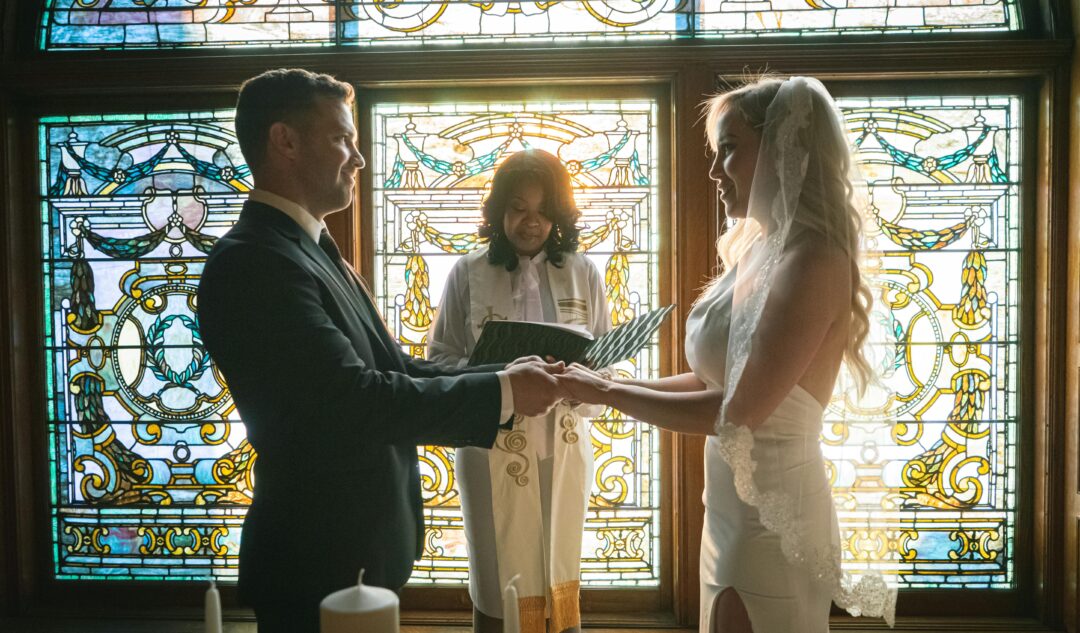

- Traditional vows draw from established religious or civil liturgy – they carry centuries of meaning and are often required by faith traditions.
- Every major religion has its own distinct vow structure: Christian (Book of Common Prayer), Catholic (Rite of Marriage “I do” format), Jewish (Harei at formula + ketubah), Hindu (Saptapadi – seven steps), Buddhist, Islamic (Nikah Ijab and Qabul).
- Catholic vows use a question-and-answer format; most Protestant traditions have couples repeat vows line by line after the officiant.
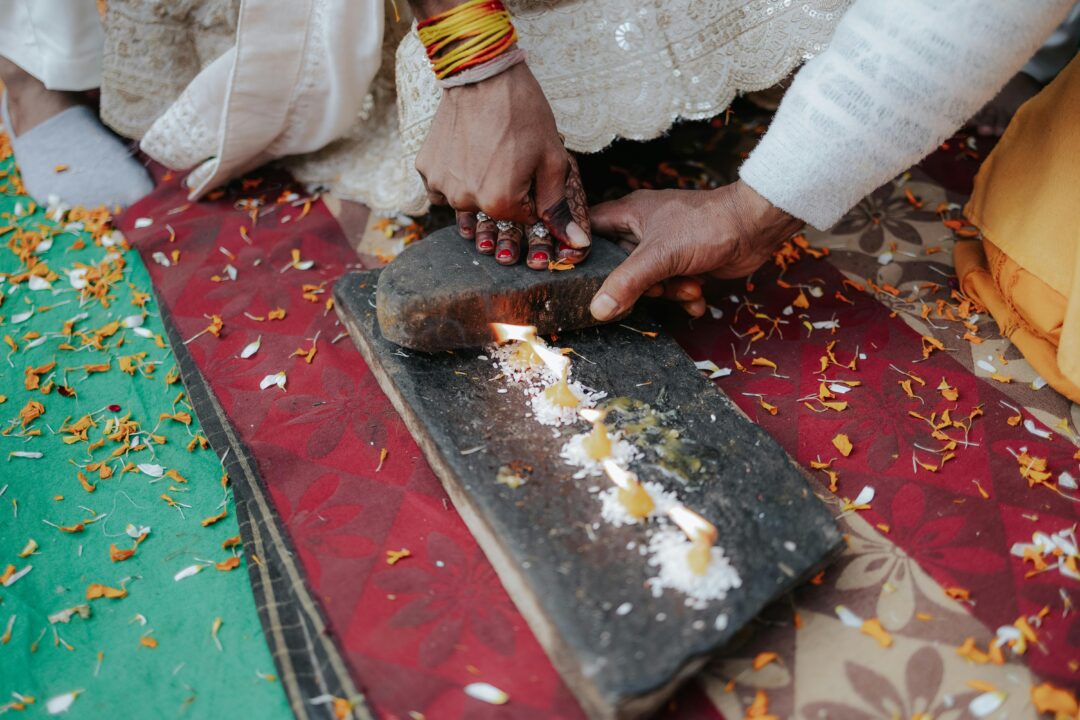
- The Hindu Saptapadi involves seven circumambulations of a sacred fire, each accompanied by a specific vow covering nourishment, strength, prosperity, happiness, offspring, health, and friendship.
- You can adapt traditional vows – most officiants allow small personal additions at the end – without replacing the required liturgical language.
- Writing your vows on a card is not just practical, it’s encouraged: even couples who have memorized every word bring a card as a backup.
Traditional wedding vows have been spoken at altars, under wedding canopies, beside sacred fires, and in courthouse chambers for generations. They carry something personal vows rarely can: the collective weight of every couple who said these same words before you. Whether you’re drawn to traditional language because your faith requires it, because your family expects it, or simply because you love the resonance of words that have stood the test of centuries – this guide covers the actual texts, their origins, and how to make them your own.
This post is part of our complete wedding vows guide, which covers every vow style from modern and secular to funny and religious. If you already know you want traditional language, you’re in the right place.
What Makes a Vow “Traditional”?
The word “traditional” gets used loosely in wedding planning – sometimes it just means “not personalized.” For this guide, traditional vows are those drawn from established religious liturgy or standardized civil ceremony scripts that predate the modern era of personalized vow writing. They share three characteristics:
- Fixed or near-fixed language – the words come from a recognized source (scripture, a prayer book, a legal formula) rather than being composed by the couple.
- Community authority – they are recognized and often required by a religious institution or civil authority.
- Historical continuity – couples have been saying these specific words, or close variants of them, for generations.
This is different from “classic” vows that feel old-fashioned but were actually written by the couple. It’s also different from “formal” vows that simply use elevated language. Traditional vows in the strict sense come from a tradition – religious, cultural, or legal – and carry the weight of that specific history.
Within that definition, there is still meaningful variation. Catholic vows follow a different format from Protestant vows. Jewish vows follow a completely different structure from both. The Hindu Saptapadi is more ritual than recitation. Each tradition has its own logic, and understanding that logic helps couples approach their ceremony – and any adaptations – with confidence.
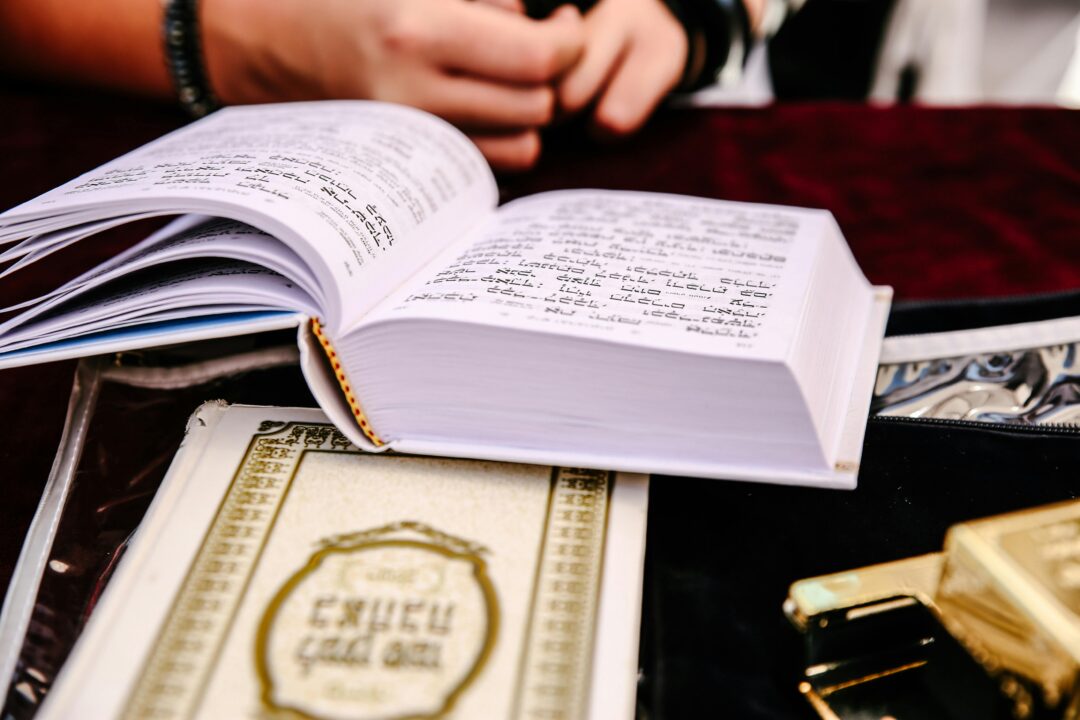
Christian Traditional Vows (Non-Denominational and Anglican)
The most widely recognized traditional vow language in the English-speaking world comes from the Book of Common Prayer, first published in 1549 under Archbishop Thomas Cranmer and revised in subsequent editions. The vows in this tradition are spoken by each partner in turn, typically repeated line by line after the officiant. They are used across Anglican, Episcopalian, and many non-denominational Christian ceremonies, and they are the template for most “generic” traditional vows you’ll encounter.
The Groom’s Vow (Book of Common Prayer)
The Bride’s Vow (Book of Common Prayer)
Attribution: Book of Common Prayer (1549, revised 1662). Note: the word “obey” was optional from the early 20th century in most Anglican traditions and is commonly omitted by modern couples. Many contemporary ceremonies use gender-neutral parallel language: both partners say “to love and to cherish.”
The phrase “to have and to hold” – probably the most recognized words in any wedding ceremony – is a legal term from medieval property law, meaning to possess and retain. Its survival into the modern ceremony is a reminder that vows were originally as much contract as covenant.
Catholic Traditional Vows
Catholic vows follow the Rite of Marriage (Ordo Celebrandi Matrimonium), the liturgical rite published by the Roman Catholic Church. The most important distinction between Catholic vows and most Protestant vows is the format: Catholic vows use a question-and-answer (declarative) structure rather than having the couple repeat full vow sentences.
The priest or deacon asks each partner a series of consent questions, and each answers “I do” or “I will.” This is the formal expression of matrimonial consent in the Catholic tradition – the “I do” is the vow.
The Consent Questions (Rite of Marriage)
Priest/Deacon: [Name], have you come here freely and without reservation to give yourself to [Name] in marriage?
Response: I have.
Priest/Deacon: Will you love and honor each other as husband and wife for the rest of your lives?
Response: I will.
Priest/Deacon: Will you accept children lovingly from God and bring them up according to the law of Christ and his Church?
Response: I will.
Following the consent questions, the couple may also speak the full form of the vow:
Attribution: Rite of Marriage, Roman Catholic Church. Note: the third consent question regarding children is standard in the Catholic rite, though some couples are surprised by it. Speak with your priest well in advance if you have questions about any element of the rite.
Catholic couples planning their stationery suite: the formality of the Catholic ceremony typically calls for a traditional invitation suite to match. Browse classic and formal wedding invitation designs at Paperlust – letterpress and foil options work particularly well for church ceremonies.
Couples in the United States can browse the Paperlust collection of letterpress wedding invitations suited to formal Catholic vows and traditional ceremony stationery.
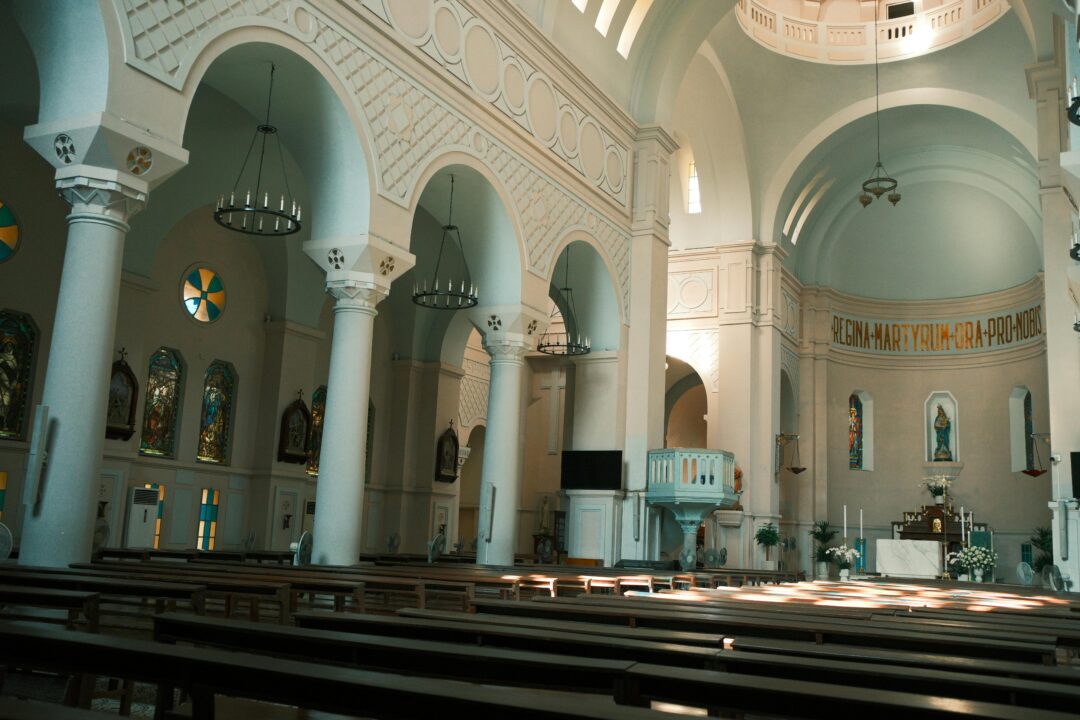
Protestant Traditional Vows
Protestant vow language varies more widely than Catholic, because Protestant denominations each maintain their own liturgical traditions. That said, most Protestant ceremonies – Baptist, Methodist, Lutheran, Presbyterian – use variants of the Book of Common Prayer vow language or close adaptations of it, with the couple repeating lines after the officiant.
Contemporary Protestant Form (widely used)
Methodist and Baptist ceremonies often include a ring exchange vow immediately following:
Attribution: Adapted from Book of Common Prayer (1662) and subsequent Protestant liturgical revisions. The ring exchange vow is common to Anglican, Episcopal, and Methodist traditions. Presbyterian ceremonies may use slightly different language – always confirm with your minister.
Jewish Traditional Vows
Jewish wedding ceremonies follow a structure that differs significantly from Christian traditions. In traditional Jewish law (halacha), the central legal act of marriage is not a vow in the Christian sense but the giving and acceptance of a ring – the kiddushin (betrothal). The words spoken at that moment are among the oldest marriage formulas in continuous use.
The Ring Formula (Harei at / Harei atah)
Groom to bride (Hebrew): Harei at mekudeshet li b’taba’at zu k’dat Moshe v’Yisrael.
Translation: Behold, you are consecrated to me with this ring according to the law of Moses and Israel.
Bride to groom (egalitarian/Conservative/Reform addition): Harei atah mekudash li b’taba’at zu k’dat Moshe v’Yisrael.
Translation: Behold, you are consecrated to me with this ring according to the law of Moses and Israel.
Attribution: Traditional Jewish liturgy. The reciprocal exchange by the bride is a feature of egalitarian ceremonies (Reform, Conservative, Reconstructionist) and is not part of Orthodox practice, where only the groom gives the ring and speaks the formula.
The Sheva Brachot (Seven Blessings)
The ceremony continues with the sheva brachot – seven blessings recited over a cup of wine, usually by family members or honored guests. These are not vows spoken by the couple but blessings conferred on them; they form the emotional and spiritual climax of the Jewish wedding ceremony.
The seven blessings move from praise of God as creator, through gratitude for human creation, to joy for the couple, and finally to a vision of future happiness – ending with the image of “the sound of joy and the sound of gladness, the voice of the bridegroom and the voice of the bride.” The ketubah – the marriage contract specifying the husband’s obligations to his wife – is typically read and signed before the ceremony begins, witnessed by two people.
Hindu Traditional Vows (Saptapadi)
The Saptapadi – from Sanskrit, meaning “seven steps” – is the central ritual of a Hindu wedding ceremony. The couple walks seven steps together around a sacred fire (the agni, considered a divine witness to the marriage), and with each step they make a vow. The steps and vows vary somewhat by regional and family tradition, but the seven themes are consistent across traditions.
The Seven Steps and Vows
Step 1 (Nourishment): We take the first step to nourish each other and our household. May we be blessed with an abundance of food and a prosperous life.
Step 2 (Strength): We take the second step to grow in physical and mental strength together. May we build the resilience to face life’s challenges as one.
Step 3 (Prosperity): We take the third step to increase our wealth through righteous means and share it generously. May we pursue prosperity with integrity.
Step 4 (Happiness): We take the fourth step to fill our home with joy, peace, and harmony. May we always find happiness in each other’s company.
Step 5 (Progeny): We take the fifth step to welcome children as a gift and raise them with wisdom, love, and devotion.
Step 6 (Health): We take the sixth step to care for each other through all seasons of life. May we be blessed with good health and long life together.
Step 7 (Friendship): We take the seventh step to become lifelong companions – best friends, partners, and devoted to each other above all others. This step seals our union: by these seven steps, we are husband and wife.
Attribution: Saptapadi, as performed in Hindu Vedic ceremony. The exact Sanskrit text varies by regional tradition (North Indian, South Indian, Gujarati, Bengali, etc.) and by the specific Vedic rites followed. The pandit (Hindu priest) guides the ceremony; the above is a representative English rendering. Consult your pandit for the specific Sanskrit texts appropriate to your family tradition.
In most Hindu traditions, the marriage is considered legally and spiritually complete after the seventh step. At that moment, the groom applies sindoor (red powder) in the part of the bride’s hair, and she receives a mangalsutra (sacred necklace) – both symbols of her status as a married woman.
Buddhist Wedding Vows
Buddhism does not have a single universal marriage ceremony – there is no Buddhist equivalent of the Catholic Rite of Marriage. Wedding ceremonies in Buddhist communities vary widely by country, tradition (Theravada, Mahayana, Zen, Tibetan), and the preferences of the presiding monk or officiant. Many Buddhist-influenced Western ceremonies use contemporary vows drawn from Buddhist values: compassion, non-attachment, presence, and the intention to support each other’s spiritual growth.
Contemporary Buddhist-Influenced Vow (non-denominational)
Attribution: Contemporary Buddhist-influenced vow language. Couples marrying in a Buddhist context should work with their monk or officiant – many bring their own ceremony texts, and some traditions include specific Pali or Sanskrit blessings recited by the monk on behalf of the couple. The above is a representative Western Buddhist-influenced vow, not a traditional Asian Buddhist liturgical text.
In Theravada Buddhist countries (Thailand, Sri Lanka, Myanmar), monks typically bless the couple rather than officiate at a legal ceremony, which is conducted separately by a civil registrar. The monk’s role is spiritual blessing, not legal solemnization.
Islamic Wedding Vows (Nikah)
The Islamic marriage contract is called the Nikah. The central legal act is the Ijab (offer) and the Qabul (acceptance) – an offer of marriage made by one party and formally accepted by the other, witnessed by at least two adult Muslim witnesses and typically an imam or Islamic scholar (wali).
In Islamic law, the marriage vow is not a romantic declaration but a legal contract. What makes the marriage valid is the offer, acceptance, and witnesses – the exact words used for Ijab and Qabul have some flexibility, though they must express clear consent to the marriage.
Ijab and Qabul (Offer and Acceptance)
Wali (guardian, speaking Ijab on behalf of the bride): I give [Name] in marriage to you, [Name], in accordance with the injunctions of the Holy Quran and the traditions of the Prophet, peace be upon him, for the agreed mahr (dowry) of [amount].
Groom (Qabul/acceptance): I accept the marriage of [Name] in accordance with the injunctions of the Holy Quran and the traditions of the Prophet, peace be upon him, for the agreed mahr (dowry) of [amount].
The Qabul must be spoken three times, or the wali and groom must repeat the exchange three times, to ensure clarity of consent. Following the Nikah, the imam typically recites verses from the Quran and delivers a sermon (khutbah) including the three verses known as the Khutbah an-Nikah.
Attribution: Nikah ceremony as practiced across Sunni and Shia Islamic traditions. The mahr (dowry/gift) is an agreed-upon sum or gift given by the groom to the bride as her right – it is a required element of the Nikah contract. Consult your imam for the specific language, requirements, and ceremony structure appropriate to your tradition and community.
In many Muslim communities, the Nikah is also registered as a civil marriage; in others, couples additionally complete a civil ceremony to satisfy local legal requirements. Check with your imam and local registrar well in advance.
Civil and Courthouse Vows
Civil ceremonies – courthouse weddings, registry office marriages, and officiant-led secular ceremonies – use legally prescribed language that varies by state and country. In the United States, the exact required wording is set by state law, but most states allow wide flexibility as long as the essential elements of consent are present.
Standard US Civil Vow
Alternatively, many civil officiants use a consent question format:
Officiant: Do you, [Name], take [Name] to be your lawfully wedded [spouse], to have and to hold, from this day forward, for better or for worse, for richer or for poorer, in sickness and in health, to love and to cherish, until death do you part?
Response: I do.
Note: Courthouse weddings are often quick and purely functional – if you want the words to feel meaningful, prepare your own version of these vows to read, even if the legal minimum is only the “I do.” Your officiant will typically allow you to recite a personal version as long as the required consent elements are present. Check your state’s requirements.
Adapting Traditional Vows
Most couples who choose traditional vows want the weight of established language without feeling like they’re reading from a script. The good news: almost every tradition allows some degree of personal addition, and there’s a respectful way to personalize without replacing what matters.
The Rule: Addition, Not Substitution
In religious ceremonies, the required liturgical language is non-negotiable – it is what makes the marriage valid in the eyes of the institution. What you can do is add personal language before or after the required text. For example, a Catholic couple might speak a personal statement of love after the formal consent questions, or a Jewish couple might add English vows following the Hebrew ring formula. The key is to talk to your officiant first – they will tell you exactly where additions are welcome and where they’re not.
How to Add Without Disrupting
- Keep additions brief – two to four sentences of personal language sits naturally beside traditional vows without overwhelming them. Long personal additions can feel tonally mismatched with formal liturgy.
- Match the register – if the traditional vow is formal and elevated, keep your addition in the same register. Casual or humorous language jars against solemn liturgy.
- Place additions at the end – adding before the liturgical text can feel like you’re delaying or undermining the official vow. After is cleaner.
- Write it down and rehearse it – personal additions are where couples freeze on the day. If you’re adding anything beyond the required text, practice it until it’s muscle memory.
Sample Addition for a Protestant Ceremony
Printing Your Vows
Whether you’re using verbatim traditional language or a traditional-plus-personal combination, printing your vows on a dedicated vow card is always a good idea. A well-designed vow card is a practical backup for nerves and a keepsake you’ll want to keep. It also ties your ceremony paper goods into a cohesive suite alongside your wedding invitations – the same design family, the same printing quality, carrying the same tone throughout your day. Couples often pair their vows with a wedding program that lays out the ceremony order, so guests can follow each moment of the service.
For wording guidance beyond your vows, our wedding invitation wording guide covers every line of the invitation – from formal to informal – with real examples you can adapt.

Frequently Asked Questions: Traditional Wedding Vows
What are the most traditional wedding vows?
The most widely recognized traditional vow text in the English-speaking world comes from the Book of Common Prayer (1549): “to have and to hold, from this day forward, for better for worse, for richer for poorer, in sickness and in health, to love and to cherish, till death us do part.” This language – or close variants of it – is used across Anglican, Episcopalian, Protestant, and many civil ceremonies. Catholic traditional vows follow a different format using consent questions from the Rite of Marriage.
Do Catholic vows say “I do” or do couples repeat full sentences?
Catholic vows primarily use the “I do” / “I will” declarative format – the priest or deacon asks a series of consent questions and each partner responds. This is different from most Protestant ceremonies, where couples repeat full vow sentences line by line after the officiant. Catholic couples may also speak the full form of the vow after the consent questions, but the “I do” responses are the formal expression of matrimonial consent.
What are traditional Jewish wedding vows?
In traditional Jewish weddings, the central spoken formula is the ring declaration: “Harei at mekudeshet li b’taba’at zu k’dat Moshe v’Yisrael” (Behold, you are consecrated to me with this ring according to the law of Moses and Israel), spoken by the groom as he places the ring on the bride’s finger. In egalitarian ceremonies (Reform, Conservative, Reconstructionist), the bride also speaks a reciprocal formula. The sheva brachot (seven blessings) are then recited over wine – these are blessings conferred on the couple rather than vows spoken by them. The ketubah (marriage contract) is signed before the ceremony.
What is the Saptapadi in a Hindu wedding?
The Saptapadi (Sanskrit for “seven steps”) is the central ritual of a Hindu Vedic wedding ceremony. The couple walks seven steps together around a sacred fire, and with each step they make a vow. The seven vows cover nourishment and sustenance, physical and mental strength, prosperity gained through righteous means, happiness and harmony in the home, the welcoming of children, good health and longevity, and lifelong friendship and companionship. The marriage is considered legally and spiritually complete after the seventh step. The exact Sanskrit text varies by regional and family tradition.
What is the Islamic Nikah ceremony, and what vows are spoken?
The Nikah is the Islamic marriage contract. The central legal acts are the Ijab (offer of marriage) and Qabul (acceptance), witnessed by at least two adult Muslim witnesses. In most traditions, the wali (guardian) speaks the Ijab on behalf of the bride, and the groom speaks the Qabul three times. The agreed mahr (a gift or sum given by the groom to the bride as her legal right) is specified in the contract. An imam typically presides and recites Quranic verses and a sermon (Khutbah an-Nikah). The exact language is flexible as long as clear consent is expressed.
Can you change the words of traditional wedding vows?
It depends on the tradition. In religious ceremonies, the liturgical language is typically required by the institution – you cannot substitute your own words for the formal vow text and still have it count as that tradition’s sacrament. What most traditions do allow is adding personal language before or after the required text. Always talk to your officiant first – they will tell you exactly what flexibility exists and where additions are appropriate.
Do traditional vows include “to obey”?
The original Book of Common Prayer (1662) included “to obey” in the bride’s vow but not the groom’s. Most Anglican and Protestant traditions made this optional from the early 20th century onward, and contemporary ceremonies almost universally use parallel language for both partners: “to love and to cherish.” The 1928 American Book of Common Prayer made “obey” optional, and the 1979 revision removed the asymmetry entirely. Catholic vow language does not include “obey.” In short: traditional vows today do not typically include “obey” unless you specifically choose the historical text.
What is the difference between Protestant and Catholic wedding vows?
The main difference is format. Catholic vows use a question-and-answer (declarative) structure from the Rite of Marriage – the priest asks consent questions and each partner says “I do” or “I will.” Protestant vows (Anglican, Methodist, Baptist, Lutheran, Presbyterian) typically have the couple repeat full vow sentences line by line after the officiant, using language derived from the Book of Common Prayer. Protestant language tends to be more variable between denominations; Catholic language is standardized across the universal Church.
How long do traditional wedding vows take to say?
Traditional religious vows are typically short – the Book of Common Prayer vow takes approximately 30-45 seconds to recite. Catholic consent questions take about 2-3 minutes for the full exchange. The Jewish Harei at formula is a few seconds, though the broader ceremony including the sheva brachot takes considerably longer. Hindu Saptapadi timing depends on the pandit and the full ceremony structure – the seven steps alone can take 10-15 minutes. If you’re adding personal language to traditional vows, add 1-2 minutes for your addition.
Should I memorize traditional vows or read them from a card?
Read them from a card – or at minimum bring a card as a backup even if you plan to speak from memory. The ceremony is an emotionally heightened moment, and even words you’ve rehearsed dozens of times can disappear under the pressure. Most officiants repeat lines for you to echo, which takes the pressure off memorization entirely. If you want to look your partner in the eye and speak from memory, practice until the words are automatic – and still bring the card. Needing it is not a failure.
What is the difference between traditional vows and writing your own?
Traditional vows use established language from a recognized religious, cultural, or civil source – words that have been spoken at weddings for generations. Writing your own vows means composing original text specific to your relationship. Neither is more meaningful than the other. Traditional vows carry the weight of history and community; personal vows carry the weight of specificity. Many couples choose a middle path: traditional liturgical language with a brief personal addition at the end.
What do you say when exchanging rings in a traditional ceremony?
The most traditional ring exchange words in English come from the Book of Common Prayer: “With this ring I thee wed; with my body I thee honor; and with all my worldly goods I thee endow.” A simpler contemporary version used in many civil and Protestant ceremonies is: “With this ring, I thee wed, and pledge you my love, now and forever.” In Catholic ceremonies, the ring exchange follows the consent questions and may include: “Take this ring as a sign of my love and fidelity. In the name of the Father, and of the Son, and of the Holy Spirit.” The Jewish ring formula (Harei at) is spoken at the ring placement and serves as the central vow.
Are interfaith couples allowed to use traditional vows from more than one religion?
It depends entirely on the traditions involved and the officiants. Some faiths do not recognize marriages conducted in or combined with other religious rites – the Catholic Church, for example, requires a dispensation for a Catholic to marry outside the Church, and interfaith Catholic ceremonies have specific rules. Jewish-Christian interfaith ceremonies are common in the US and typically handled by an interfaith or non-denominational officiant who draws respectfully from both traditions without fully performing either religious rite. Hindu and Buddhist elements are frequently incorporated into secular or civil ceremonies. Always consult religious leaders from both traditions before assuming combination is possible.
Carry the tradition through
Classic wedding invitations
Letterpress, foil, and engraved details across formal type families that match the gravity of traditional vows.
About Paperlust
Paperlust has been designing and printing wedding stationery from Melbourne since 2014. With 500+ exclusive designs from independent artists and a team of dedicated designers, every order includes a professional proof within 1-2 business days, two free rounds of edits, and a 100% happiness guarantee – free reprint or full refund if anything isn’t right.
Paperlust was named a Westpac Business of Tomorrow in 2017 and has been featured in leading wedding and lifestyle publications. We ship internationally via DHL Express on orders over $350 USD, with US delivery typically arriving within 2 to 4 business days after production.
Have questions about your vow card design or invitation suite? Our team is available on live chat – and every order includes a designer who works with you to get every detail exactly right.
Ready to design your wedding stationery?
Browse 500+ exclusive invitation designs – from classic letterpress to modern digital print. Every order includes a professional designer, a proof within 1-2 business days, and a happiness guarantee.
Image credits