
Timing your wedding invitations is one of those details that seems simple until you realize how many variables are involved. Standard wedding or destination? Did you send save the dates? What about guests flying in from overseas? Get the timing wrong and guests scramble for flights, caterers get inaccurate headcounts, and your stress levels spike right when you need them to drop.
If you have not sent yours yet, start with the upstream piece: our guide on when to send save the dates covers the 6 to 8 month rule and destination exceptions, which set the cadence for the invitation send.
Key Takeaways
- For most US weddings, mail invitations 6-8 weeks before your wedding date, which gives guests enough time to RSVP without so much lead time the invitation gets filed away.
- Destination weddings need 3 months (12 weeks) of notice minimum, so guests can book flights, arrange accommodation, and sort out any visa requirements.
- Order your invitations 12-14 weeks before your wedding to allow time for sampling, proof approval, production, and shipping, especially if you are choosing letterpress or foil.
- Set your RSVP deadline 3-4 weeks before the wedding so you have a full week to chase non-responders before your venue’s final headcount is due.
Shop wedding invitations at Paperlust
500+ exclusive wedding invitation designs, free white envelopes, and 1-2 day proofs.
This complete guide covers every scenario so you know exactly when to mail what, and how to work backwards from your wedding date to make sure everything lands in mailboxes at the right time.
In This Article
- The complete wedding invitation timeline at a glance
- When to send save the dates
- When to send standard wedding invitations (6-8 weeks)
- When should you send out wedding invitations?
- Destination and international weddings (3 months)
- Short engagement timeline
- Why the timeline matters: too early vs. too late
- No save the date? Send invitations 10-12 weeks out
- Setting your RSVP deadline
- How to mail wedding invitations: postage and hand-cancellation
- When guests do not reply: how to follow up
- Common mistakes to avoid
- Working backwards: the Paperlust ordering timeline
- When is it too late to send wedding invitations?
- Frequently asked questions
The Complete Wedding Invitation Timeline at a Glance
| Task | When to Do It |
|---|---|
| Send save the dates | 6-8 months before (destination: 10-12 months) |
| Order invitation samples | 5-6 months before |
| Finalize invitation design | 3-4 months before |
| Submit invitation order | 2-6 weeks before mail date (depending on print method) |
| Mail standard invitations | 6-8 weeks before wedding |
| Mail destination invitations | 3 months before wedding |
| RSVP deadline | 3-4 weeks before wedding |
| Follow up on missing RSVPs | 1 week after RSVP deadline |
| Final headcount to venue and caterer | 1-2 weeks before wedding |
When to Send Save the Dates
Save the date cards should go out 6-8 months before your wedding. For destination weddings, bump that to 10-12 months. The hard minimum for a local wedding is 4 months, but earlier is nearly always better.
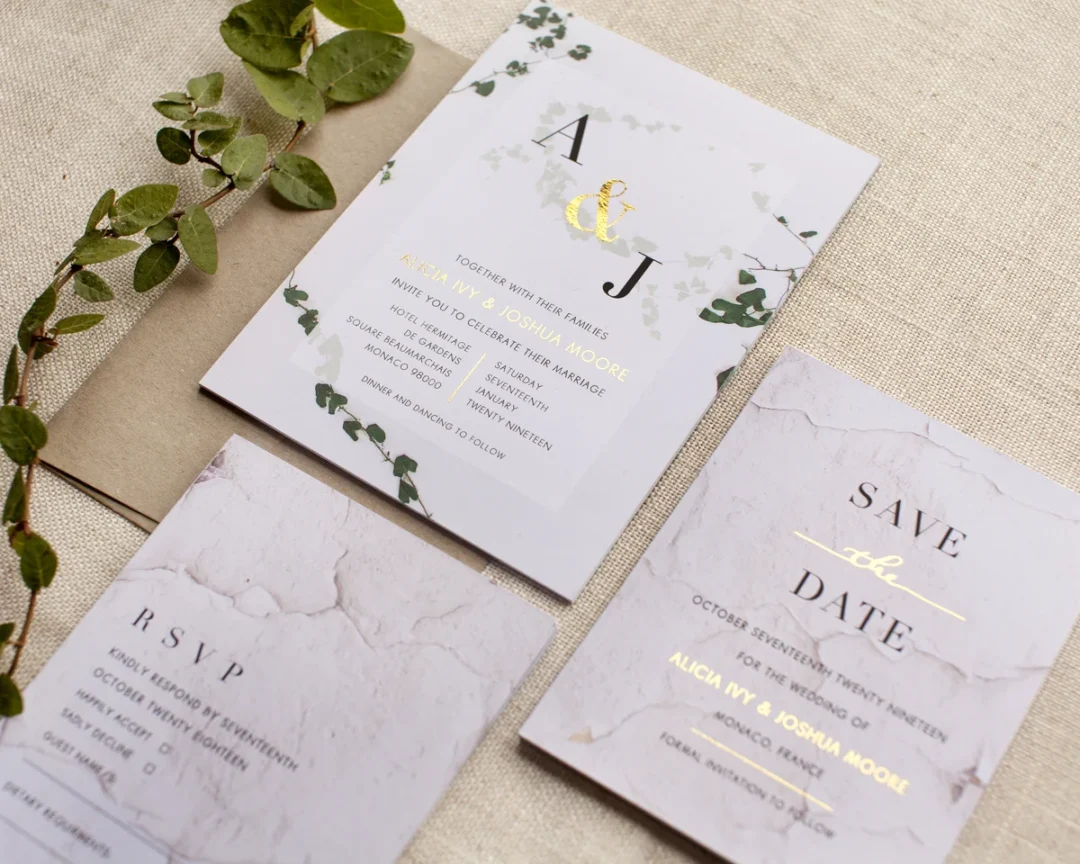

Why do save the dates matter so much? Because they give guests the runway to block out their calendar, request time off work, and sort out travel and accommodation before everything books up. A save the date is not a formal invitation: it does not need to include every detail. It just needs to confirm the date, the general location, and where guests can find more information (your wedding website, for example).
For your save the date wording, keep it simple. Date, city, and a note that a formal invitation will follow. That is all guests need at this stage.
If you are skipping save the dates entirely, jump ahead to the section on what to do when you have not sent them. Your invitation timeline shifts significantly.
Shop save the dates at Paperlust
Designer save the dates ready to personalise. Printed, digital, and custom options with 1-2 day proofs.
When to Send Standard Wedding Invitations
For most weddings where the majority of guests are local or within easy driving distance, mail your wedding invitations 6-8 weeks before the wedding date. This window gives guests enough time to RSVP, make any remaining travel arrangements, and sort out childcare or time-off requests, without so much lead time that the invitation ends up buried under a pile of mail.
Six weeks is the practical minimum for a local wedding. Eight weeks is a safer buffer if you have a significant number of out-of-town guests, a holiday weekend wedding, or a weekday ceremony where guests will need to request leave from work.
Once you have finalized your invitation wording, double-check every detail before you send to print. Correcting a typo after your invitations have shipped is an expensive headache.
When Should You Send Out Wedding Invitations?
For most US weddings, send invitations 6 to 8 weeks before the date. Destination or international weddings require 3 months. If you skipped save the dates, add 4 to 6 extra weeks to whichever window applies.
| Wedding type | Mail-out date | RSVP cutoff |
|---|---|---|
| Standard (local or domestic guests) | 6-8 weeks before | 3-4 weeks before |
| Destination or international | 3 months before | 6-8 weeks before |
| Backyard or micro (50 guests or fewer) | 4-6 weeks before | 2-3 weeks before |
| No save the dates sent (any type) | Add 4-6 extra weeks to the windows above | Same as above |

When Should You Send Wedding Invites Out?
For a standard US wedding with mostly local guests, send invites out 6 weeks before the date. Eight weeks is the safer margin if your guest list includes a significant number of out-of-town guests, a holiday or long weekend where travel books up early, or a weekday ceremony where guests need to request time off work.
The short answer is 6 to 8 weeks, and if you have any doubt about which end to use, choose 8. If you skipped save the dates entirely, shift the whole window out: send invites 10 to 12 weeks before instead, since invitations now carry the first advance notice your guests have received.
When to Mail Out Wedding Invitations
Mail wedding invitations 6 to 8 weeks before the ceremony for a local US wedding. For destination or international events, mail them 3 months out. The word “mail” matters here: USPS First-Class delivery takes 1 to 5 business days domestically, so your post office drop date should fall at least 5 to 7 days before you want invitations to arrive in hand, and at least 3 weeks before your RSVP deadline closes.
For foil-printed, letterpress, or square-envelope suites, there are extra mailing steps worth planning in advance. The full checklist on postage rates, non-machineable surcharges, and hand-cancellation is in the postage and mailing section below. For help addressing envelopes to couples, families, and guests with plus-ones, see our how to address wedding invitations guide.
When to Send Invitations for a Destination Wedding
Destination wedding invitations need to be mailed 3 months before the wedding date, full stop. Your guests need that lead time to research flights, compare hotel options, arrange accommodations, and in some cases check passport or visa requirements. Setting your RSVP deadline at 6-8 weeks before the wedding (rather than the standard 3-4) also gives you more room to finalize headcounts with venue and catering coordinators at a destination that may operate differently from a local vendor.
- Mail date: 3 months (approximately 12 weeks) before the wedding
- RSVP deadline: 6-8 weeks before the wedding
- What to include: accommodation block details, airport information, and a link to your wedding website where guests can find all travel logistics in one place
- Visa note: if any guests need a visa to attend, remind them to check processing times early; a direct message before invitations even go out is a thoughtful heads-up
When to Send Invitations If You Did Not Send Save the Dates
Skipping save the dates shifts your entire invitation calendar earlier, because invitations now have to do double duty. Instead of the standard 6-8 week window, plan to mail out 10-12 weeks before the wedding for a local ceremony. For a destination event without save the dates, push that out to 4-5 months. The extra weeks compensate for the early notice your guests did not receive and give them a realistic window to make travel arrangements, request time off work, and commit to attending.
- Local wedding, no save the dates: mail invitations 10-12 weeks before
- Destination wedding, no save the dates: mail invitations 4-5 months before
- On the invitation itself: make the RSVP deadline and any travel details prominent, since guests are seeing this information for the first time
- Consider a direct heads-up: a text or call to key guests letting them know invitations are on the way is especially helpful when no save the date was sent
When to Send Invitations on Short Notice
Short timelines happen. If your wedding is fewer than 6 weeks out and invitations have not gone out yet, send them immediately and tighten your RSVP deadline to 7-10 days. For very compressed timelines of 4 weeks or under, combine a direct call or text to each must-attend guest with a printed or digital invitation sent the same day. The verbal heads-up ensures no one misses it; the printed piece makes the occasion official. Expect a lower RSVP response rate than a well-planned timeline would produce, and build in extra follow-up time.
- Under 6 weeks: send invitations immediately on finalizing your venue and guest list
- RSVP deadline: 7-10 days from the date invitations land
- Under 4 weeks: direct call or message to each guest, followed immediately by a printed or digital invite
- Postage tip: for urgent mail, USPS First-Class mail typically delivers within 1-5 business days domestically; verify current rates at USPS PostalPro before mailing
When to Send Invitations for Destination and International Weddings
Destination weddings follow a different calendar entirely. If your wedding requires guests to book flights, arrange accommodation, or sort out a passport, give them 3 months of notice minimum. For international guests attending a local wedding, the same rule applies: 3 months lets them find reasonable airfares, secure accommodation, and apply for any necessary visas.
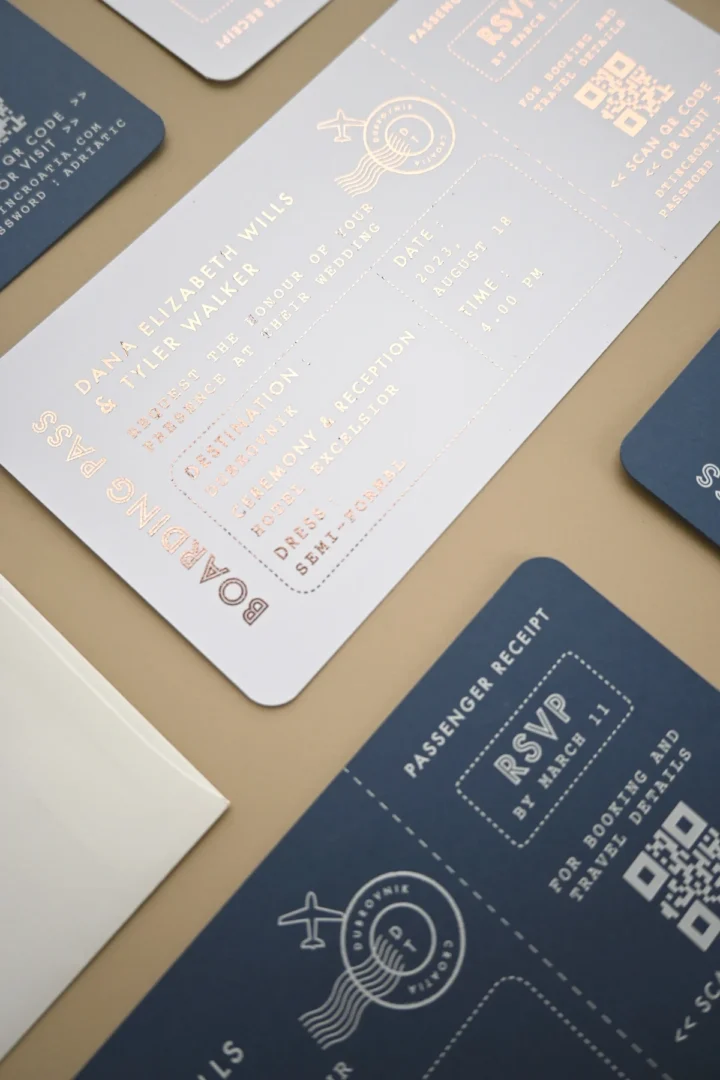
Here is the timeline that works for most destination weddings:
- Save the dates: 10-12 months before the wedding
- Formal invitations: 3 months before the wedding
- RSVP deadline: 6-8 weeks before the wedding (you need more lead time for catering and event planning at a destination)
One practical tip: include accommodation and travel information with your destination invitation. An information card is a clean way to bundle hotel blocks, airport details, and travel notes in a separate insert without overcrowding the main invite. Or direct guests to a wedding website where they can find all logistics in one place. The more you make it easy for guests to say yes, the higher your attendance rate will be.
Shop wedding invitations at Paperlust
500+ exclusive wedding invitation designs, free white envelopes, and 1-2 day proofs.
What to Do If You Have a Short Engagement (Under 6 Months)
Short engagements are more common than people think, and the timeline is absolutely manageable with a bit of compression. If your engagement is under 6 months, here is how to adapt:
- Skip save the dates and go straight to invitations (send them 10-12 weeks out)
- Or send save the dates digitally as soon as the date is confirmed, then follow up with printed invitations 8 weeks out
- Prioritize getting your design finalized quickly: order a sample, approve it fast, and submit your full order as soon as possible
- Consider all-in-one invitations, which combine the invitation, RSVP card, and details card into a single piece, reducing design time and production complexity
For a short engagement with a destination element, communication becomes even more critical. Consider a direct phone call or message to your most important guests before the formal invitation arrives, so they can start planning immediately.
Why the Wedding Invitation Timeline Matters: What Happens If You Send Too Early or Too Late
The Emily Post Institute and most US wedding etiquette authorities agree on a 6-8 week send window for standard weddings, and the reasoning goes beyond formality. Timing your invitations correctly keeps your RSVP return rate high, your vendor headcounts accurate, and your guests confident they have the information they need. Get outside that window in either direction and real logistical problems follow.
Sent Too Early (12+ Weeks Out for a Standard Wedding)
Mailing formal invitations three or four months out for a local wedding creates a cluster of problems that couples do not anticipate:
- Guests forget. An invitation that arrives 14 weeks before the wedding is filed in a drawer and often not retrieved until the date is imminent, or missed entirely.
- RSVPs trickle rather than cluster. Early mailing means some guests respond promptly and others wait until a few weeks before the wedding, stretching your follow-up window across months.
- Save-the-date confusion. If you already sent save the dates, guests who receive a formal invitation 3+ months later sometimes assume the event was rescheduled or that the invitation is a duplicate mailing.
- Guests’ situations change. An enthusiastic “yes” in January may become a conflict by June. Early RSVPs carry higher cancellation rates.
The exception, of course, is destination weddings, where 3 months is exactly the right lead time and any less creates the problems below.
Sent Too Late (Under 5 Weeks Out)
Late invitations create a cascade that hits your vendors harder than it hits your guests:
- RSVP return rate drops significantly. Guests who receive a last-minute invitation, especially if they need to arrange travel, often decline or simply do not respond in time, leaving you chasing numbers past your venue deadline.
- Final headcounts suffer. Most US venues and caterers require confirmed numbers 10-14 days before the event. An invitation sent 5 weeks out with a 3-week RSVP deadline leaves zero buffer for follow-up before that cutoff.
- Catering attrition clauses trigger. If you committed to a minimum guest count and late RSVPs leave you below it, you may still owe the full minimum, a cost that a well-timed timeline easily avoids.
- Vendors scramble. Florists, photographers, and reception coordinators adjust their staffing and logistics based on your headcount. A late-arriving number forces renegotiation at the worst possible time.
No Save the Date? Send Invitations 10-12 Weeks Out
If you did not send save the dates, your invitations need to do double duty. They are the first formal notification guests receive, which means you need to mail them earlier than the standard 6-8 week window.
The rule of thumb when skipping save the dates is to mail invitations 10-12 weeks before your wedding. For a destination wedding with no prior save the date, push that to 4 months.
The additional lead time compensates for the fact that guests have had no advance warning. It gives them the runway to request time off work, book travel, arrange accommodation, and sort out childcare, all the things save the dates normally prompt people to do months earlier.
If you are in this situation, also consider printing a note inside the invitation acknowledging the shorter lead time: “We know this is short notice and completely understand if you are unable to attend. Your presence in our lives means everything.” A little grace goes a long way.
Shop simple wedding invitations
Clean, modern invitations from $1.50 per card. Free envelopes with every order.
Setting Your RSVP Deadline
Your RSVP deadline should fall 3-4 weeks before your wedding. That window gives you time to finalize your seating chart, submit a headcount to your caterer and venue, and chase down the inevitable non-responders before final numbers are due.
For destination weddings, set your RSVP deadline 6-8 weeks before the wedding. You will need more lead time to plan any group activities, confirm accommodation blocks, and coordinate with local vendors who may require earlier notice.
When printing your RSVP deadline on the response card, be specific. Instead of “Please respond by [date],” write “Kindly reply by [specific date] so we can finalize arrangements.” Guests respond better to a clear, polite reason for the deadline than a bare date with no context. For wording ideas for every tone and format, see our RSVP card wording guide.
How to Mail Wedding Invitations: Postage, Weight, and Hand-Cancellation
Before you buy your stamps, take one fully assembled invitation suite (inner envelope, outer envelope, RSVP card, RSVP envelope, and any inserts) to a US post office and ask them to weigh it. This single step prevents the most common (and most embarrassing) mailing mistake in wedding planning: under-postage returns.
Here is what to know before you mail:
- Standard postage is rarely enough. A single Forever stamp covers a 1-oz letter. A fully assembled wedding invitation suite typically weighs 2-3 oz, and any suite with foil-stamped cards, thick cardstock, or a wax seal can exceed that easily. Current first-class rates in 2026 make exact postage around $1.20 to $1.85 for most wedding suites; always confirm at the counter rather than guessing.
- Square envelopes require additional postage. USPS charges a non-machineable surcharge for square envelopes (roughly $0.46 extra over the base letter rate as of 2026). If your invitation uses a square format, factor this in before purchasing stamps.
- Ask for hand-cancellation. Machine cancellation runs envelopes through a high-speed roller and stamps a bar code across the face, which can crease, gouge, or smear foil-printed cards and letterpress invitations. Simply ask the postal clerk to hand-cancel your suite at the counter. It takes a few seconds and preserves the presentation your guests will receive. There is no form to fill out; a polite verbal request is sufficient.
- Buy 10% spare stamps. If any RSVP envelopes come back needing re-mailing, or you need to send a second wave to guests who moved, having spare matched stamps saves a trip back to the post office mid-cycle.
- Forever stamps protect against rate changes. US postage rates adjust periodically. If you buy regular-denomination stamps and rates change before you mail, your envelopes go out under-stamped. Forever stamps hold their value regardless of future rate changes.
- Destination guests: consider USPS Priority. For international guests attending a domestic wedding, USPS Priority Mail International or First-Class Mail International ensures faster, trackable delivery. Standard First-Class international mail can take 1-3 weeks with no tracking.
When Guests Do Not Reply: How to Follow Up
Even with a clearly printed RSVP deadline, some guests will not respond. This is one of the most universally experienced frustrations in wedding planning, and it has nothing to do with how well-organized you are.
Here is a practical follow-up approach:
- Wait one week after your RSVP deadline before following up
- Start with a friendly text or phone call rather than email: it is faster, more personal, and harder to ignore
- Keep the message light: “Hey, we are finalizing numbers for the wedding and just wanted to check if you received our invitation. Hope to see you there!”
- If you have not heard back after two follow-ups, make a decision and move on. Count them as not attending for catering purposes, and be pleasantly surprised if they show up
It is also worth noting that some venues and caterers require a firm headcount 7-10 days before the event. Factor that into your RSVP deadline so you have at least a week to follow up after it passes.
Common Mistakes to Avoid When Sending Wedding Invitations
Most invitation timing problems are preventable. These are the six mistakes that derail couples most often:
- Mailing before your venue headcount is locked. If your guest list is still in flux when invitations go out, you risk over-inviting and hitting venue capacity, or under-inviting and paying for empty seats. Finalize your list with the venue before stamps go on envelopes.
- Forgetting to print the RSVP deadline on the response card. An RSVP card without a clear “Please reply by [date]” line gets filled in whenever the guest gets around to it, which is often too late. Print the date clearly, and explain why it matters: “so we can finalize arrangements.”
- Skipping the postage weigh-in. Square envelopes, thick cardstock, foil printing, and multiple inserts all add weight. A standard Forever stamp may not be enough. Mailing under-stamped invitations means they come back to you, or worse, arrive at the guest’s door with postage due.
- Mailing on a Friday. Cards dropped at the post office on a Friday afternoon sit in postal processing facilities all weekend before moving. Mail on Monday or Tuesday to get your suite into the delivery stream immediately and minimize transit time.
- Using the wrong addressing format for plus-ones and families. Guests assume the invitation scope matches who is named on the outer envelope. “Mr. and Mrs. Johnson” tells them children are not included. “The Johnson Family” tells them the whole household is welcome. Inconsistency here drives more RSVP confusion than almost anything else. Our wedding invitation addressing guide covers every format, from couples and families to single guests with plus-ones.
- Not including a stamped, addressed RSVP envelope. Asking guests to supply their own stamp is the single biggest killer of RSVP return rate. Pre-stamp the response envelope. The $0.73 (or whatever current rate applies) is the best money you spend on your invitation suite.
Working Backwards: The Paperlust Ordering Timeline
One thing most wedding planning guides skip over is the production and shipping time between ordering your invitations and actually mailing them. At Paperlust, here is how the timeline works from order to mailbox:
- Order a sample first: Start with our $5 sample pack to feel the paper stock and see print quality in person. This step saves regret later and takes 1-2 weeks to arrive.
- Finalize your design: Once you have chosen your paper and design direction, customize your invitation. Allow yourself a few days to finalize wording and get input from your partner or family.
- Proof approval: Paperlust sends a digital proof within 1-2 business days of your order. Review it carefully, check every name and date, and approve it promptly to keep production on schedule.
- Production: 3 to 5 business days for digital print, white ink, and metallic; 7 to 10 business days for flat foil; 20 to 23 business days for letterpress and foil stamp.
- Shipping: Standard international shipping adds another 5-10 business days. Express options are available if you are working to a tight deadline.
Working backwards from your mail date: if you need invitations in hand by a specific date, allow 2 weeks from order submission to delivery for digital print (3 weeks for flat foil, 6 weeks for letterpress or foil stamp). For letterpress or foil stamp orders, build in 6 to 7 weeks. This means your design should be finalized and ready to submit well before your target mail date.
A practical way to think about it: decide when invitations need to arrive in guests’ mailboxes, then count back 3-4 weeks. That is your order deadline. Count back another 2-3 weeks for design finalization. That is when you should be browsing and sampling.
Custom address labels simplify your mailing. Print return address labels at Paperlust Print Shop, from $0.08 each.
Shop wedding invitations at Paperlust
500+ exclusive wedding invitation designs, free white envelopes, and 1-2 day proofs.
When Is It Too Late to Send Wedding Invitations?
If your wedding is less than four weeks away and invitations have not gone out yet, it is not too late, but you will need to adjust your expectations and your process. Here is how to handle each scenario:
4 Weeks Out
Send printed invitations immediately and pair them with a direct text or call to every guest on your list. Postal mail at this stage typically takes 3-5 business days, so guests will receive paper invitations roughly 3 weeks before the wedding. Tighten your RSVP deadline to 10-14 days from mailing. For any guests you know have travel to arrange, follow up personally the same day invitations drop in the mail.
Electronic invitations are digital files delivered online, while digitally printed wedding invitations are physical paper cards created with printed color. For last minute wedding stationery, review the production and delivery timing before choosing printed cards.
2 Weeks Out
At this point, postal mail for formal paper invitations is not a realistic primary channel; the invitation may arrive the week of the wedding or after. The right approach is digital-first: send a digital invitation to every guest today, and reserve any printed pieces for close family who you want to have a keepsake. Follow up every non-response by phone within 48 hours of sending.
Under 1 Week Out
Skip formal invitations entirely and call each guest directly. A phone call is the only reliable channel at this timeline. A brief, warm text following the call (“So glad you can make it, here are the details: [time, address, dress code]”) serves as the functional invitation. Reserve paper stationery for your thank-you cards after the wedding.
What You Lose With a Late Send
- Postal mail as a practical channel. Standard First-Class mail takes 1-5 business days and is not trackable. Under 2 weeks, it is too unreliable to be the primary notification.
- Formal etiquette. Late invitations read as informal by definition. Accept this gracefully and focus on making guests feel genuinely welcomed rather than formally invited.
- Vendor headcount accuracy. A compressed RSVP window means more guests respond late or not at all, leaving your caterer and venue with uncertain numbers until the last moment.
Frequently Asked Questions
How far in advance should wedding invitations be sent?
For most weddings, 6-8 weeks before the wedding date is the standard. If you did not send save the dates, extend that to 10-12 weeks. For destination weddings, aim for 3 months in advance.
Is 4 weeks too late to send wedding invitations?
Four weeks is very tight and is not recommended for most weddings. If circumstances mean you have no choice, send invitations immediately and consider following up with a direct message to your most important guests so they know the invitation is coming. For local, intimate weddings with no out-of-town guests, 4 weeks can just barely work, but expect a lower RSVP rate and less certainty around attendance.
Do I need to send save the dates if I am sending invitations early?
Not necessarily. If your invitations go out 10-12 weeks before the wedding, a save the date is less critical. Save the dates become essential when guests need significant lead time for travel planning: destination weddings, holidays, or weddings requiring international travel. For local weddings with an early invitation, you can skip the save the date and simply mail invitations earlier than usual.
What is the RSVP etiquette for wedding invitations?
Set your RSVP deadline 3-4 weeks before the wedding. Include a pre-addressed, stamped response card or a clear link to an online RSVP tool. Make it as easy as possible for guests to respond. After the deadline, it is completely acceptable to follow up by phone or text with anyone who has not replied. Most non-responses are not intentional slights: people simply get busy and forget.
Should destination and local guests receive different invitations?
You can send everyone the same invitation, but it is thoughtful to include accommodation and travel inserts specifically for out-of-town guests. Some couples use all-in-one invitations that fold out to reveal travel details, accommodation cards, and RSVP sections in a single piece, which simplifies assembly and reduces postage costs.
How do I handle international guests for a local wedding?
Treat international guests like destination wedding guests: give them 3 months of notice minimum. Send a direct message as soon as you know your date so they can start planning, then follow up with the formal wedding invitations 3 months out. Include accommodation suggestions and any relevant travel information to make the trip as easy to plan as possible.
When do you send out wedding invites?
The standard timing is 6-8 weeks before the wedding date for most US ceremonies. If you did not send save the dates, extend that to 10-12 weeks. For destination weddings or events where guests need to book travel, mail invitations 3 months before. The phrasing does not change the answer: whether you say “send out,” “mail out,” or “send invites for a wedding,” the same calendar applies.
When do you mail out wedding invites?
Mail wedding invitations 6-8 weeks before your wedding date for a standard local ceremony. For destination weddings, mail 3 months out. If a large share of your guest list is traveling from out of state for a local wedding, treat those guests like destination guests and give them the full 3-month notice, even if local guests receive invitations on the standard 6-8 week schedule.
When do you send out invites for a wedding?
For most weddings in the US, invitations go out 6-8 weeks before the date. Skipped save the dates? Add 4-6 weeks. The goal is giving guests enough notice to RSVP, make travel arrangements if needed, and request time off work, while the date still feels close enough that the invitation is top of mind rather than filed away and forgotten.
What if my wedding invitations are late?
If invitations are running behind schedule, send them as soon as they are ready and call or text your most important guests to flag that invitations are on the way. If invitations are more than 2 weeks later than planned, tighten your RSVP deadline slightly to preserve enough time to finalize headcounts with your venue and caterer. For very tight situations, a digital announcement sent the same day as the printed mailing bridges the gap while paper pieces are in transit.
Can you send wedding invites the same week as the wedding?
Technically possible, but not recommended for any gathering where attendance requires planning. Sending invitations the same week or even 1-2 weeks before the wedding can only work for very small, informal gatherings where you have already given each guest a direct verbal heads-up. For any formal ceremony, last-minute invitations will result in low attendance and logistical problems. If your timeline is genuinely compressed, send immediately and follow up directly with key guests.
How far in advance should you mail out wedding invitations?
Mail wedding invitations 6-8 weeks before the wedding for most US ceremonies, or 3 months out for destination events. If no save the dates were sent, add 4-6 extra weeks to whichever window applies. Working backwards: decide when you need invitations in guests’ hands, then add 2 weeks for digital print, 3 weeks for flat foil, or 6 weeks for letterpress or foil stamp to find your order deadline at Paperlust.
Can you send wedding invitations too early?
Mailing formal invitations more than 3 months before a standard local wedding is generally too early. Invitations mailed that far out tend to be filed away and forgotten, and guests’ schedules are too unsettled to RSVP reliably. If you want to alert guests early, send save the dates instead and reserve the formal invitation for the 6-8 week window. The exception is destination weddings, where 3 months is the expected and recommended lead time.
What is the difference between a save the date and a wedding invitation?
Save the dates go out first (6-12 months before the wedding) to alert guests that the date is reserved. They do not need to include full details. Formal wedding invitations go out later (6-8 weeks before) and include the complete information: venue, ceremony time, dress code, RSVP instructions, and any enclosure cards. If you send both, invitations can go out on the standard shorter timeline because guests have already blocked the date. If you skip the save the date, invitations need to go out earlier to compensate.
Can I include registry information on the wedding invitation?
Standard US etiquette says no: registry details should not appear on the formal invitation itself. Putting a registry on the invitation reads as a direct request for gifts, which most etiquette authorities consider poor form. Instead, direct guests to your wedding website, where registry information can be listed without it feeling like a transactional request. If guests ask where you are registered, they will find it there; guests who are not planning to give a gift are not confronted with the information.
How do we handle ceremony-only versus full-reception invitations?
The cleanest approach is a separate insert card addressed only to ceremony-only guests that provides the ceremony details and omits any reception information. Alternatively, you can note on the inner envelope or RSVP card which portion of the event the guest is invited to attend. Your wedding website is also useful here: you can use guest-specific RSVP links that surface only the schedule relevant to each guest. In all cases, plus-ones receive the same invitation scope as their primary guest; if the primary guest is ceremony-only, the plus-one is too.
Should we include dietary restriction questions on the RSVP card?
For sit-down dinners with a plated menu, yes: include a simple one-line field for dietary restrictions or allergies:” with a blank line. This information goes directly to your caterer and prevents last-minute surprises. For cocktail parties, buffets, or stations-style receptions where guests self-serve from a varied spread, you can skip it; the format accommodates most restrictions naturally. If you prefer a cleaner RSVP card, dietary questions can also be handled via a short form on your wedding website as part of the RSVP flow.
Can I include our wedding hashtag or social media handles on the invitation?
Generally no; the formal invitation is not the right vehicle for hashtags or social handles. These are better placed on your wedding website, your details insert card, your reception signage, or your save the dates, where the informal tone fits. The formal invitation is one of the few pieces of wedding communication that benefits from restraint: it sets the tone for the occasion, and a social handle beside the ceremony address reads as inconsistent with that formality. If your wedding has an informal feel by design, a details insert card is still the cleaner option than the main invitation card itself.