
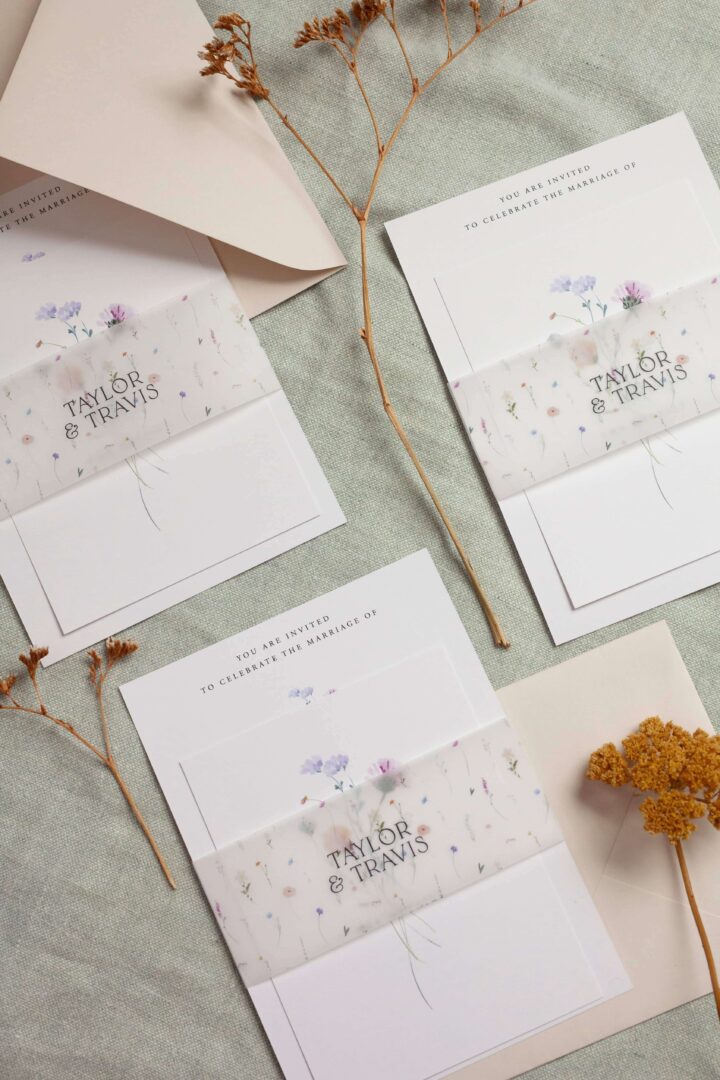
- Vellum overlays are the breakout stationery story of 2026, translucent 180gsm vellum layered over heavyweight invitations creates instant editorial depth without a high price premium.
- Foil stamping on heavyweight paper is surging, with couples choosing Foil Stamp on Wild Cotton (300gsm or 600gsm) for a pressed, tactile impression that photographs beautifully.
- Deckled edges: the irregular, torn-paper look, are appearing on flat-foil and digital suites alike, signaling a wider shift toward handcrafted, artisan aesthetics.
- Oversized A4 and larger formats double as art pieces, with editorial typography and hand-illustrated motifs driving the trend for invitations that guests actually frame.
- Sustainable seed paper is the fastest-growing eco choice among 2026 couples: plantable after use, certified responsibly sourced, and available across Paperlust’s full design library.
Wedding stationery is having a moment. After several years when digital-first couples questioned whether printed invitations still mattered, 2026 data from The Knot Real Weddings Study and Pinterest’s 2026 Wedding Predicts report shows a confident reversal: couples are investing more in paper, texture, and print craft than at any point in the past decade. Whether you’re planning an intimate garden ceremony or a multi-day destination celebration, the invitation sets the emotional register for everything that follows. For a deeper look at how these stationery shifts fit into the broader landscape, see our 2026 wedding trends hub.
Below, we break down the 10 wedding invitation trends defining 2026, explain exactly how each one works with current color palettes, and show you how Paperlust’s Melbourne studio delivers each look with the precision it deserves.
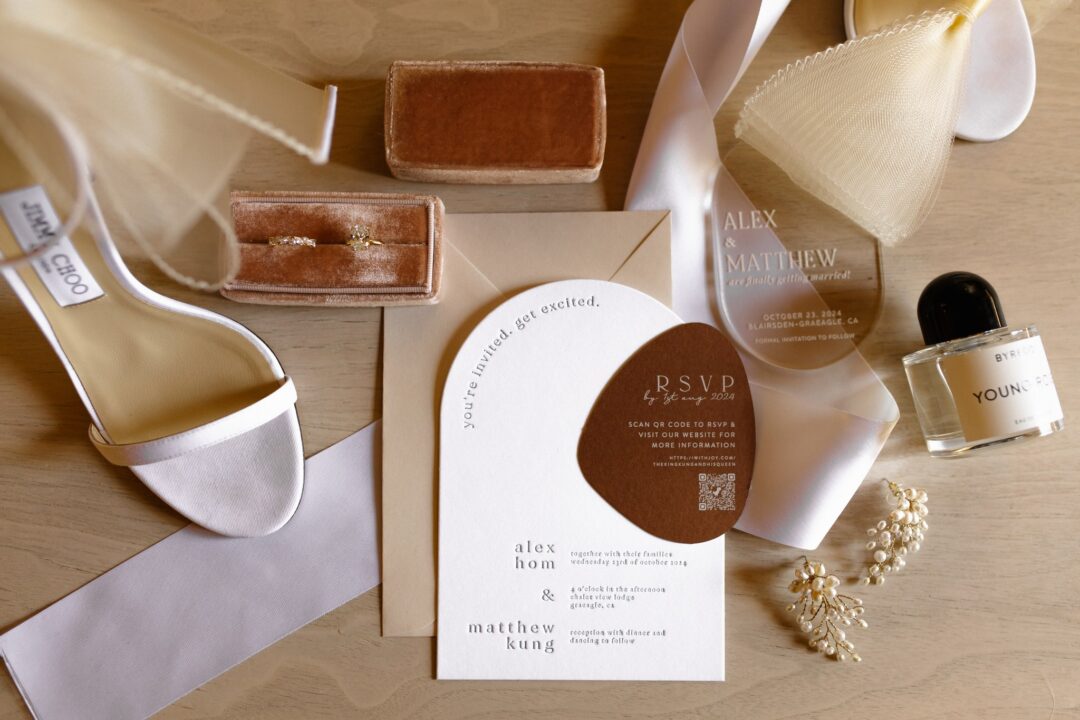

What’s Shaping Wedding Invitations in 2026
Three forces are converging to reshape what couples want from their stationery this year.
First, tactile luxury is winning. After years of screen fatigue, video calls, digital invites, phone-first everything, there’s a strong cultural appetite for objects you can actually hold and feel. According to WeddingWire’s 2026 planning survey, 71% of engaged couples say they plan to send physical invitations even when also sharing event details digitally. The physical invite is no longer just a formality; it’s a deliberate sensory statement.
Second, stationery budgets are growing. The Knot’s Real Weddings Study found that the average US couple spent 14% more on paper stationery in 2025 than in 2023, and that figure is tracking upward into 2026. Couples are ordering fewer cards overall, tighter guest lists post-pandemic, but spending more per piece on premium print methods, specialty papers, and finishing details like wax seals and vellum wraps.
Third, personalization has become non-negotiable. Pinterest’s 2026 Wedding Predicts report flags “uniquely us” as the single biggest macro trend in wedding planning, and stationery is where that instinct lands first. Couples want invitations that tell a story (their venue, their dog, their handwriting, their color palette) rather than a generic template.
Paperlust’s wedding invitation collection is built around exactly these pressures, 500+ exclusive designs, multiple premium print methods, and a Melbourne design studio that turns around proofs in 1-2 business days.
10 Wedding Invitation Trends for 2026
1. Vellum Overlays and Wraps: Translucent Elegance
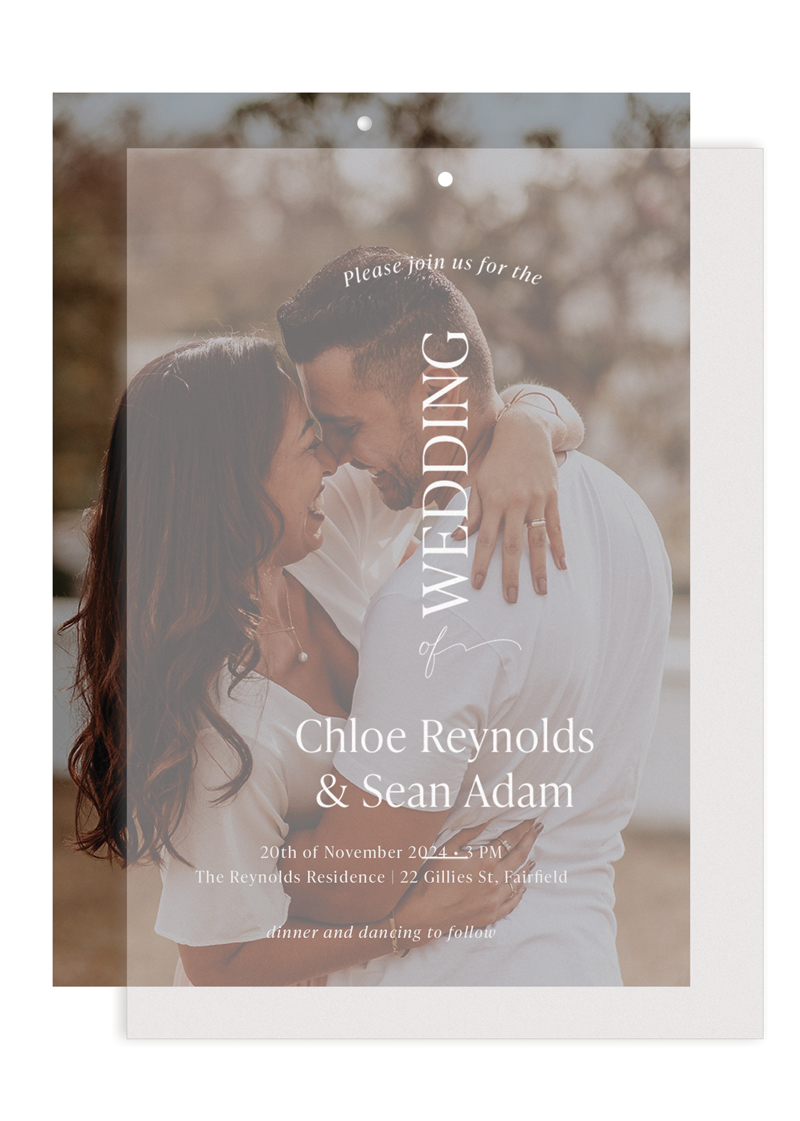
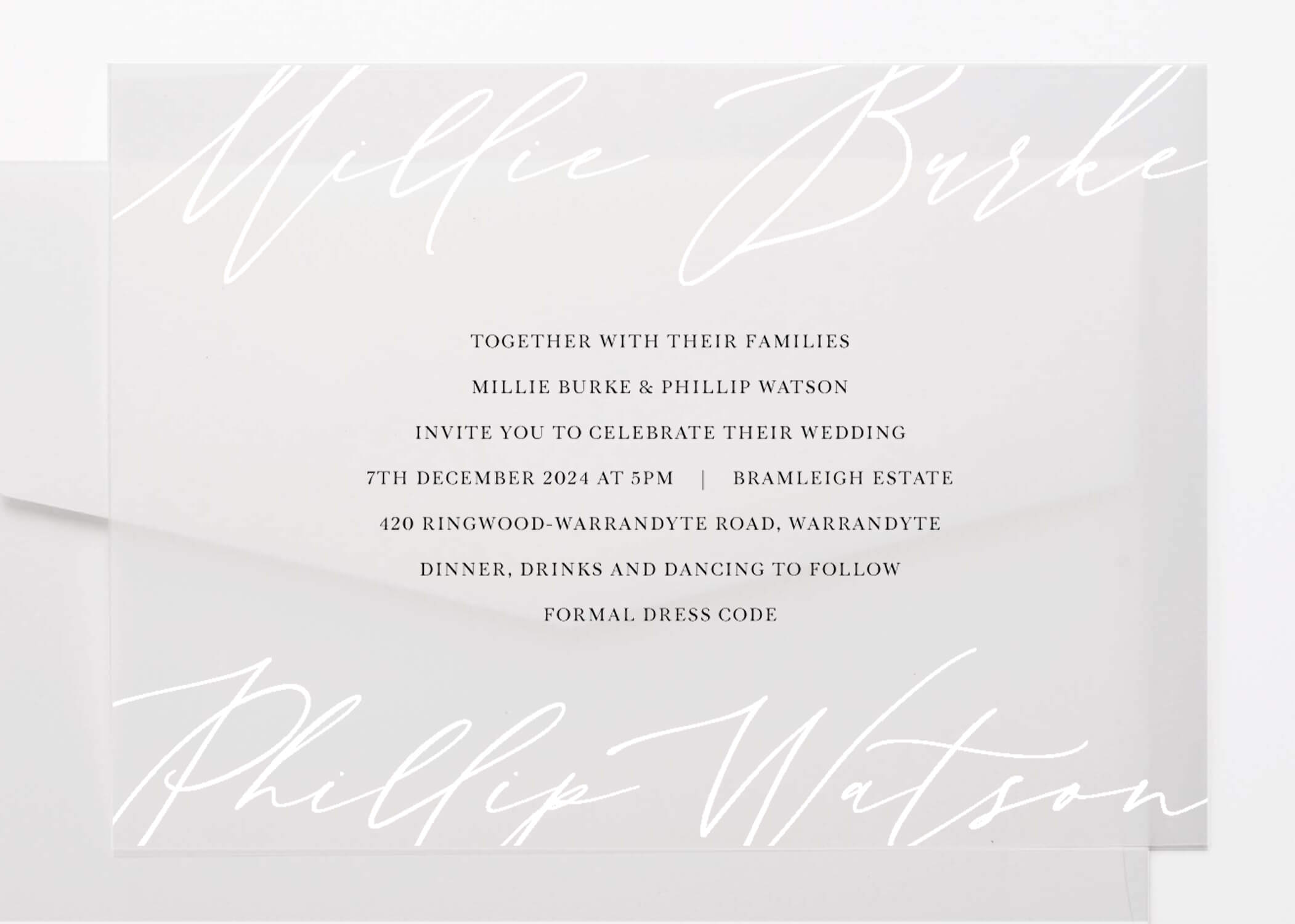
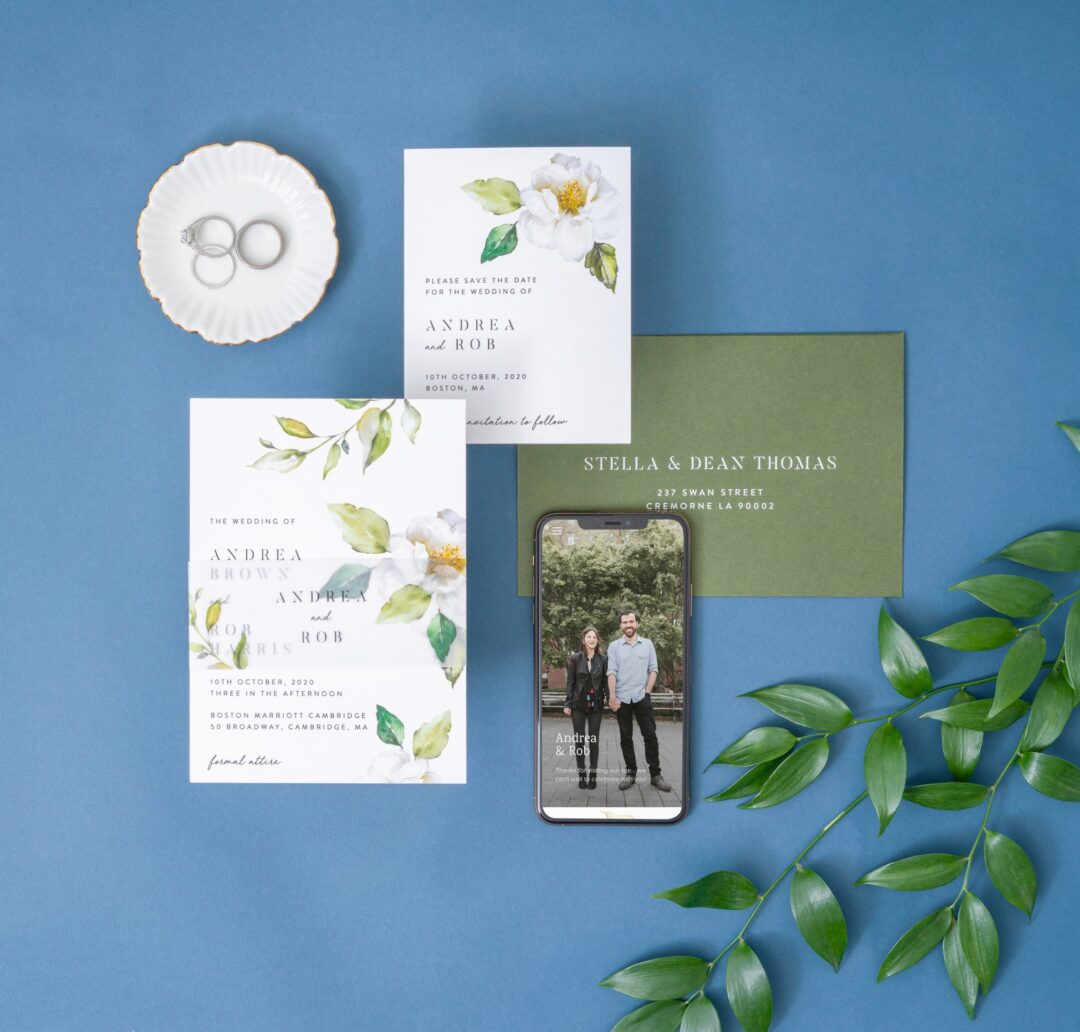
Vellum had its breakout moment on social media in late 2024, and as of 2026 it has become one of the defining materials of the stationery season. A semi-transparent sheet of 180gsm vellum laid over a printed invitation creates an instant layered effect: the typography beneath shows through softly while the vellum surface catches light differently, adding depth and a sense of quiet luxury.
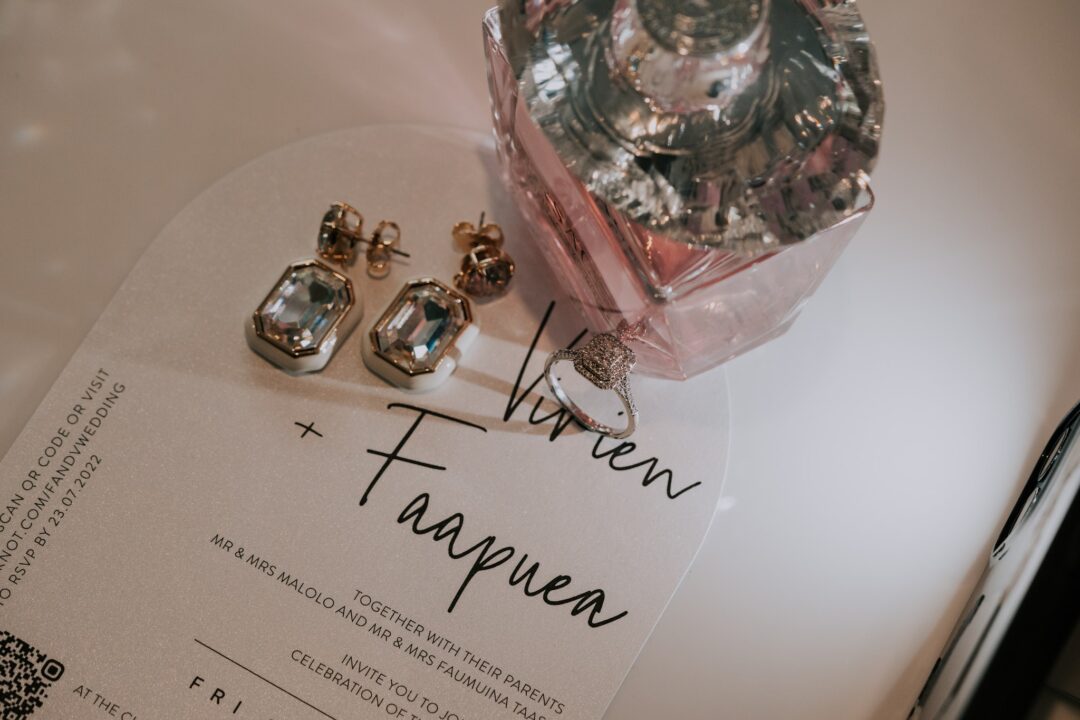
The trend is versatile enough to work across palettes. Warm ivory-and-terracotta suites use vellum wraps tied with a grosgrain ribbon in dusty rose or sage. Cooler, monochromatic suites (navy, slate, charcoal) use vellum to soften what might otherwise feel stark. Vogue Bridal has called the vellum-wrapped suite “the invitation equivalent of a silk organza overlay dress.”
For 2026 couples drawn to the translucent look, the styling detail that makes it feel elevated rather than merely trendy is the hardware: a wax seal pressed into the fold, a narrow satin ribbon, or a dried botanical sprig tucked underneath the overlay.
Paperlust’s 180gsm vellum stock is available with white ink printing, allowing monogram initials, a fine botanical border, or a venue outline to appear on the vellum itself. Alternatively, vellum ships as a plain overlay atop a digitally or foil-printed base card. Either approach stays well under the $2.04/card starting price for digital print.


2. Wax Seals with Custom Monograms: Tactile Luxury
The wax seal revival began around 2021, but in 2026 it has evolved from a finishing touch into a centerpiece detail. Couples are no longer choosing wax seals purely for closure; they’re commissioning custom monogram stamps, often designed to match the invitation typography exactly, and treating the seal as the signature element of the entire suite.
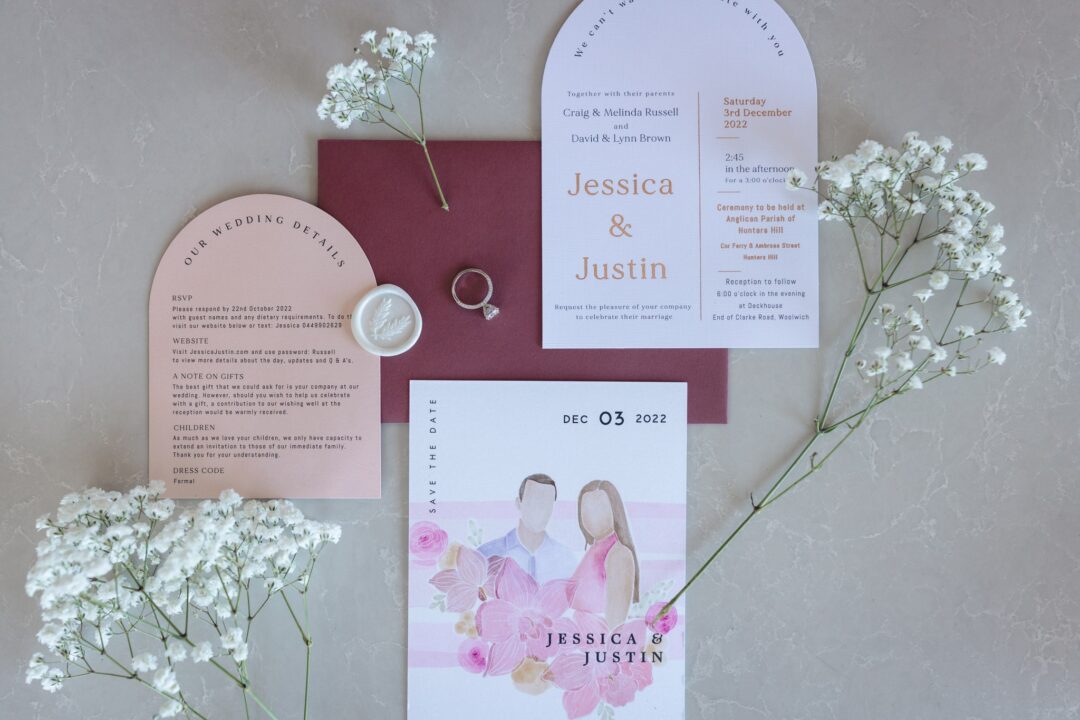
Pinterest’s 2026 Wedding Predicts data shows saves for “custom wax seal invitations” up 67% year over year. The appeal is straightforward: a wax seal is one of the few stationery elements that guests interact with physically before the invitation is even read. The act of breaking it (or, for many guests, carefully lifting it intact) creates a micro-ritual that sets the emotional tone before a single word is processed.
Current color preferences for wax seals run toward terracotta, dusty blush, forest green, and deep burgundy for warm-toned suites; and pearl white, pewter, and translucent (for vellum) for cooler palettes. Metallic golds and antique bronzes remain perennially strong.
Paperlust invitations pair naturally with wax seals as an add-on finishing detail. A Foil Stamp invitation on 300gsm Wild Cotton with a matching gold monogram wax seal creates a fully cohesive tactile suite. The custom die required for Foil Stamp (minimum 50 invitations) can echo the same letterform used on the wax stamp, creating design continuity across every touchpoint.
3. Deckled (Torn) Paper Edges: Artisan, Handcrafted Feel
Deckled edges, the soft, irregular, feathered border that results from paper being torn or cut with a deckle blade rather than a guillotine, are having their biggest moment in a generation. The look signals handcraft in an era of mass production, and it photographs extraordinarily well against neutral tabletop styling.
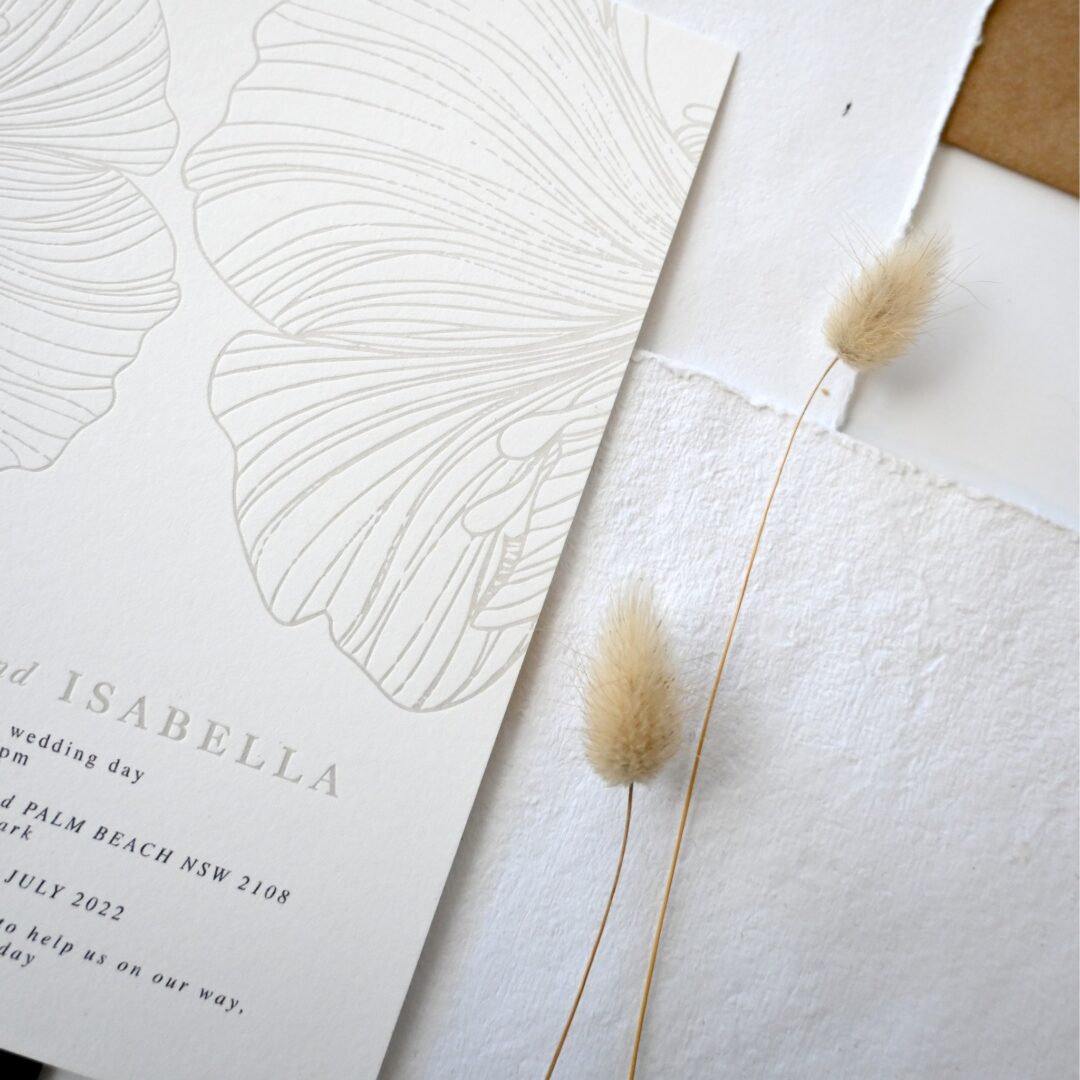
As of 2026, deckled edges are appearing on invitations across the full budget spectrum. At the higher end, deckled 600gsm Wild Cotton with letterpress printing and a wax seal is the most requested “heirloom” suite configuration. At mid-range, deckled matte or linen stock with digital print delivers the artisan aesthetic at approachable pricing.
Color pairing is easy: deckled edges work with everything, but they look especially considered against warm neutrals (cream, linen, warm white, dusty mushroom) and with earthy accent palettes. Terracotta calligraphy on a deckled ivory letterpress card is a top Vogue Bridal pick for 2026.
Deckled edges are available as a finishing option on select Paperlust letterpress and foil stamp orders on Wild Cotton stock. For couples who want the full artisan effect, combining deckled edges with letterpress printing on 600gsm Wild Cotton Double Thick produces the heaviest, most substantial invitation card currently available on the Australian market.
4. Foil Stamping on Heavyweight Paper: Mirror-Bright Metallic
Gold foil has never really gone away, but the 2026 version looks significantly different from the foil-on-everything maximalism of 2018-2019. This year’s foil moment is deliberate and restrained: a single foil-stamped monogram on a clean, minimalist design; a botanical border in rose gold against warm white Wild Cotton; or a venue silhouette in silver foil as the only ornament on an otherwise text-led card.
The key technical distinction for 2026 is the substrate. Lightweight foil cards, the kind that feel flimsy in the hand, are decisively out. Couples are specifying heavyweight paper, and the combination of Foil Stamp’s pressed deboss impression with thick, textured Wild Cotton paper is the look dominating editorial coverage from Vogue Bridal to The Knot’s 2026 inspiration boards.
WeddingWire data from late 2025 shows that foil-accented invitations command the highest guest “wow factor” rating of any print method, a metric that correlates strongly with couples sharing their suite on social media, which in turn drives gifting behavior from guests who want to acknowledge the invitation’s quality.
Paperlust offers two foil routes depending on quantity and budget. Flat Foil (minimum 10 invitations) delivers mirror-bright metallic without a custom die or deboss impression, faster, more affordable, and available in gold, pale gold, rose gold, silver, copper, and holographic, among others. Foil Stamp (minimum 50 invitations) adds a custom die, producing a pressed deboss impression alongside the metallic shine, the definitive luxury option. Both are available on Wild Cotton and specialty textured papers. Invitations start from $2.04/card.
Foil stamped wedding invitations →

Bohemian FoilFoil stamp

Tropical BotanicalFoil stamp
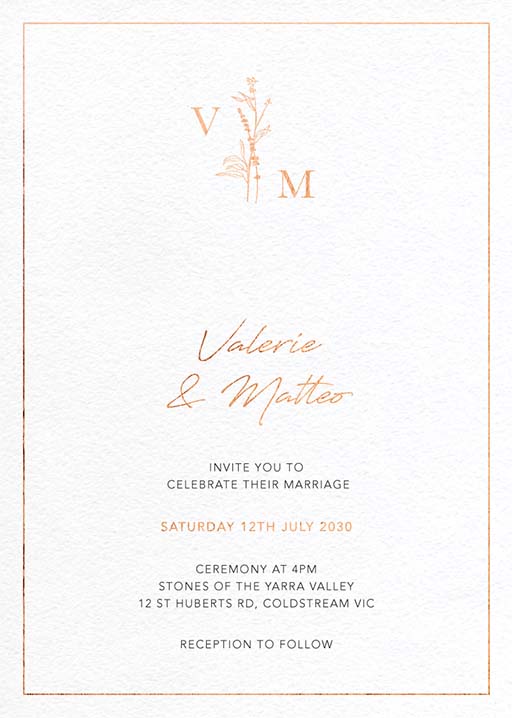
Dark RomanceFoil stamp
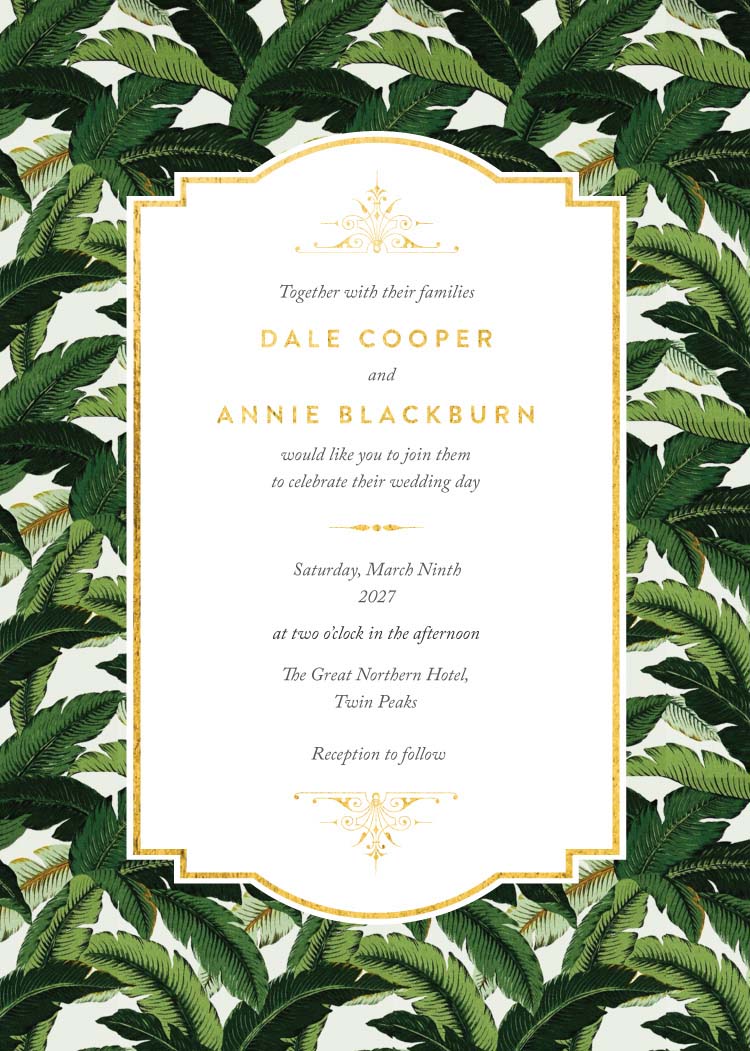
Beverly Hills HotelFoil stamp
5. Oversized Statement Formats (A4 and Larger): Editorial Impact
The standard A6 or 5-inch-by-7-inch invitation isn’t going anywhere, but 2026 has introduced a strong counter-trend: the oversized editorial statement card. A4 (8.3″ x 11.7″) and larger formats are gaining traction among couples who want their invitation to function as both communication and art object, something that gets pinned to a mood board or framed on a kitchen shelf, not just read once and recycled.
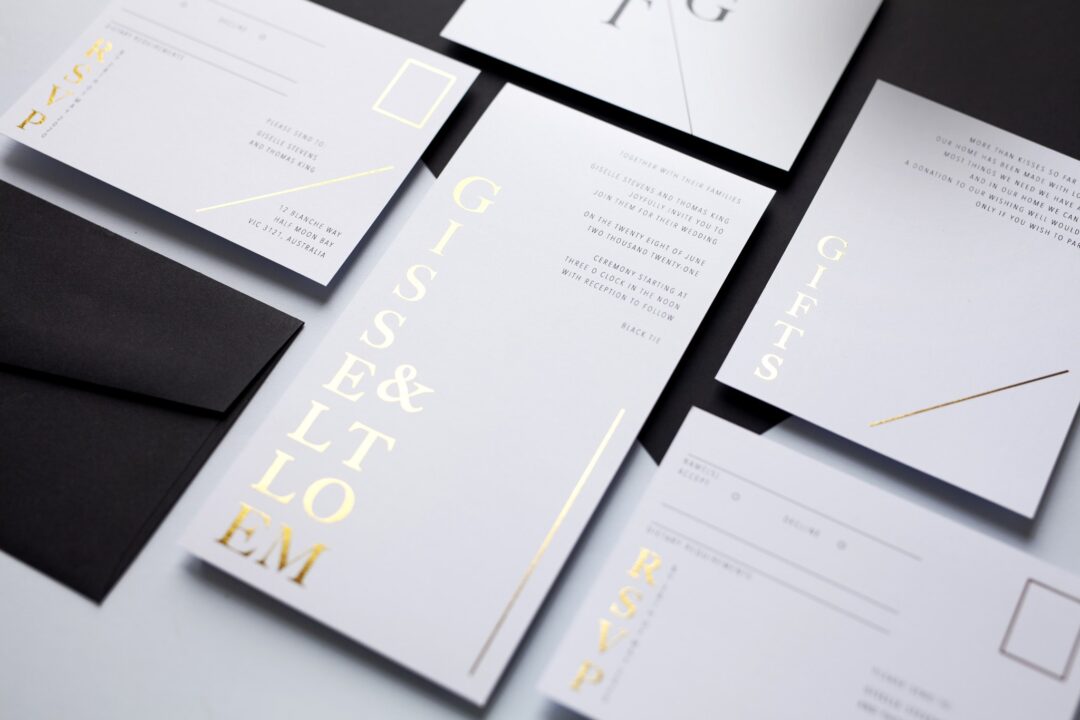
The oversized format demands confident design. These cards work best with bold, graphic layouts: a single large-scale motif (a hand-illustrated venue, a sweeping botanical), an editorial headline in a contemporary serif, or a full-bleed photograph on the reverse. The extra real estate also allows designers to integrate all suite information (ceremony details, accommodation, RSVP instructions) on a single card, eliminating the need for separate information cards.
Pinterest trends data for 2026 shows saves for “oversized wedding invitations” up 44% versus 2024, with the strongest growth among couples aged 28-35 planning larger weddings of 100+ guests. The format signals scale and ambition before a guest has read a single line of text.
Paperlust’s digital print and flat foil options extend to larger format cards. An A4 digital print on 380gsm premium stock with a full-color hand-illustrated motif, perhaps the couple’s venue or a botanical native to their wedding location, creates a piece genuinely worth keeping. Combine with the Address Manager tool to import guest addresses and print directly onto coordinating envelopes.
6. Monogram-Led Design: Personalized, Timeless
The monogram (initials intertwined, stacked, or set in a medallion or crest) is the 2026 stationery detail that most directly answers the “uniquely us” macro trend identified by Pinterest. Unlike illustrated motifs or color choices that date quickly, a well-designed monogram is genuinely timeless: it reappears on the ceremony program, the menus, the welcome bags, the cake, and, in the years after the wedding, on stationery and gifts the couple will use for decades.
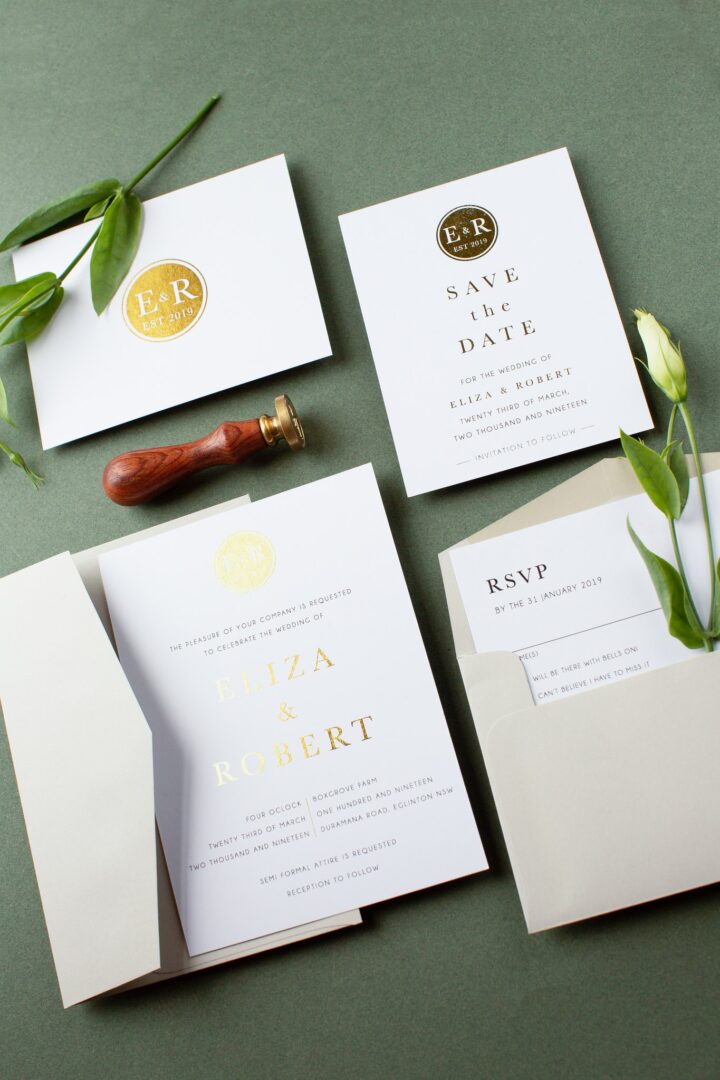
As of 2026, the strongest monogram formats are single-letter initials in an oversized, centered composition; combined-initials with a shared letter at the center in an intertwining serif; and heraldic-style crests with a simple wreath or botanical frame. The resurgence of the crest, driven partly by the popularity of British country-house aesthetic in wedding media, has been one of the more surprising stationery stories of the year.
Foil Stamp is the natural production partner for a monogram-led design. The custom die required for Foil Stamp is built to the exact specifications of the monogram artwork, and the pressed deboss impression that results, visible as a tactile relief even in the absence of light, gives the monogram a three-dimensional quality that no other print method replicates. Metallic print (subtle gold pigment, no die, more affordable) is the entry-level alternative for couples who want the gold look without the Foil Stamp minimum of 50.
7. Hand-Illustrated Botanical and Venue Motifs: Bespoke Storytelling
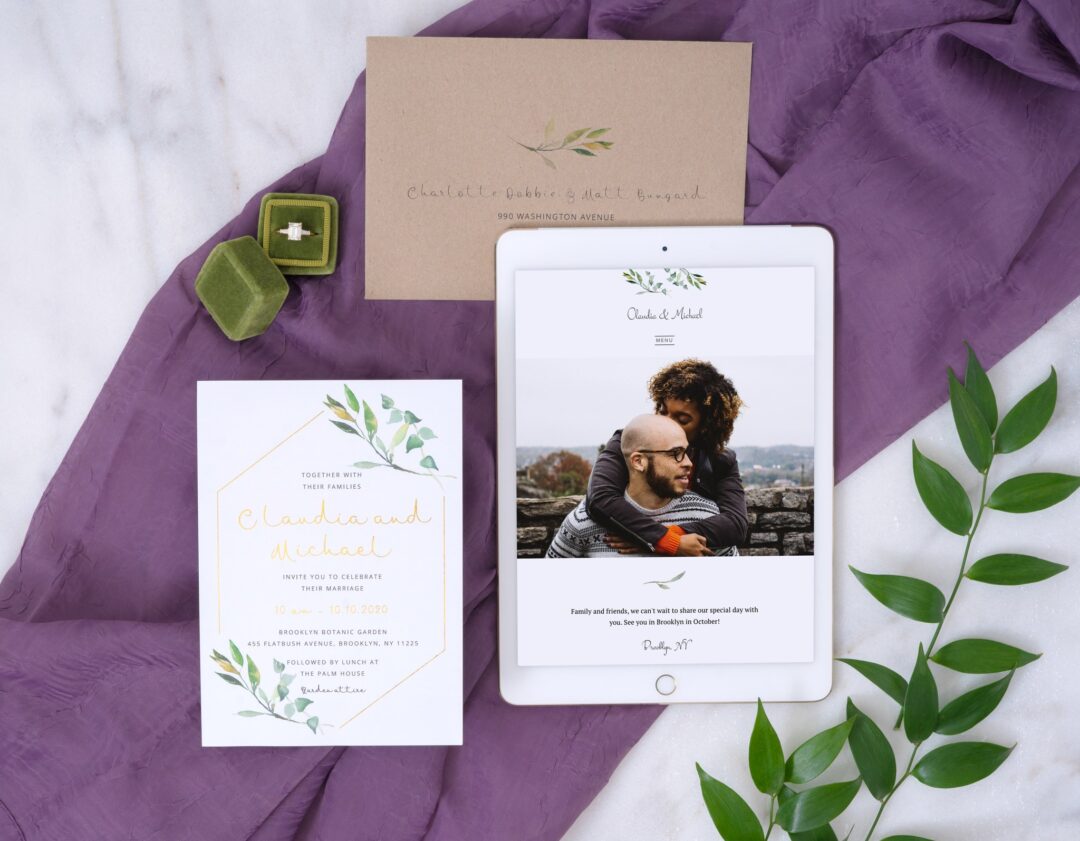
Custom illustration has moved from a niche luxury to a mainstream expectation in 2026 wedding stationery. Couples who are spending more per invitation are overwhelmingly choosing designs anchored in something specific to their story: the facade of their venue, the flower that grows in the garden where they got engaged, the dog that will walk down the aisle, or the native botanicals of the destination where they’re marrying.
Vogue Bridal flagged hand-illustrated motifs as one of its top five stationery trends for 2026, noting that the illustration need not be hyper-realistic to be effective, loose, watercolor-style botanical borders, for instance, are among the most-pinned invitation styles of the year, precisely because their slight imprecision reads as handmade and warm rather than digitally manufactured.
The illustrated invitation also solves a practical problem for couples: when a single hero image anchors the suite, every other element (the envelopes, the ceremony program, the menus, the signage) can pick up a detail from the illustration to create a cohesive visual language across the entire event.
Paperlust’s invitation library includes hundreds of designs featuring botanical and illustrative motifs from independent Australian and international artists. For couples who want something fully custom, Paperlust’s custom design service offers two paths: modify an existing design to incorporate a specific illustration, or commission a fully bespoke card from scratch with quote-based pricing. Complement your illustrated suite with coordinating wedding signs carrying the same botanical motif.
Illustrated wedding invitations →
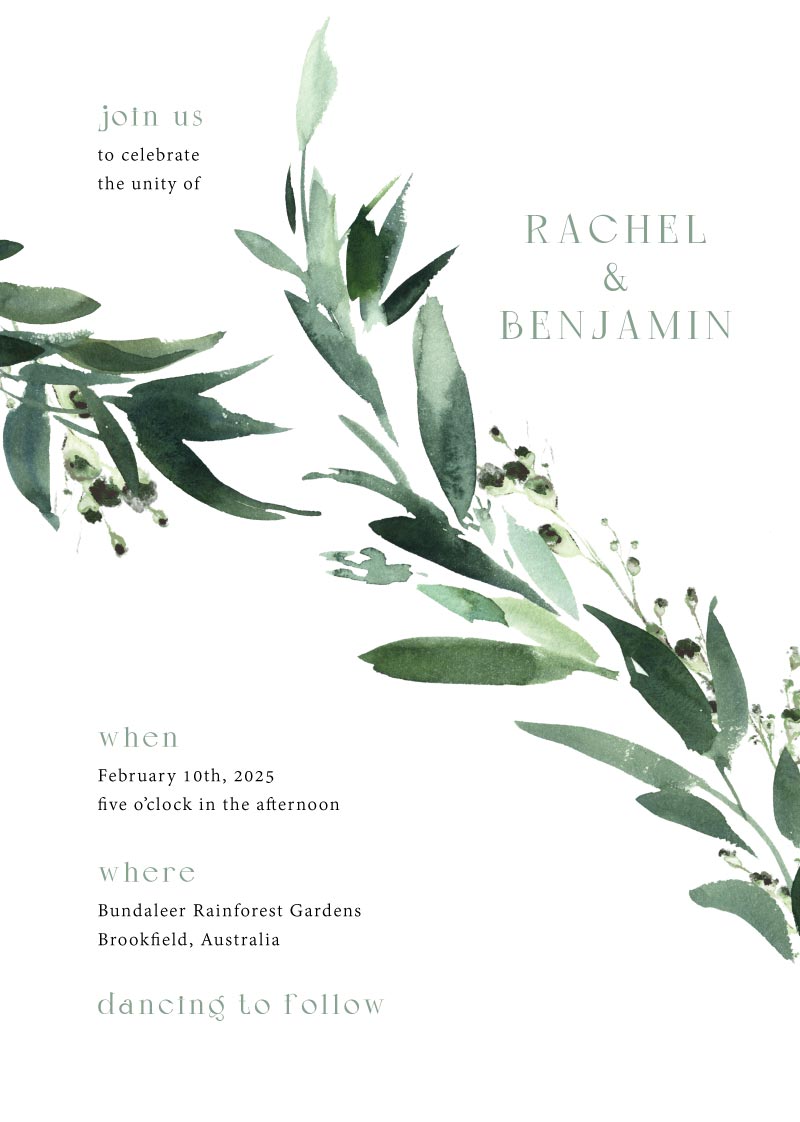
Love and LeavesDigital printing
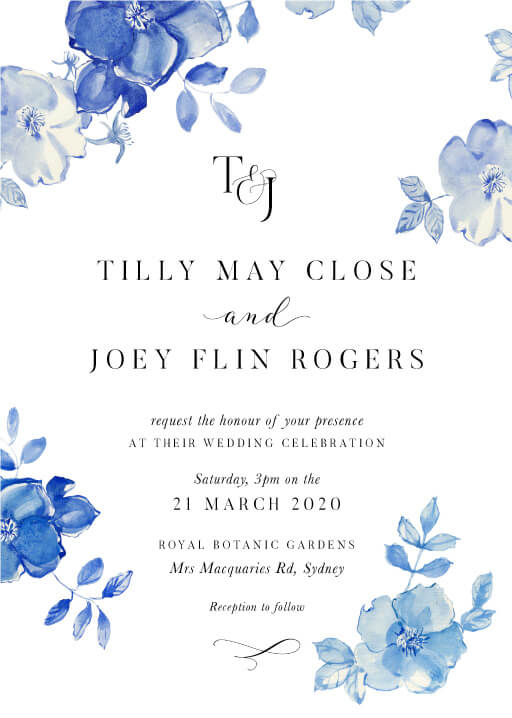
British FloralDigital printing

Elegant FlowersDigital printing
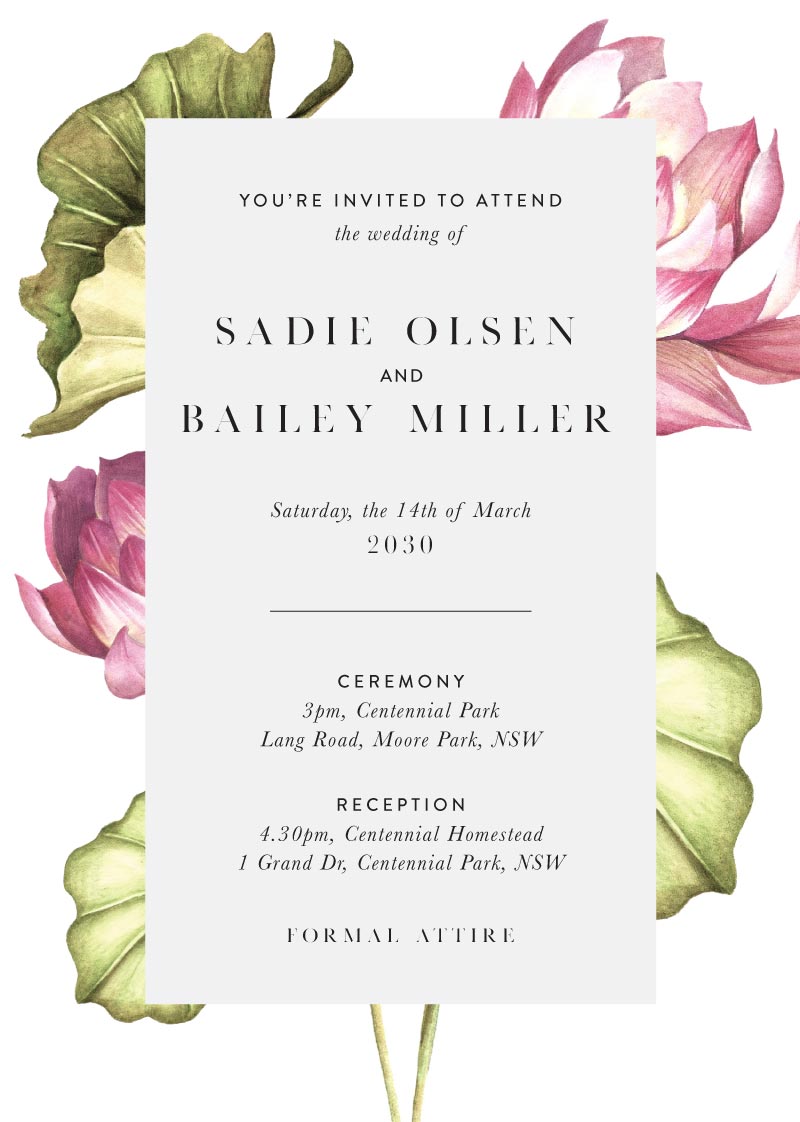
Tropical OasisDigital printing
8. QR Codes for Wedding Websites: Modern Convenience
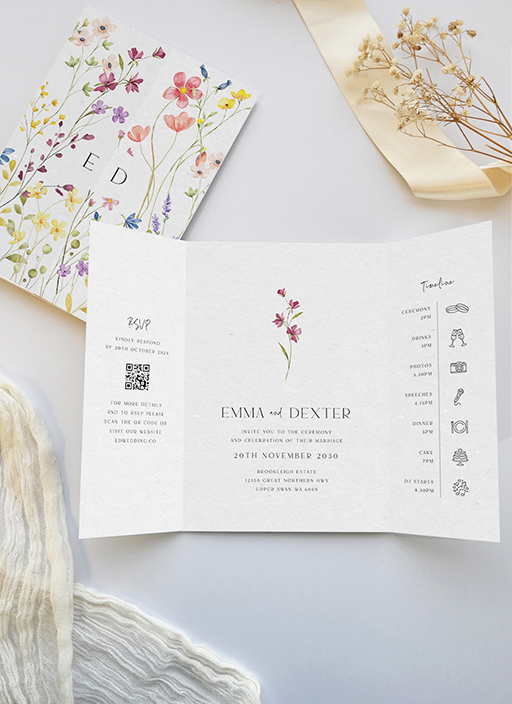
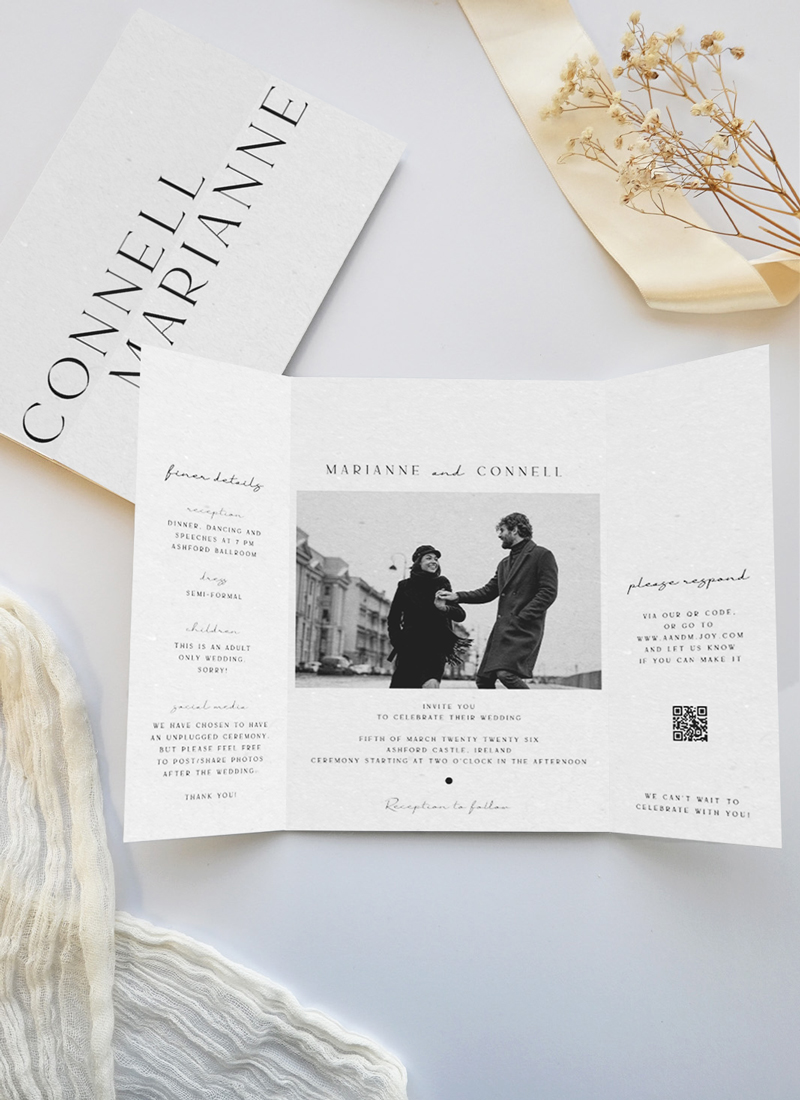
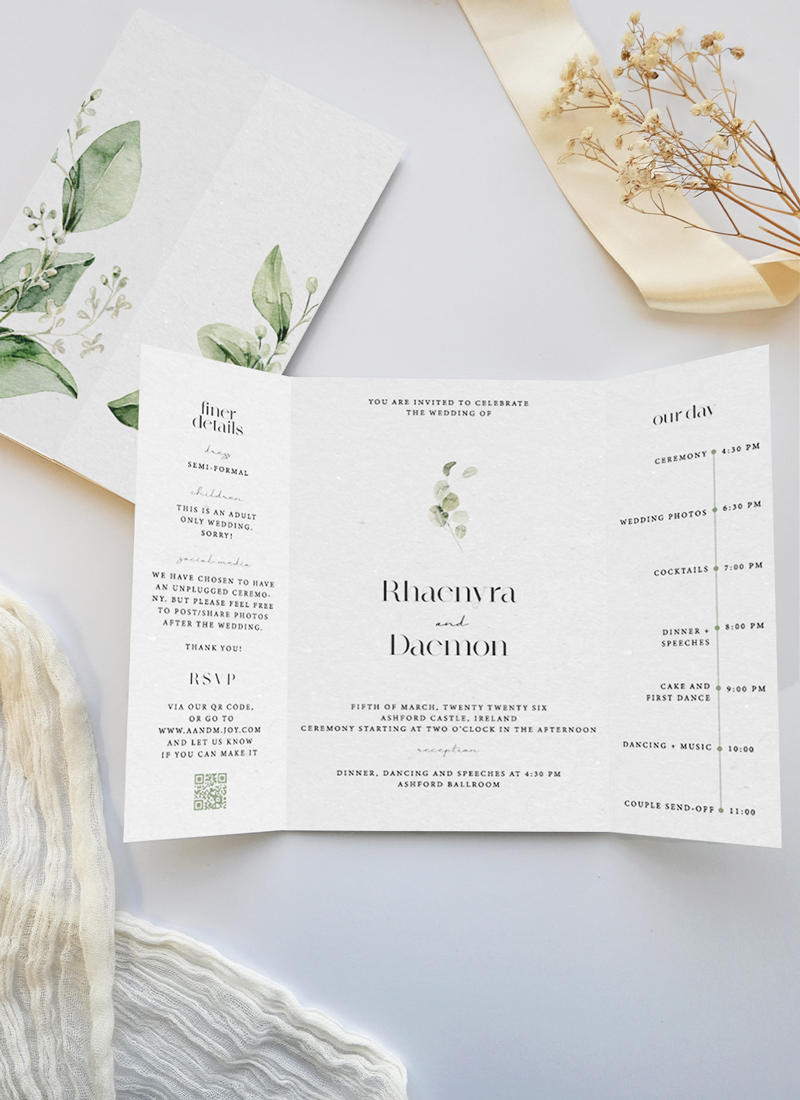
The QR code, once a pandemic-era workaround, has completed its journey from necessity to considered design element. As of 2026, QR codes appear on an estimated 38% of all US wedding invitations according to WeddingWire data, up from under 10% in 2021, and the couples including them are no longer apologetic about it. The QR code is now understood as a genuine service to guests: direct access to the wedding website, travel logistics, accommodation options, registry, and RSVP form, all in a single scan.
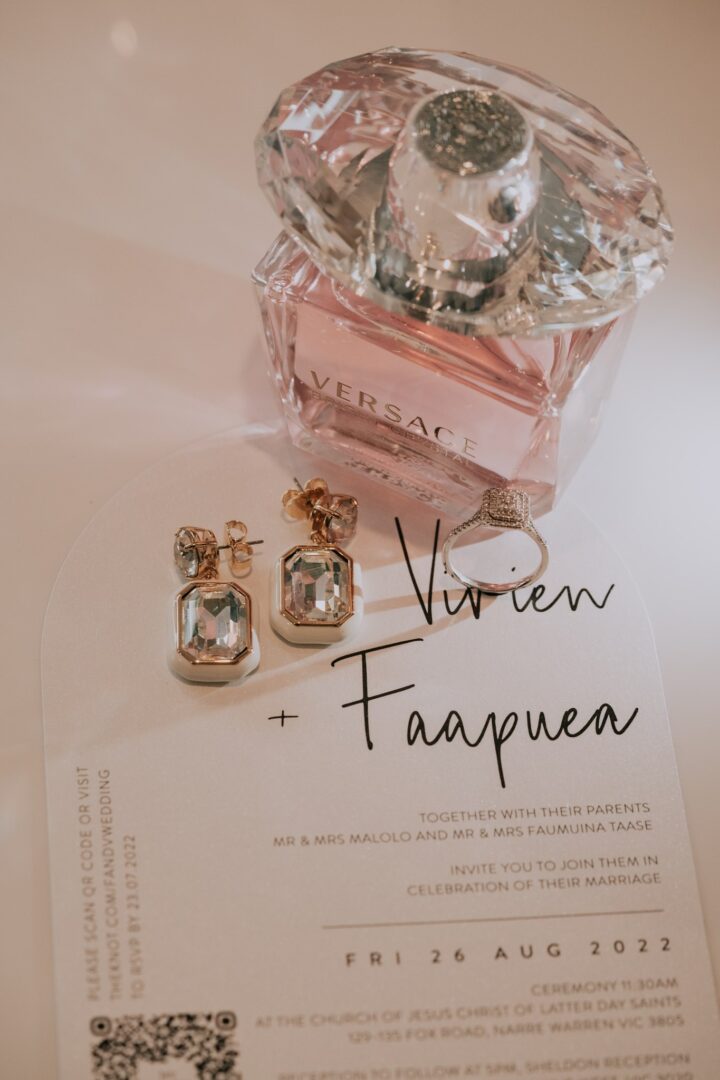
The design challenge in 2026 is integration: a QR code dropped clumsily onto an otherwise elegant invitation reads as an afterthought. The couples doing this well are working with designers who can style the QR code as a design element, surrounded by a fine rule border, set in a dedicated panel at the base of the card with a small serif label like “Scan for travel details,” or printed on the reverse of the invitation so it doesn’t interrupt the front face composition.
Digital print is the natural production method for QR code invitations, since the code is variable data that integrates cleanly with full-color digital artwork. Paperlust’s 300gsm matte, linen, and premium stocks all support crisp, scannable QR code reproduction. For couples nervous about reliability, testing the printed code against multiple devices before final approval is standard practice, Paperlust’s 1-2 business day proof turnaround and two included rounds of edits make this easy to validate before going to press.
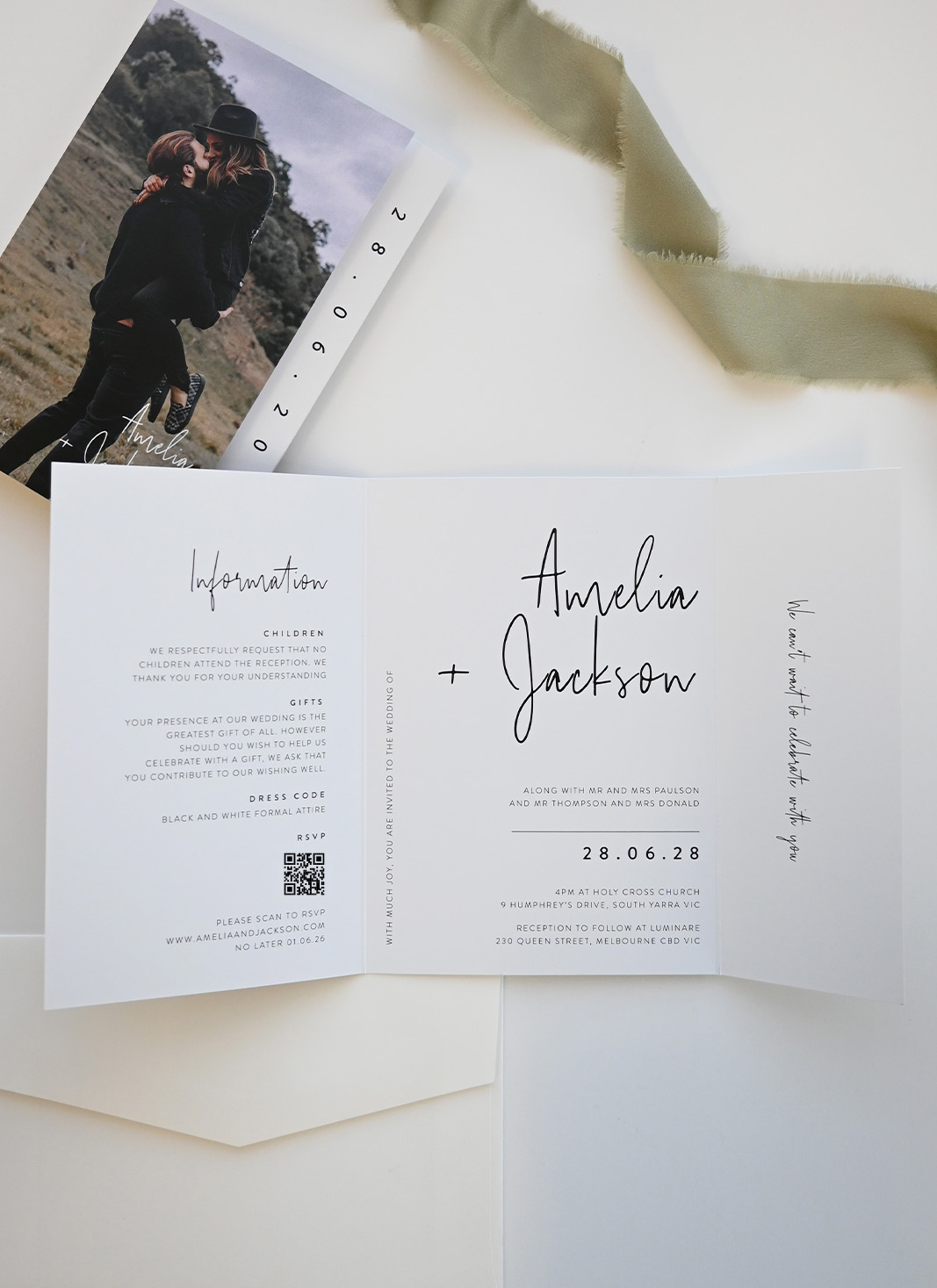
9. Sustainable and Seed Papers: Eco-Conscious Couples
The eco-wedding is no longer a niche category. The Knot’s Real Weddings Study for 2026 found that 58% of engaged US couples say environmental impact is a “significant” factor in at least one major planning decision, and stationery is a category where the eco credentials are both genuine and visible to guests.
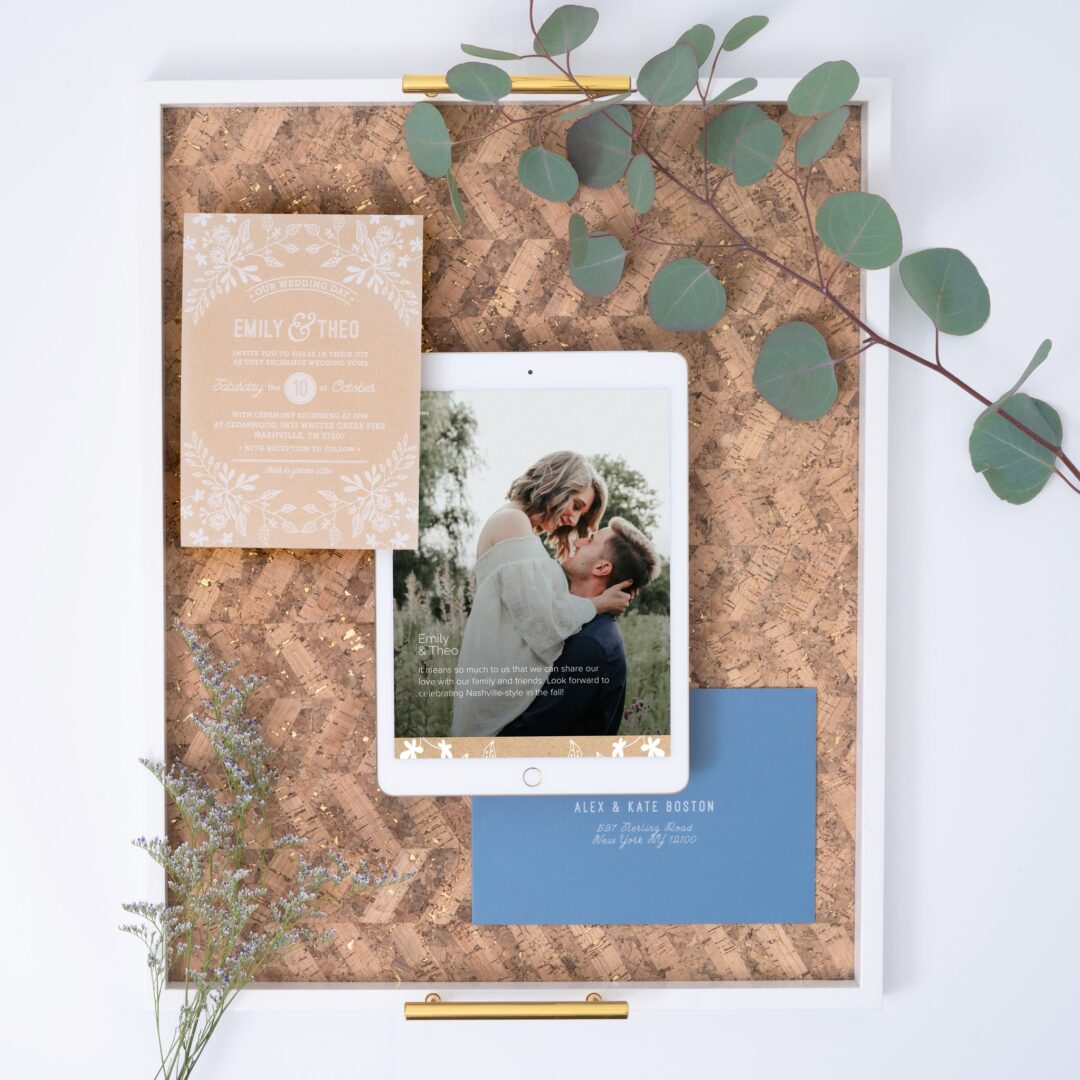
Seed paper (paper embedded with wildflower, herb, or vegetable seeds that germinates when planted in moist soil) has emerged as the leading sustainable stationery choice for 2026. It satisfies a specific emotional need: instead of throwing away a beautiful invitation, guests can plant it and watch something grow, creating a secondary memory tied to the wedding. The concept resonates particularly strongly with couples whose wedding identity includes nature, outdoor ceremony spaces, or garden party aesthetics.
Beyond seed paper, the broader sustainable-stationery category includes FSC-certified stocks, plant-based inks, and carbon-offset production. Pinterest data shows saves for “plantable wedding invitations” up 89% year over year, making it one of the fastest-growing specific searches in the wedding stationery category.
Paperlust’s seed paper stock is available across the full design library, any invitation can be printed on plantable seed paper, and the instructions for planting are printed on the reverse. Every Paperlust order also includes planting a tree, adding a tangible sustainability credential that couples can reference in their wedding website copy. For couples pairing seed paper invitations with coordinating save the dates, the save the date collection includes seed paper options from $1/card.
Eco-friendly wedding invitations →
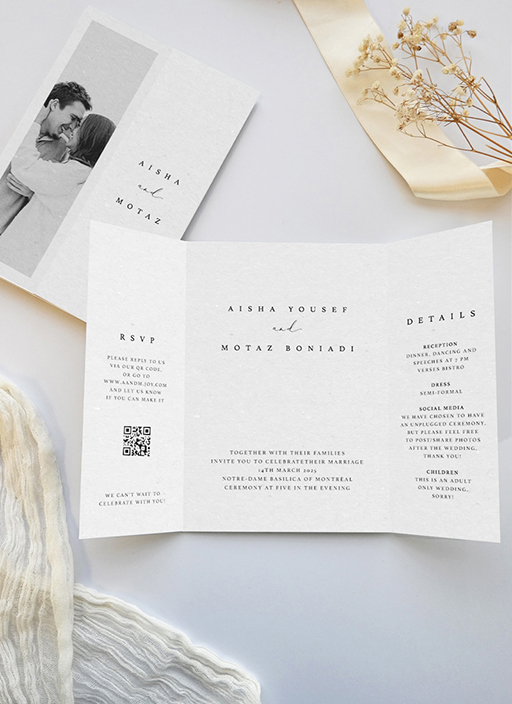
TogetherDigital printing

Modern PebbleDigital printing
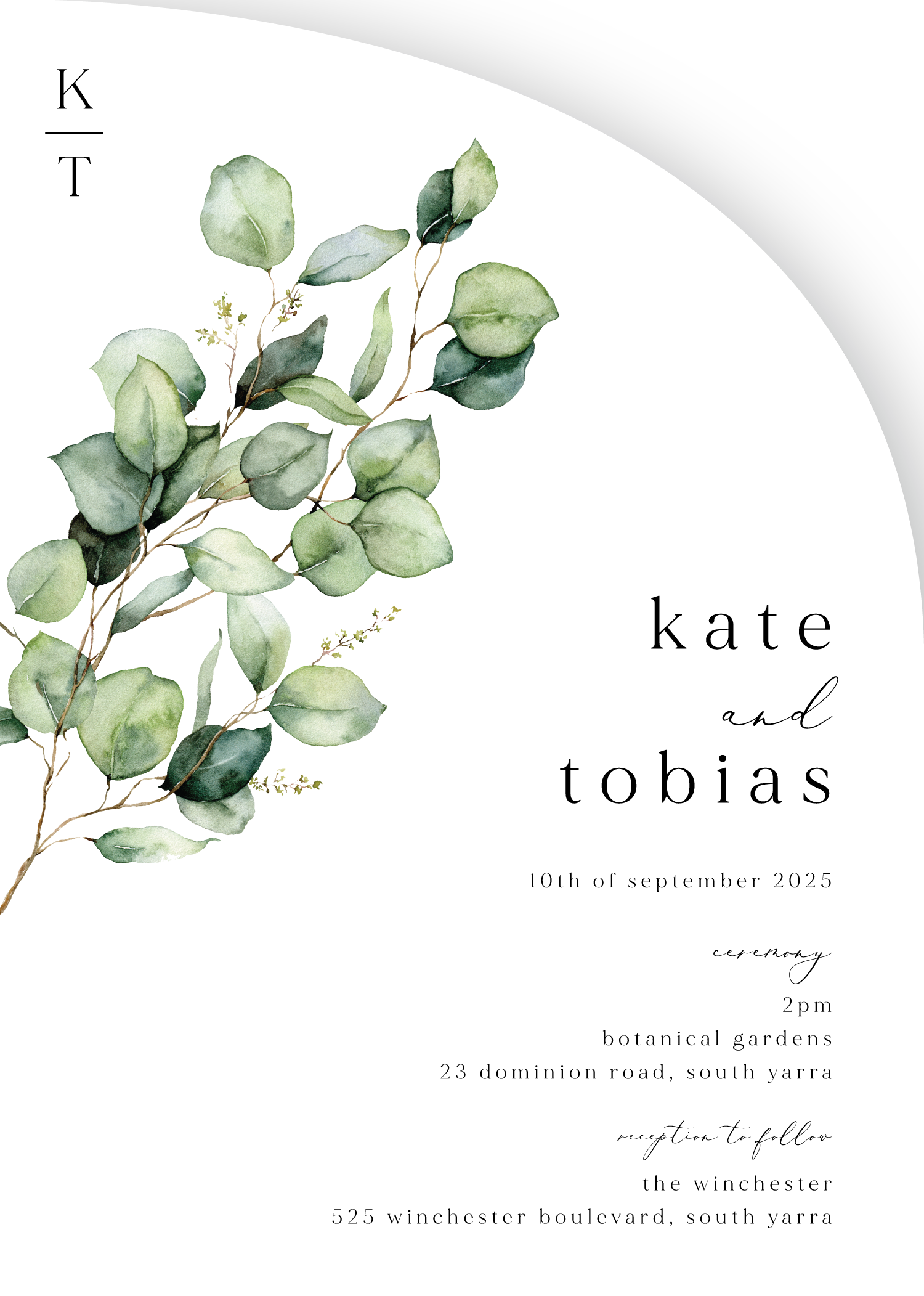
Green FoliageDigital printing
IvoryDigital printing
10. Modern Serif and Editorial Typography: Clean, Contemporary
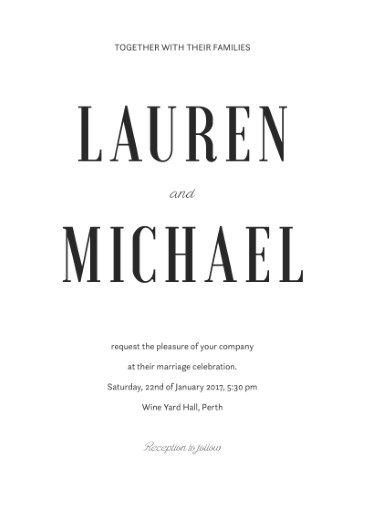
Typography is having a renaissance moment in 2026 wedding stationery. After a decade in which script fonts, flowing calligraphy, copperplate, Spencerian-style lettering, dominated the market, a significant counter-trend has emerged: clean, contemporary serif typefaces drawn from editorial design traditions. Think the restrained elegance of a magazine masthead, applied to an invitation suite.
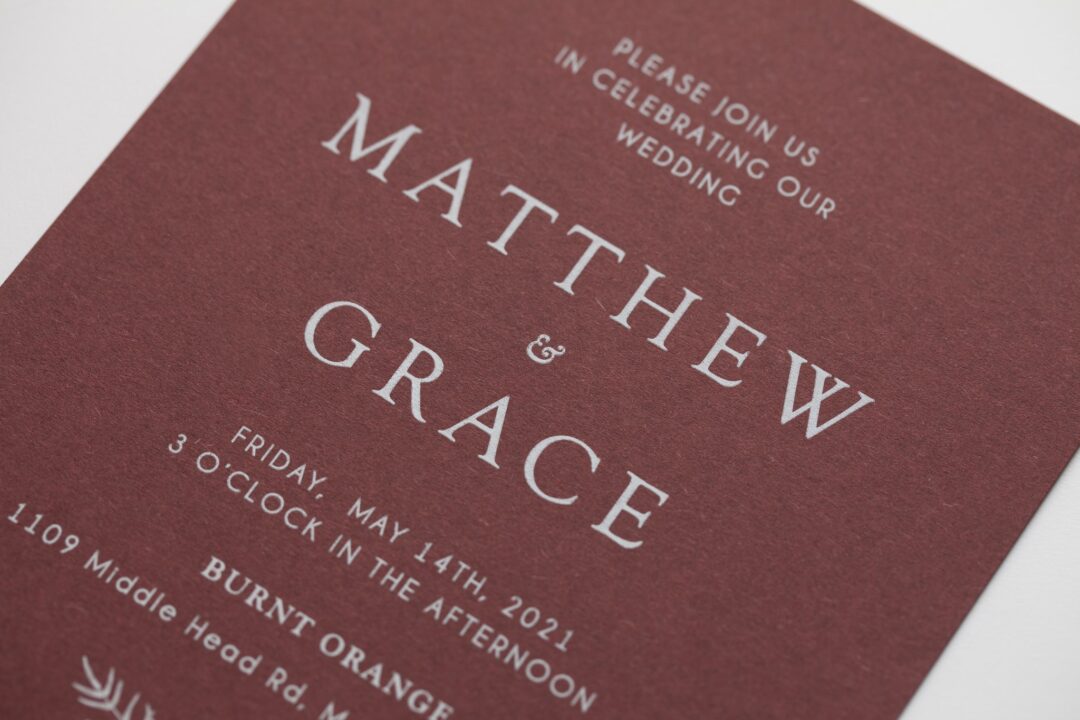
The modern serif combines the warmth and humanity of a serif letterform, the small strokes and feet that make text feel inviting rather than cold, with contemporary proportions that feel current rather than traditional. High-contrast serifs (thick downstrokes, hairline upstrokes) are particularly strong in 2026, as is the pairing of a display-sized serif for the couple’s names with a smaller sans-serif for the logistical details: date, venue, dress code.
This typographic shift pairs naturally with the other dominant 2026 trends. A foil-stamped monogram in a high-contrast serif on thick Wild Cotton reads simultaneously timeless and modern. An oversized A4 card anchored by a bold editorial serif headline, “Please join us” set at 72pt, needs no illustration or additional ornament to feel complete.
Paperlust’s design library includes dozens of editorial-typography-led designs from independent type-focused artists. For couples who want a specific typeface incorporated into a custom layout, the custom design service can build from scratch, and the proof process, starting within 1-2 business days of order, allows for typography refinement before final print approval.
Shop the 2026 trends
Trend-forward wedding invitations
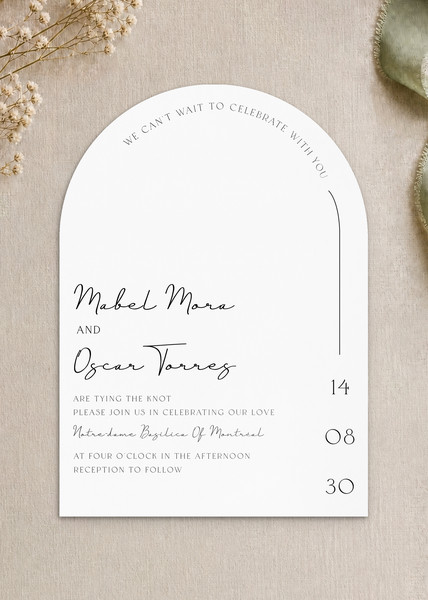
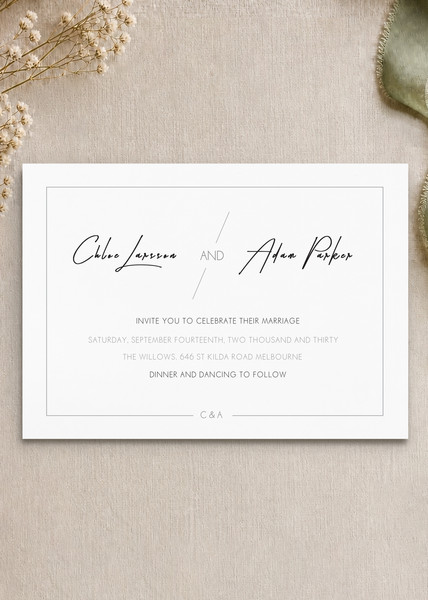
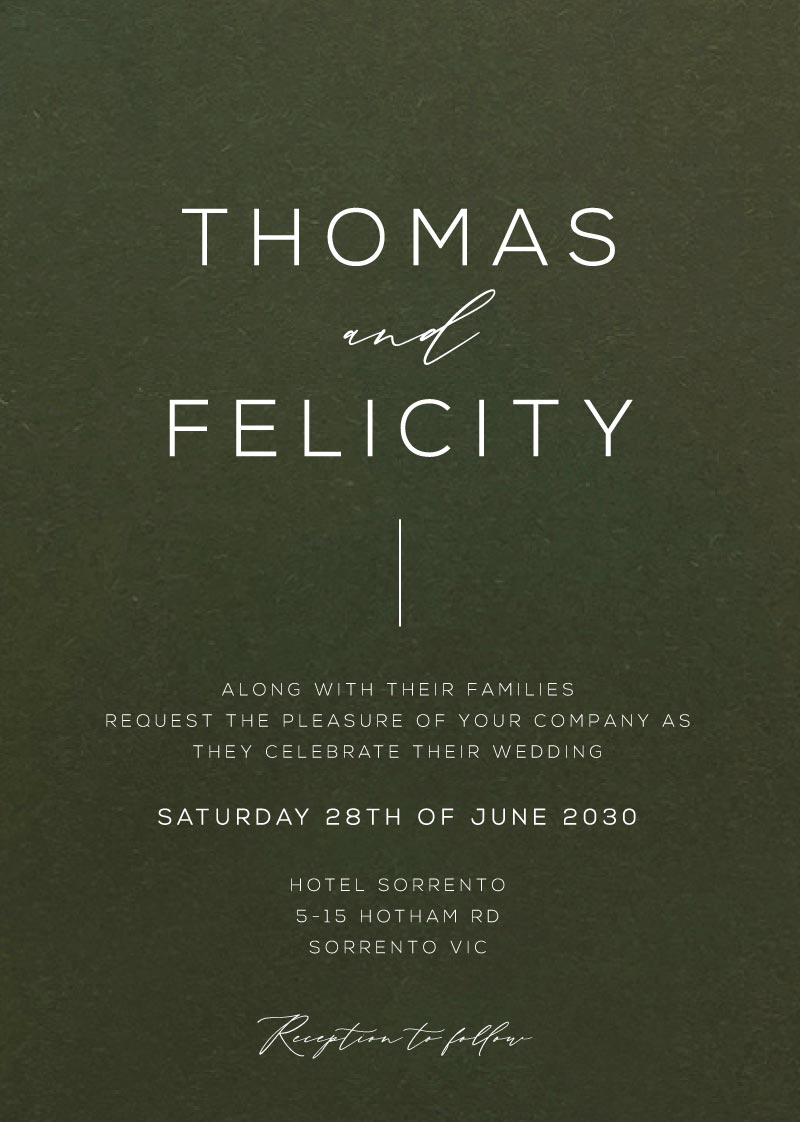
Arches, vellum overlays, foil, scallops, and editorial typography, every 2026 trend featured here is in stock.

Pairing Trends to Your Wedding Style
The 10 trends above don’t operate in isolation. The most considered 2026 invitation suites combine two or three complementary elements to create a coherent aesthetic rather than a trend checklist. Here’s how to pair them by wedding style:
| Wedding Style | Primary Trend | Supporting Details | Paperlust Print Method |
|---|---|---|---|
| Romantic garden | Hand-illustrated botanicals | Vellum overlay, wax seal | Digital print on premium 380gsm |
| Luxury estate | Foil stamp monogram | Deckled edges, heavyweight Wild Cotton | Foil Stamp on 600gsm Wild Cotton |
| Modern minimal | Editorial typography | Oversized format, QR code panel | Flat Foil on matte or linen |
| Rustic / artisan | Deckled edges | Seed paper, wax seal, kraft stock | Digital or White Ink on kraft |
| Destination / outdoor | Venue illustration | Seed paper, QR code to travel details | Digital print on seed paper |
| Black-tie / formal | Foil monogram crest | Flat foil, dark color stock, vellum | Flat Foil on 500gsm color stock |
One practical note on mixing trends: physical texture should be your through line. If you choose deckled edges, your wax seal should feel equally artisan (beeswax rather than a perfectly circular synthetic seal). If you choose flat foil and an editorial typographic layout, your wax seal, if you use one, should be minimal and clean. Visual coherence across a suite comes from choosing elements that share a sensibility, not just a color palette.
For couples uncertain about how to mix, Paperlust’s designer proofing process is particularly useful: once you place your order, a designer assigned specifically to your suite can advise on finishing combinations before anything goes to press.
How to Order Your 2026-Trend Invitation Suite
For couples planning 2026 weddings, the ordering timeline is the first practical constraint to navigate. Most invitation decisions need to be finalized 4-5 months before the wedding date to allow time for design, proofing, printing, and mailing, and popular print methods like Foil Stamp (which requires a custom die) benefit from the full window.
Here’s how the Paperlust process works from first browse to mailed invitation:
Step 1: Browse and shortlist
Start with the full invitation collection filtered by print method, paper type, or design style. Paperlust’s 500+ exclusive designs are organized by aesthetic (botanical, minimalist, typographic, illustrated, foil) so it’s straightforward to shortlist 3-5 candidates before committing to a design direction.
Step 2: Order a sample
Before placing your full order, consider a $5 sample pack (7 designs across print methods) or a $20 full swatch kit (all available paper stocks). Both ship from Melbourne and give you a physical feel for paper weight, foil finish, and ink depth before you commit. Note: $15 custom samples are available for most print methods but not for letterpress.
Step 3: Customize and place your order
Paperlust’s online customization tool handles wording, font adjustments, and color variations. For bespoke requirements (a custom illustration, a specific typeface, a design modification beyond the standard tool) the custom design service quotes individually. Once you place your order, a Melbourne designer is assigned to your suite.
Step 4: Review your proof
Your designer proof arrives within 1-2 business days. You have two rounds of edits included at no extra cost, so this is the moment to scrutinize every detail: wording, spelling, date format, QR code scan test, color matching. Most couples find one round of edits sufficient; the second is a safety net.
Step 5: Print and ship
Once you approve the proof, production begins. Completed orders ship via DHL express, free on orders over $350 USD, with US delivery typically 2 to 4 business days after production completes. For couples with a tight timeline, 24-hour rush print is available for an additional fee on eligible print methods.
A note on suite bundling: ordering 3 or more card types (invitations, save the dates, RSVP cards, information cards, envelope liners) qualifies for a 15% suite discount. This is the most cost-effective way to achieve full design coherence across every piece a guest handles.
- Made in Melbourne since 2014, 500+ exclusive designs from independent artists
- Named Westpac Business of Tomorrow 2017
- 100% happiness guarantee: free reprint or full refund
- Designer proof in 1-2 business days; two rounds of edits included
- Free DHL express shipping on orders over $350 USD
- Plant a tree with every order
Print signage to match
Wedding signs + day-of stationery
Welcome signs, seating charts, menus, and place cards in matching 2026 trend designs to extend the look beyond the invitation.
Frequently Asked Questions: Wedding Invitation Trends 2026
What are the biggest wedding invitation trends for 2026?
As of 2026, the top trends are vellum overlays, foil stamping on heavyweight paper, deckled (torn) edges, hand-illustrated botanical motifs, and oversized A4-and-larger formats. Sustainable seed paper and monogram-led designs are also growing strongly. These trends reflect a wider shift toward tactile luxury and personalization in wedding stationery.
Is vellum still in style for 2026 wedding invitations?
Yes, vellum is one of the breakout materials of 2026. It moved from a specialty trend into mainstream stationery over 2024-2025 and is now a staple of editorial wedding coverage. Vellum works both as a standalone card (with white ink printing) and as a translucent overlay layered over a heavier base invitation. Its versatility across color palettes makes it a durable choice rather than a passing fad.
Are foil invitations worth the extra cost?
For many couples, yes. Foil invitations consistently score the highest guest “wow factor” in WeddingWire surveys, and they photograph exceptionally well for the couple’s own documentation of the wedding. The two Paperlust foil options have different cost profiles: Flat Foil (minimum 10 invitations) is the more affordable route, while Foil Stamp (minimum 50 invitations, custom die required) adds a deboss impression for a true heirloom finish. If budget allows, foil on heavyweight Wild Cotton is the most recommended upgrade a couple can make to a standard digital print suite.
What paper weight should I choose for a 2026 invitation?
For a standard suite, 300gsm matte, linen, or Wild Cotton represents the sweet spot between quality and cost. For couples chasing the “heirloom” tactile luxury trend, 380gsm premium or 600gsm Wild Cotton Double Thick (available exclusively with Letterpress print) are the premium tiers. Vellum at 180gsm is typically used as an overlay or secondary element rather than a standalone invitation, though it works well as its own card when the design calls for translucency.
How far in advance should I order wedding invitations for a 2026 wedding?
The general rule is to have invitations in guests’ hands 8-12 weeks before the wedding date. Working back from there: allow 1-2 weeks for mailing, 5-7 business days for DHL shipping (from Melbourne), 1-5 business days for print production (depending on method), and at least one proof review cycle of 1-2 business days. For most couples, placing the invitation order 5 months before the wedding date gives comfortable margin. For complex print methods like Foil Stamp (which requires a custom die), or for very large guest lists, the 5-month window is the minimum recommendation.
Are QR codes on wedding invitations tacky in 2026?
Not at all, QR codes are now a standard feature on an estimated 38% of US wedding invitations according to WeddingWire. The key is integration: a QR code that’s styled as a deliberate design element, placed on the reverse of the card or in a clearly labeled panel, feels considered and modern. A QR code dropped awkwardly into an otherwise traditional design feels like an afterthought. Work with your designer during the proof phase to ensure the code is positioned and styled intentionally.
What is the most eco-friendly wedding invitation option in 2026?
Seed paper is the most visible and emotionally resonant sustainable stationery choice: guests can plant the invitation after the wedding and grow wildflowers or herbs. Beyond seed paper, look for FSC-certified stocks, plant-based inks, and producers with carbon-offset or tree-planting programs. Paperlust plants a tree with every order and offers seed paper across its full design library, so the two most meaningful eco credentials (plantable invitation plus carbon offset) are available together.
Can I mix different print methods in a single invitation suite?
Yes, and for 2026 this is actually the direction most design-forward couples are moving. A common combination: a digitally printed information card and RSVP card, paired with a Flat Foil or Foil Stamp main invitation for the hero piece of the suite. This concentrates the premium print spend where guests notice it most, on the invitation itself, while keeping the per-piece cost of the supporting cards lower. Paperlust’s 15% discount for ordering 3+ card types applies regardless of whether those card types share the same print method.
How much do 2026 trend wedding invitations cost?
Paperlust wedding invitations start from $2.04 per card for digital print, which covers trends like hand-illustrated motifs, oversized formats, QR codes, and seed paper. Flat Foil adds a moderate premium with a low minimum of 10 invitations. Foil Stamp, the top-tier option, requires a minimum of 50 invitations and a custom die, placing it at the higher end of the budget range. For most couples, the total invitation budget (including supporting cards, envelopes, and DHL shipping) ranges from $300-$700 USD for a guest list of 80-150, depending on print method and finishing choices.
Do deckled edges add extra cost to wedding invitations?
Deckled edges are available as a finishing option on select Paperlust letterpress and foil stamp orders. The cost depends on the base print method chosen, they’re not a major budget driver, but they do require a compatible paper stock (typically Wild Cotton) and are not available across every product in the range. The proof process is the right stage to confirm availability and cost for a specific design.
What’s the difference between Flat Foil and Foil Stamp at Paperlust?
These are two distinct print methods. Flat Foil uses no custom die and leaves no deboss impression, the foil sits flat on the paper surface with a mirror-bright finish. It starts from a minimum of 10 invitations and is the faster, more affordable foil route. Foil Stamp requires a custom die built to the exact specifications of your design artwork, the die presses the foil into the paper, leaving both a metallic surface and a tactile deboss impression visible in raking light. Foil Stamp has a minimum of 50 invitations. Both offer the same foil color range including gold, rose gold, silver, copper, and holographic.
Are oversized wedding invitations more expensive to mail?
Yes, invitations larger than the USPS standard envelope dimensions (6.125″ x 11.5″) are classified as non-machinable or as large envelopes (flats), which carry higher postage rates than standard first-class letter postage. Couples choosing A4 or oversized formats should factor in the additional per-piece postage cost, which varies depending on final dimensions and weight. It’s worth visiting a USPS location with a sample envelope before ordering the full print run to confirm postage requirements. The aesthetic premium of the oversized format is real, but so is the mailing cost.