

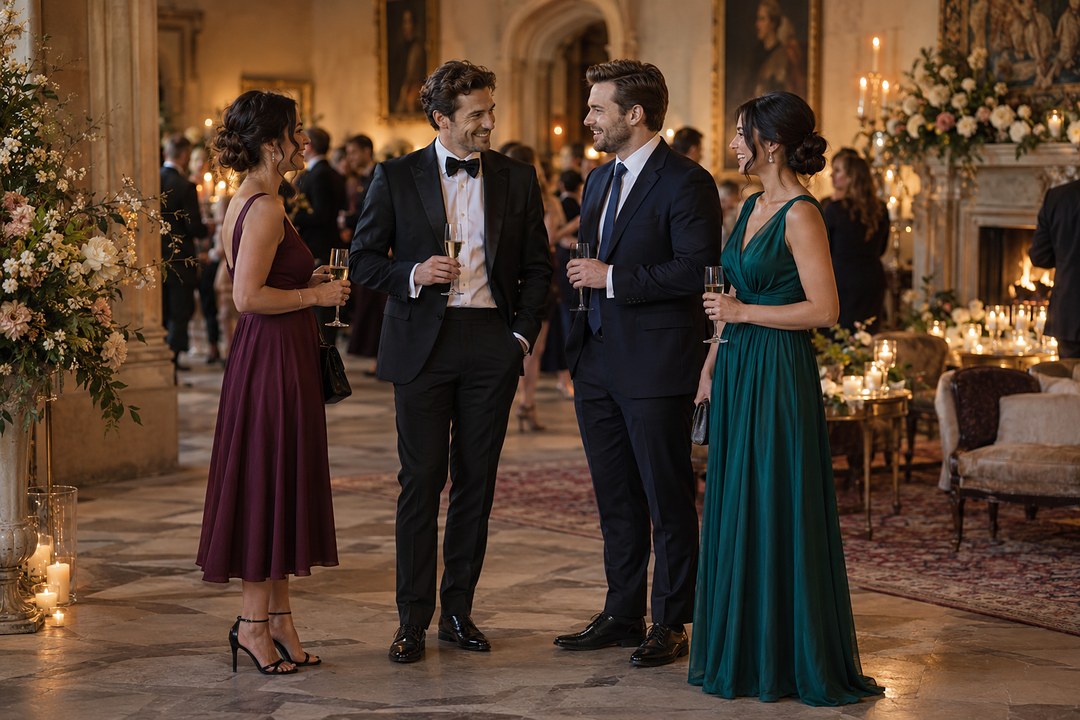
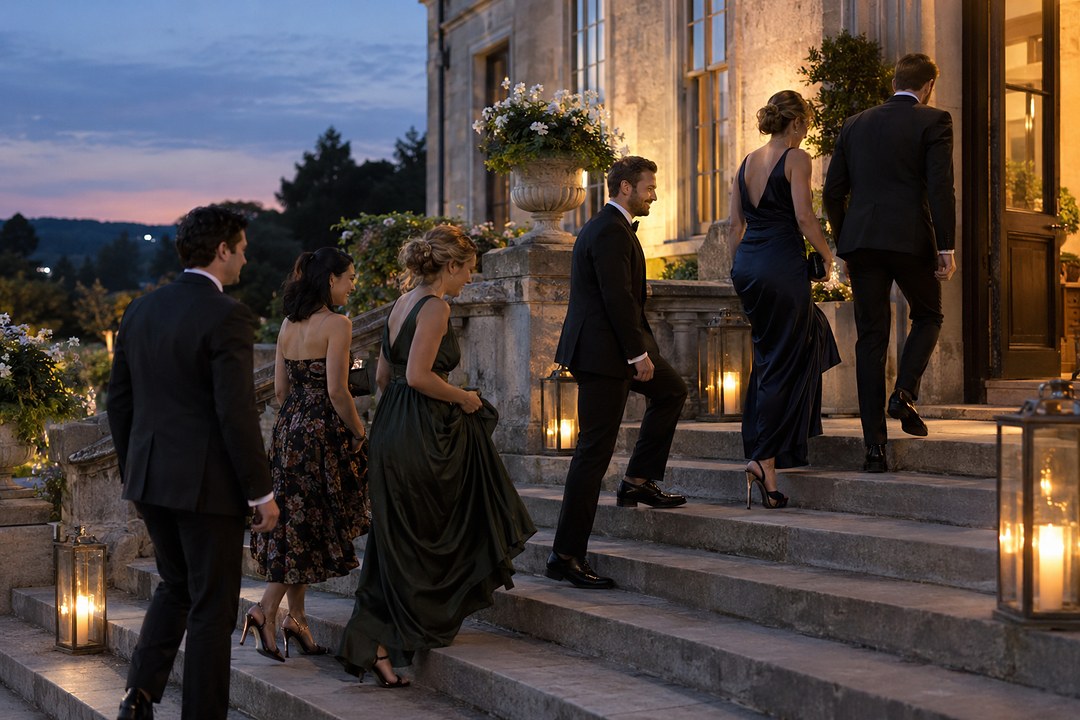
- For black tie optional, guests may choose a tuxedo, but a dark suit and tie is fine.
- Formal attire and black tie optional often overlap, but formal does not ask for a tuxedo at all.
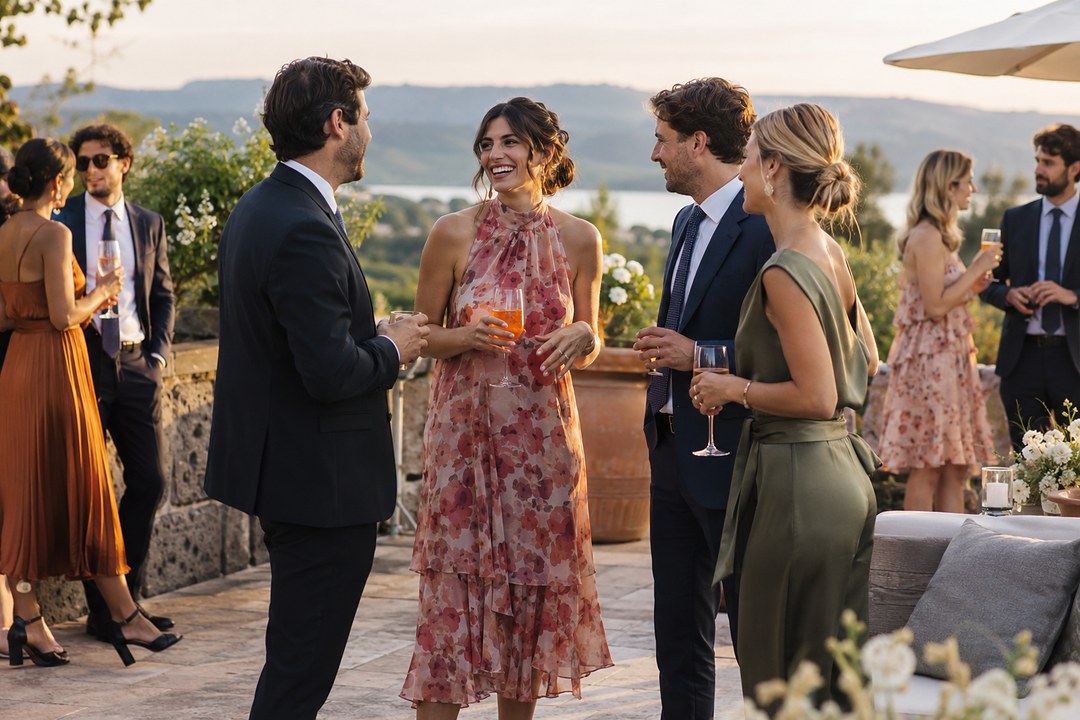
- Cocktail attire calls for a suit and tie for men and a knee-length or midi dress, jumpsuit, or pantsuit for women.
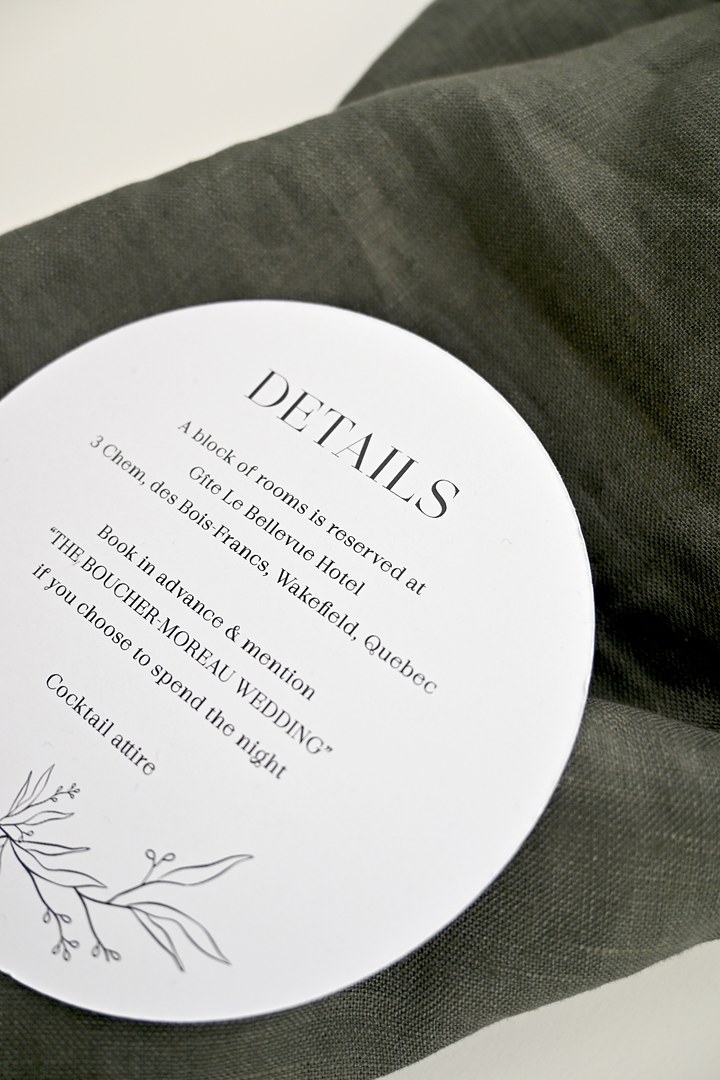
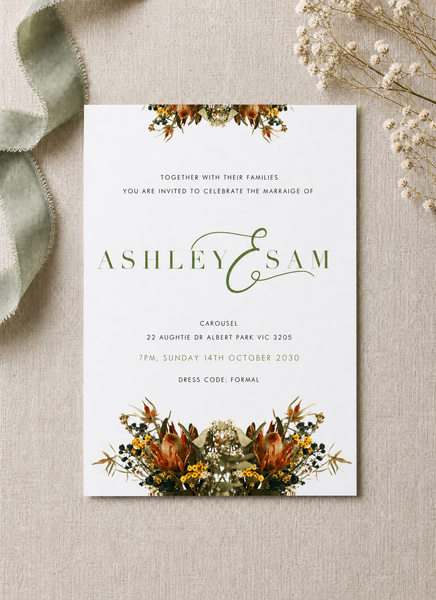
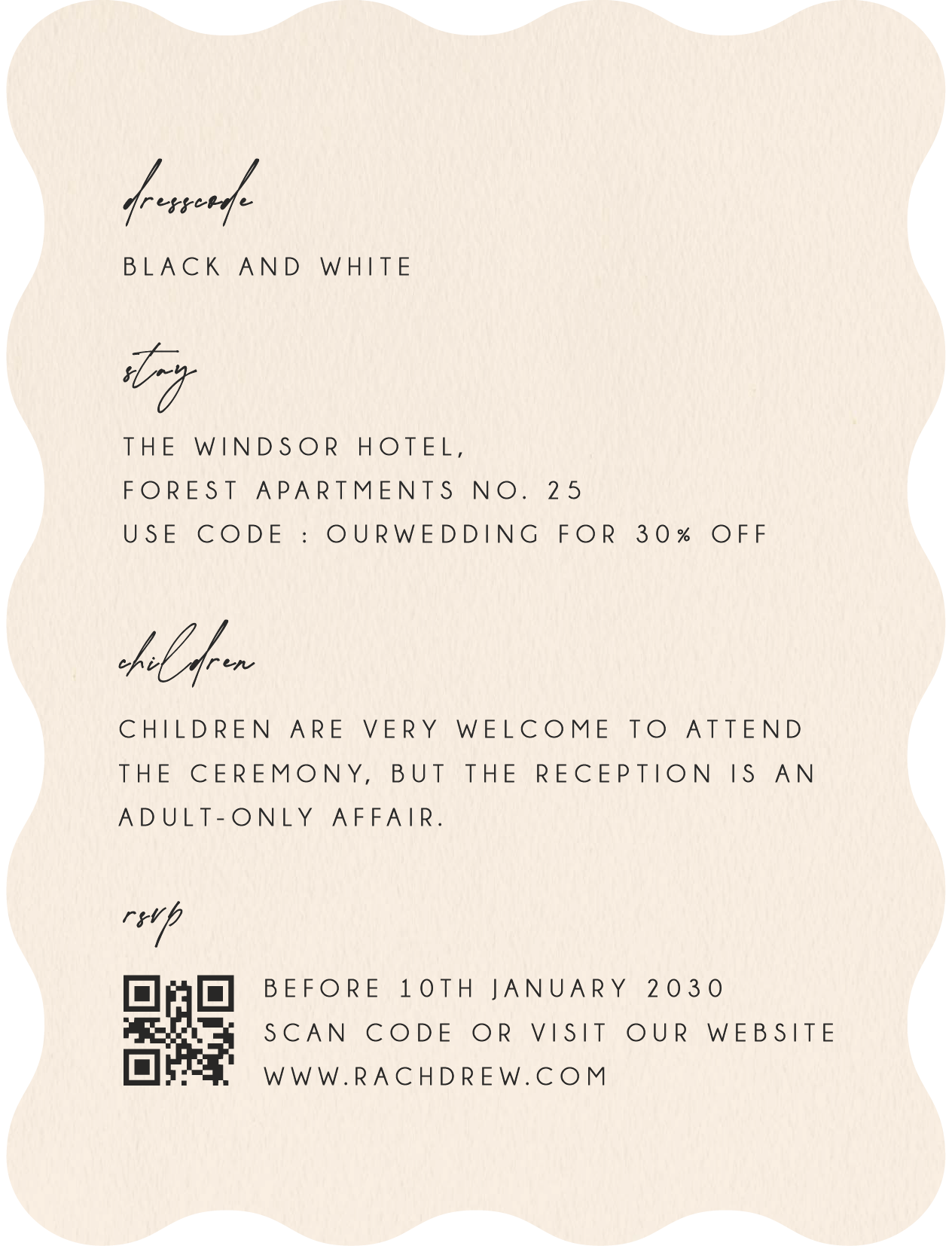
- Print the dress code in the lower right corner of the invitation, on a details card, or on the wedding website.
- Choose one standard label so guests know what to pack instead of guessing between invented names.
- A warm one-line note can cover grass, sand, weather, color, or cultural dress without becoming a list of rules.
It is the last line of the invitation, and you have been staring at it for twenty minutes. You know the wedding will feel elegant, but you also know half the guests are quietly panicking over what black tie optional means. You want them to open the invite and know exactly what to pack.
This guide is written for the host, not the clothing shop. You will get a one-line meaning for every code, a table you can share, wording for the invitation, details card, and wedding website, and polite replies when guests text you.
By the end, you will have chosen a label and have the exact lines ready to print without leaving guests guessing.
Black tie optional, defined for guests
Black tie optional means a tuxedo is welcome but not required, and a dark suit with a tie is completely acceptable for guests. The couple and the wedding party usually dress in black tie, so the evening still looks formal while guests get more room to choose.
Hosts often pick this code when they want a polished ballroom or city wedding without asking every guest to rent or buy a tuxedo. It sits one step below black tie, which by tradition asks men for a tuxedo and black bow tie and women for a floor-length gown. Black tie preferred and black tie invited push a little harder toward a tuxedo, but a dark suit is still allowed under those labels. Many hosts and guides treat black tie optional and formal as the same level; the distinction is mostly mood. Formal simply asks men for a dark suit and tie, while black tie optional tells guests a tuxedo would not be out of place.
- Men: a tuxedo if you own one or want to wear one; otherwise a navy or charcoal suit, light or white dress shirt, and a tie. Polished evening shoes complete the look.
- Women: a floor-length gown, a formal cocktail dress, or a dressy pantsuit. Choose an evening fabric and skip the short daytime sundress.
That balance is why the wording matters. You are not handing guests a rulebook. You are telling them the room will be dressy, and that choosing a suit is not a mistake.
The ten wedding dress codes at a glance
These ten labels cover almost every wedding, from white tie to casual, and each one tells guests what to wear without a phone call. Share the table or read the columns with your own setting in mind.
| Dress code | What men wear | What women wear |
|---|---|---|
| White tie | Black tailcoat, white waistcoat, white bow tie | Floor-length ball gown |
| Black tie | Tuxedo and black bow tie | Floor-length gown, very formal cocktail dress, or dressy jumpsuit |
| Black tie optional | Tuxedo welcome; navy or charcoal suit and tie accepted | Floor-length gown, formal cocktail dress, or dressy pantsuit |
| Formal | Suit and tie expected, no tuxedo required | Long gown, formal midi or tea-length dress, or dressy pantsuit |
| Cocktail | Suit and tie | Knee-length or midi dress, dressy jumpsuit, or pantsuit |
| Semi-formal | Suit, or dress shirt and slacks, tie optional | Cocktail dress, dressy skirt and top, or pantsuit |
| Dressy casual | Dress pants or chinos, button-up shirt, blazer optional, no tie needed | Sundress, skirt and blouse, or jumpsuit |
| Beach or garden formal | Lightweight suit in linen or cotton, lighter colors | Flowing dress in light fabric, tea-length or midi |
| Casual | Khakis or neat pants, button-up or polo | Sundress, or nice pants and top |
| Festive | Cocktail level with color, prints, or sparkle | Cocktail level with color, prints, or sparkle |
Formal attire sits very close to black tie optional, so many guests will wear the same thing for either one. Cocktail and semi-formal also blur, but the clearest difference is the tie: cocktail expects a suit and tie, while semi-formal makes the tie optional and allows a dress shirt with slacks. Semi-formal also shifts color with the time of day, with darker colors for evening and lighter colors for daytime. Dressy casual is the most relaxed of the middle group, and festive is a cocktail baseline with permission to add color, print, or sparkle. Because these neighboring codes overlap, choose one standard term rather than inventing a label that only makes sense to you.
What cocktail attire means for a wedding
Cocktail attire asks men to wear a dark suit with a tie, while women choose a knee-length or midi dress, dressy jumpsuit, or pantsuit. It sits between semi-formal and formal, and the hemline is the main difference from formal: a long gown is not expected, but a dressy shorter dress is completely welcome.
For men, cocktail attire for a wedding is straightforward. A navy or gray suit, a tucked dress shirt, and a tie meet the code. If the celebration is relaxed and the invitation says so, a tie may be optional, but it is usually safer to wear one than to wonder. For women, the code leaves room for a polished midi, a refined jumpsuit, or tailored pants. It is less structured than formal and dressier than semi-formal. Daytime cocktail weddings can lean into lighter colors and breathable fabrics, while evening celebrations often suit darker colors and richer fabrics.
If you are hosting, say the phrase plainly. Cocktail attire is widely understood, so you rarely need a long explanation on paper.

Choosing a dress code guests can follow
Start with the venue and the hour, then decide what you and your wedding party are wearing, and choose the label that matches the more formal of the two. That single rule prevents the most common mismatch: a black tie label on a barefoot lawn reception.
- Venue and setting. A hotel ballroom, museum, or historic house can carry black tie or formal; a garden, barn, or beach usually calls for semi-formal, dressy casual, or beach or garden formal.
- Time of day. Evening weddings lean more formal than daytime weddings. A two o’clock garden ceremony can honestly say dressy casual, while a five o’clock city wedding might be cocktail or formal.
- Style of the event. A candlelit seated dinner and a picnic-style lawn reception send different signals. Let the actual event, not the mood board, decide the label.
- What you and the wedding party wear. If your attendants are in dark suits and long dresses, a casual line will look mismatched. Match the code to the wedding party, not only to the room.
- What guests can reasonably afford or pack. Tuxedos and floor-length gowns ask more of guests. If many would have to rent or buy, black tie optional or formal may be the kinder standard.
Once you pick one, use its standard name. A familiar label lets a guest pick an outfit and stop worrying.
Where to print the dress code
Put the dress code in one of three places: on the invitation, on the details card, or on the wedding website. The shortest version of the dress code on a wedding invitation usually sits in the lower right corner beneath the time and location. Keep it to two or three words, not a full sentence. Browse Paperlust wedding invitations to see how the line can sit without crowding the main wording.
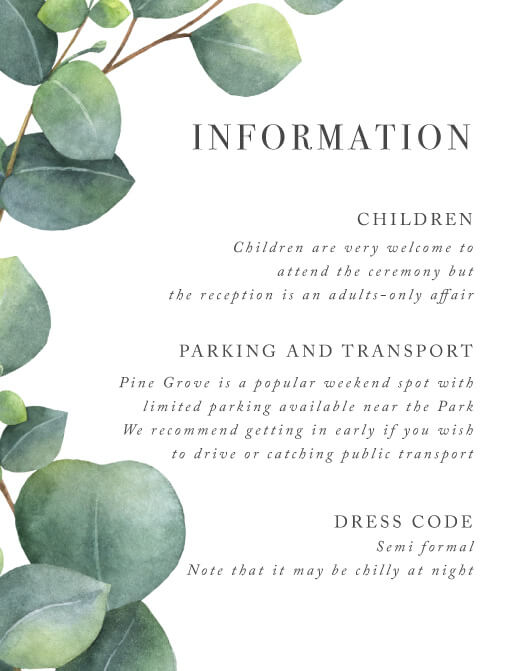
The details card is the most practical home for more explanation. Also called an information card or enclosure card, it holds the code plus one line about terrain, weather, or a color request. That keeps the invitation clean and the instruction clear. On Paperlust, the free digital proof lets you check the lower right line and the details card together before printing starts.
The wedding website carries the longer note that explains the code and answers the obvious follow-ups. Add the code to the FAQ and to the schedule or travel section, using the same label that appears on paper. If the phrasing feels stiff, borrow sentence starters from wedding website wording examples for every section.
Save the date cards earn the dress code only when travel or outfit planning has to start months out, as with a destination wedding; otherwise leave that detail for the invitation and the details card so no one feels rushed. On the printed line, follow three style rules: keep it brief, match the capitalization style of the rest of the card, and skip the final period.
The wording bank
The same dress code wording can work at three depths: a short invitation line, one practical sentence on the details card, and a two-sentence warm note on the wedding website. Keep all three consistent in label and tone, and choose only the pieces you actually need.
White tie
Choose white tie only for the most formal evening affair, usually a late dinner in a grand room where tailcoats and ball gowns will not feel like a costume.
Black tie
Pick black tie for a formal evening wedding where the room, hour, and seating all match the most polished standard, and use our guide to black tie wedding invitations for the full wording and design.
Black tie optional
Choose this when you want a formal look but want guests to have a suit option, especially if many would need to rent a tuxedo.
Formal
Formal is a safe elegant level for an evening wedding that does not require tuxedos; our formal wedding invitation wording examples show how to keep the rest of the card in step.
Cocktail
Use cocktail attire for the in-between evening wedding that feels more polished than a garden party but less ceremonial than a ballroom.
Semi-formal
Pick semi-formal for the day or early evening that feels polished but not overly dressed, especially when any formal label would make guests overpack.
Dressy casual
Use dressy casual for a comfortable party where neat clothes still matter, such as a lakeside dinner, a winery lawn, or a city rooftop.
Beach or garden formal
Choose this for an outdoor setting where a standard suit might fight the ground, and where light fabric and practical shoes should be named.
Casual
Casual fits a backyard or picnic wedding where comfort matters, and our casual wedding invitation wording examples carry the same relaxed tone through the rest of the invitation.
Festive
Festive is cocktail with permission to play, great for a holiday-adjacent or colorful celebration where guests can lean into prints and shine.
Browse invitation designs with room for the dress code →

Fifth AvenueDigital printing
A Native CircleDigital printing

Garden windowDigital printing

Moira Hughes CoutureColour Stock + Foil
Adding venue, weather, color, and culture notes
Start with the code label, then add at most one practical note, never a list of demands. If the note is essential, it belongs on the details card or the wedding website, not under the invitation line. Paperlust wedding information cards give that note a dedicated place without crowding the invitation.
A ceremony on grass can swallow a stiletto or make a narrow heel wobble, so one shoe note saves guests from a slow or awkward walk.
On sand, even the best formal shoe becomes a fight, so a light note lets guests relax and leave the heels at home.
Guests cannot see the temperature drop after sundown, so tell them the one layer that will keep the evening pleasant.
A color note works when the palette is part of the decor or the couple has a single color they hope to keep for themselves, and it saves guests from guessing.
When some guests will wear cultural or traditional pieces, a warm line invites them to take part instead of wondering whether it fits the stated code.
A place of worship may carry customs unfamiliar to some visitors, and a simple heads-up saves them from feeling exposed.
A note like these works because it feels like a helpful hint, not a dress-code contract.


What to reply when guests ask
Give one consistent answer in a kind tone, and keep the identical text on the wedding website so both partners and the wedding party repeat the same thing. The couple usually fields these questions, but a parent or attendant can handle them if they have the same line in front of them. The goal is to answer without introducing a new dress code.
A guest asking whether a dark suit is fine for black tie optional should hear the same yes from everyone.
A guest asking about dress length for cocktail attire needs one clear option, not a style lecture.
A guest staring at an empty formal wardrobe needs to hear that their presence matters more than a purchase.
If someone arrives outside the code, welcome them exactly as you would any other guest. Do not mention it, do not hand them a jacket, and do not let it take up space in your memory of the day.
American, Australian, and British terms
Most labels match across countries, but three differ: lounge suit, smart casual, and dinner suit or dinner jacket. If your guest list crosses Australia, Britain, and the US, add one plain line of explanation on the website for each term that could confuse.
| Term used in Australia and Britain | Closest American term | What guests wear |
|---|---|---|
| Lounge suit | Cocktail or formal attire | Dark or gray business suit and tie; smart dress or suit for women, no tuxedo |
| Smart casual | Dressy casual | Relaxed polished separates; no tie or jacket expected |
| Dinner suit or dinner jacket | Tuxedo | Evening formalwear with a bow tie |
Lounge suit causes the most confusion because it sounds like loungewear to an American guest but actually means a dark or gray business suit and tie. A website line such as ‘Lounge suit means a dark suit and tie, not a tuxedo’ solves it in seconds.
Dress code wording mistakes to avoid
The most common mistake is printing a label nobody can decode, like “upscale garden chic.” Guests then text five people instead of simply choosing an outfit.
- Invented or contradictory labels. Use a standard term. If you want personality, add it to the website note, not the invitation line.
- A code that fights the venue or the hour. Black tie on a midday lawn looks like a costume request; match the label to the setting and time.
- A paragraph of instructions on the invitation itself. Keep the printed line short. Park the explanation on the details card or website.
- Different wording on the card and the website. Black tie optional on paper and formal online will make guests wonder which one is current.
- Color rules presented as orders. Say “we would love” rather than “all guests must.” A request is kind; a rule reads like a notice.
- Announcing the code after guests have shopped. Send it with the invitation or on the website before RSVPs, so no one has to re-buy an outfit.
If a label would make your own family ask for a translation, replace it with one guests already know.
Frequently asked questions
What does black tie optional mean for women?
It means a floor-length gown is great, but a refined cocktail dress or tailored pantsuit is also welcome. Choose evening fabrics such as silk, chiffon, or crepe, and skip anything that reads as a daytime sundress. For a cocktail dress, midi to tea length works well; for a pantsuit, keep the cut sharp and evening-polished.
What does black tie optional mean for men?
A tuxedo is welcome but not required. If you skip the tuxedo, wear a navy or charcoal suit with a long tie, and save the black bow tie for a tuxedo. Dark leather shoes finish the outfit, and a pressed shirt matters more than a flashy pattern. A dark suit and tie meets the code.
Are black tie optional and formal the same?
They are close but not identical. Black tie optional names a tuxedo as a possibility and often signals that the couple and wedding party are wearing black tie. Formal requests a dark suit and tie without mentioning tuxedos. Black tie preferred and black tie invited nudge a little harder toward black tie, but a dark suit remains acceptable.
Does black tie mean a floor-length dress?
A floor-length gown is the traditional choice, but many hosts also accept a very formal cocktail dress, a dressy jumpsuit, or tailored evening separates. If you are unsure, choose a floor-length dress in a solid evening fabric; it matches the classic black tie template, so nobody will wonder whether you hit the mark.
What does cocktail attire mean for a man?
For men, cocktail attire means a suit and tie. Choose a navy or gray suit with a pressed shirt and leather shoes, and keep the jacket on through dinner. A tie is expected unless the invitation or website says it is optional. If you take the jacket off later, wait until the reception has relaxed and other men have done the same.
Should a dress code be printed on the invitation at all?
It is helpful, not mandatory. When nothing is printed, guests infer from the setting and hour: an evening hotel ballroom reads formal, a daytime garden reads semi-formal or dressy casual, and a backyard afternoon reads casual. The venue and hour are better clues than the invitation alone. Printing one prevents mismatched guesses and last-minute texts, especially for a destination weekend.
Is it rude to ask guests to wear or avoid a color?
No, when worded as a request with a clear palette or reason. Write ‘We would love our guests to join us in soft blues’ or ‘Please leave white to the couple.’ Put the line on the details card or website, not in the invitation corner. The moment it becomes a list of rules, it starts to feel like a notice rather than an invitation.
I’m not sure whether to dress up or down for a wedding. What should I do?
When you are stuck between two levels, choose the dressier option. If torn between cocktail and formal, pick formal, because a slightly more polished outfit reads as effort, while underdressing is the only choice that is hard to fix on the spot. If still unsure, ask one of the couple or a member of the wedding party once rather than polling the whole group. They can settle it in one reply.