
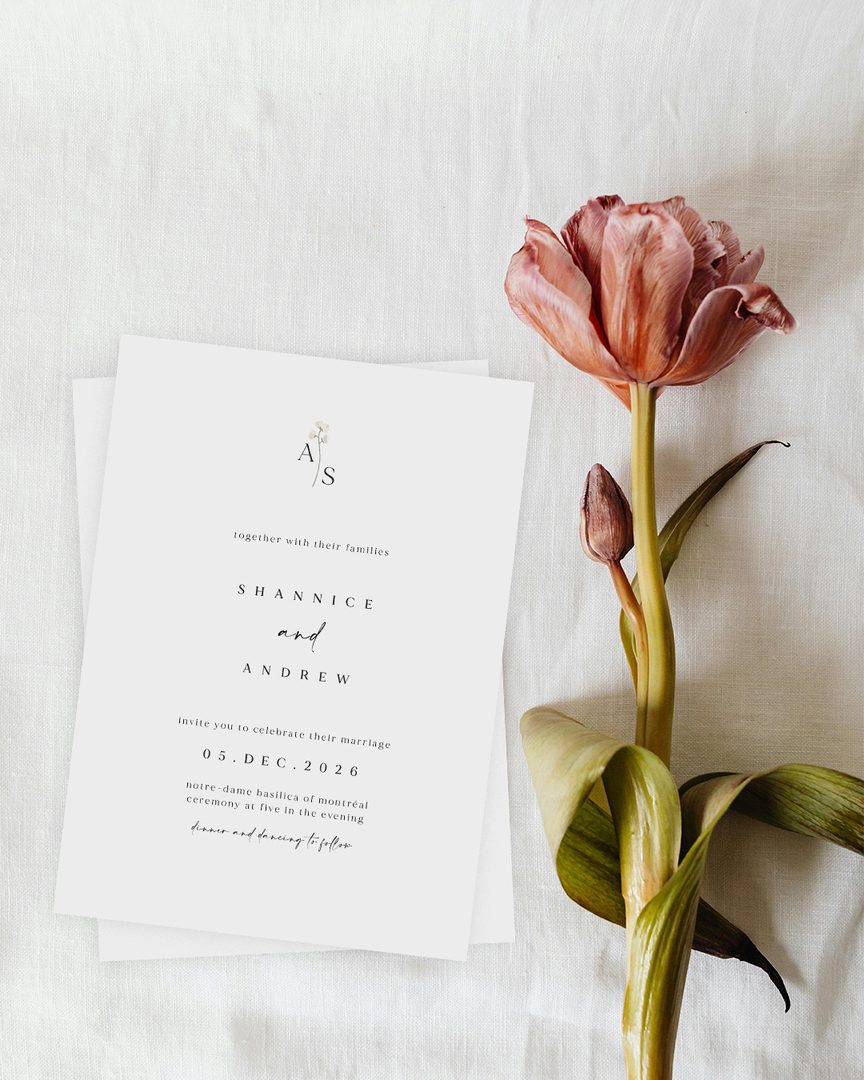
Choosing the right paper for your wedding invitations is not just an aesthetic decision. The stock you print on determines how well each print method performs, how the finished card feels in your guests’ hands, and whether the design delivers the elevated impression you are aiming for. This guide walks through every option, from GSM and weight conversions to cotton, matte, linen, and kraft stocks, and shows you exactly which paper suits each print method.
Whether you are ordering professionally printed invitations, uploading a print-ready file through a print-your-own-design service, or trying to understand why home-printer cardstock looks and feels different from real invitation stock, this is the resource to keep open.
Quick reference: what to know before you choose a paper
- Professional wedding invitations are typically printed on 300-380gsm stock (roughly 110-140 lb cover). Most home printers cap out around 216-270gsm.
- Cotton paper (Wild Cotton 300gsm or 600gsm) is the only stock used for letterpress at Paperlust. No other stock holds a proper deboss impression.
- Flat foil and foil stamp are different products with different paper requirements. Know which one your design calls for before choosing a stock.
- White ink requires a dark or colored base stock. It does not work on blush paper.
- The tactile gap between office-store cardstock and real invitation stock is significant. Weight, surface coating, ink adhesion, and color depth all differ.
- Paperlust’s Print Your Own Design service lets you upload a design file and have it printed on real invitation stock using a professional press.
- Free DHL express international shipping on orders over $350 USD.
Why Paper Choice Matters More Than Most Couples Expect
A wedding invitation is the first physical object your guests receive from you, and it sets the tone for everything that follows. The paper it is printed on carries more of that first impression than most people realize.
Weight is the most immediate factor. A 300gsm card feels dense and deliberate in the hand. A 130gsm card, the kind available in the cardstock section of a big-box office store, flexes when you hold it. That flex reads as informal before the guest has even read a word. The difference is not subtle.
Texture is the second factor. Smooth matte paper gives a clean, crisp base for digital print. Linen adds a fine woven texture that photographs beautifully and feels warm to the touch. Cotton has a soft, fibrous quality that is unlike anything made from wood pulp, and it is the only surface that holds a true letterpress impression. Kraft has an earthy, unbleached character that works well for rustic and outdoor wedding aesthetics.
The third factor is print method compatibility. Not every paper accepts every print method. Cotton is required for letterpress and foil stamp. Premium heavyweight stocks are needed for flat foil. Dark colour stocks are required for white ink. Pairing the wrong paper with your chosen print method produces outcomes ranging from poor ink adhesion to a completely failed impression.
Understanding Paper Weight: GSM and lb Cover
Paper weight is measured in two systems. GSM (grams per square meter) is the international professional standard used by printers worldwide. Lb cover is the US equivalent. They do not convert on a straight ratio because each system measures a different standard sheet size. The approximate equivalents below are what you will see across the wedding stationery industry.
| GSM | Approx. lb Cover | Common Use |
|---|---|---|
| 180gsm | 65 lb cover | Vellum overlays, translucent inserts |
| 216gsm | 80 lb cover | Standard home-printer cardstock ceiling |
| 270gsm | 100 lb cover | Enclosure cards, RSVP cards |
| 290gsm | 105 lb cover | Kraft stock (digital, white ink) |
| 300gsm | 110 lb cover | Standard professional invitation stock |
| 350gsm | 120 lb cover | Heavyweight flat foil stock |
| 380gsm | 140 lb cover | Premium stock (flat foil, metallic) |
| 500gsm | 185 lb cover | Colour Stock + Foil (heavyweight) |
| 600gsm | 220+ lb cover | Wild Cotton Double Thick (letterpress premium) |
The most important number to carry: most home printers are rated to 216gsm (80 lb cover), some reaching 270gsm. Professional invitation stock starts at 300gsm. That 30-90gsm gap is where nearly all the perceptible quality difference lives.
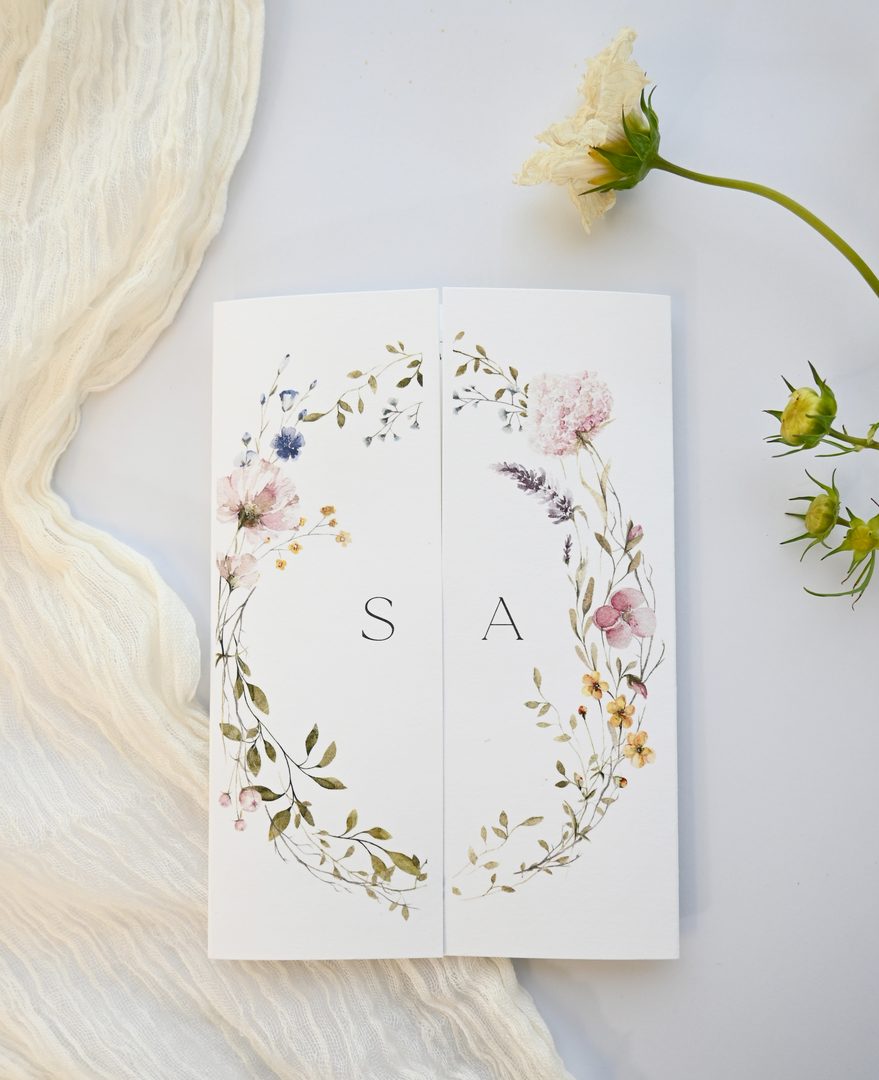

Wedding Invitation Paper Stocks Compared
The table below covers the full range of Paperlust wedding invitation stocks, with weight, texture, and print method compatibility for each.
| Stock | Weight | Texture | Best Print Method(s) |
|---|---|---|---|
| Wild Cotton | 300gsm | Soft, fibrous, matte; takes deboss cleanly | Letterpress, Foil Stamp |
| Wild Cotton Double Thick | 600gsm | Ultra-thick; maximum deboss depth | Letterpress (premium) |
| Matte | 300gsm | Smooth, clean surface; crisp color | Digital, Metallic |
| Linen | 300gsm | Fine woven texture; warm and tactile | Digital, Metallic |
| Premium | 380gsm | Smooth heavyweight; ideal foil adhesion | Flat Foil, Metallic |
| Heavyweight | 350gsm | Smooth, thick; min. 30 units for flat foil | Flat Foil |
| Kraft | 290gsm | Earthy, unbleached; natural brown tone | Digital, White Ink |
| Blush | Standard weight | Soft pale pink; smooth | Digital only |
| Vellum | 180gsm | Translucent, smooth; overlay or standalone | White Ink |
| Colour Stock | 270-300gsm | Vibrant solid-color card; smooth surface | White Ink |
| Colour Stock + Foil | 270gsm / 500gsm | Colored card with foil finish | Flat Foil (Colour + Foil method) |
| Seed Paper (Plantable) | Varies | Embedded wildflower seeds; textured, organic | Digital |
Key points this table highlights:
- Letterpress uses Wild Cotton exclusively. No other stock available for this method.
- Blush paper is digital only. White ink is not available on blush.
- Foil Stamp (which uses a custom die and creates a deboss) and Flat Foil (no die, no deboss) have different stock lists. They are not interchangeable methods.
Matching Paper to Print Method
Digital Print
Digital is the most flexible print method in terms of paper compatibility. It runs on Matte (300gsm), Linen (300gsm), Premium (380gsm), Kraft (290gsm), Blush, Cotton, and Seed Paper. It suits full-color photography, watercolor illustrations, and any design that requires a wide color range or smooth gradient.
For couples uploading a print-ready file through Print Your Own Design, digital is the most accessible entry point and works across a broad range of stock choices.
Letterpress
Letterpress is the most demanding when it comes to paper. The process works by pressing a plate into the paper to create a deboss, then applying ink. That impression only forms cleanly on 100% cotton stock. The natural fiber in cotton compresses under the press plate and recovers partially, producing the soft tactile indentation that defines the letterpress aesthetic.
At Paperlust, letterpress runs on Wild Cotton 300gsm and Wild Cotton Double Thick 600gsm. The 300gsm produces a clear, noticeable impression. The 600gsm produces a deep, dramatic deboss that is the industry’s premium standard for formal invitations. If you are considering letterpress, ordering a $5 sample pack before committing to your full print run is worthwhile. (Note: the $15 custom sample option is not available for letterpress orders.)
Letterpress wedding invitations →
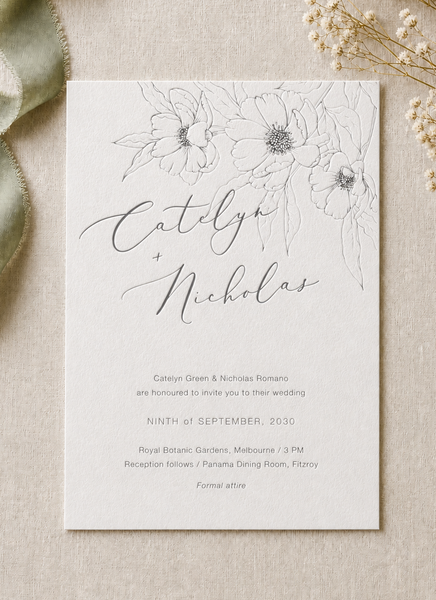
Graphite BloomsLetterpress

Sweet and SaltyLetterpress
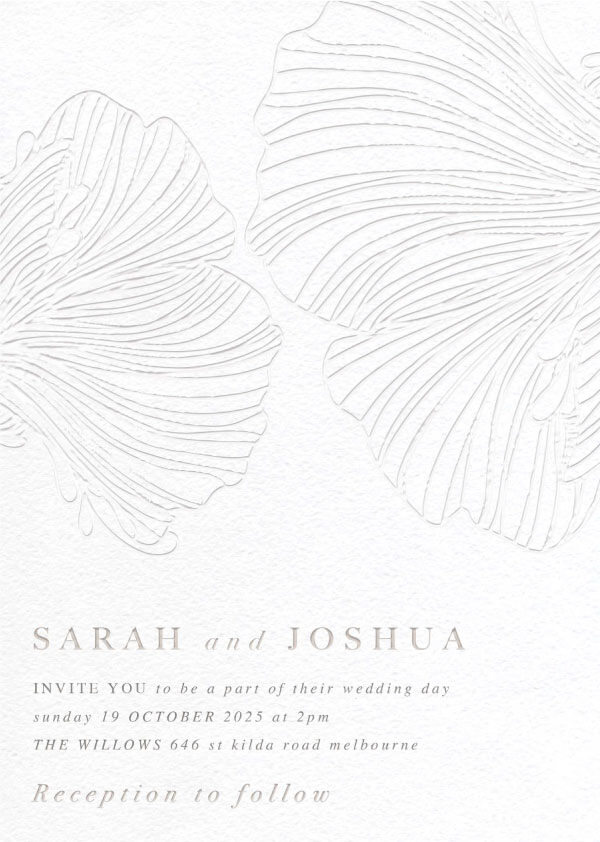
Botanic PressLetterpress

Tropical OasisLetterpress
Foil Stamping: Flat Foil vs Foil Stamp
These are two different products with different paper requirements.
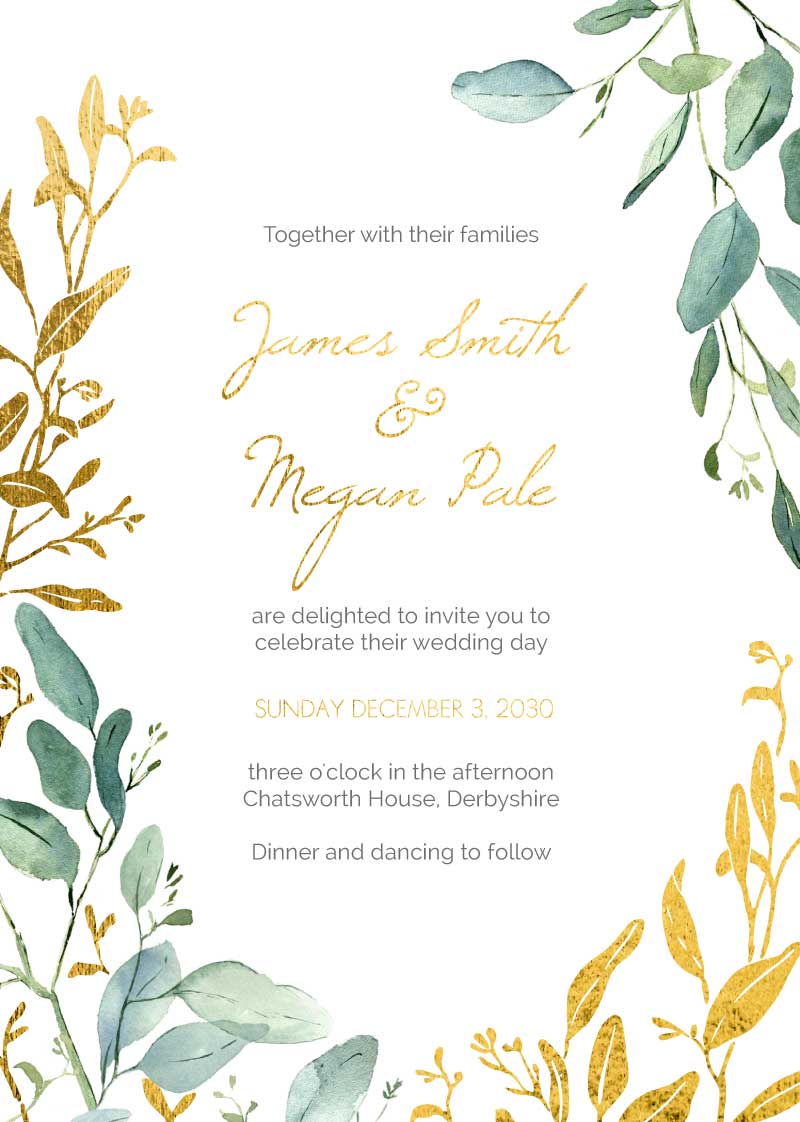
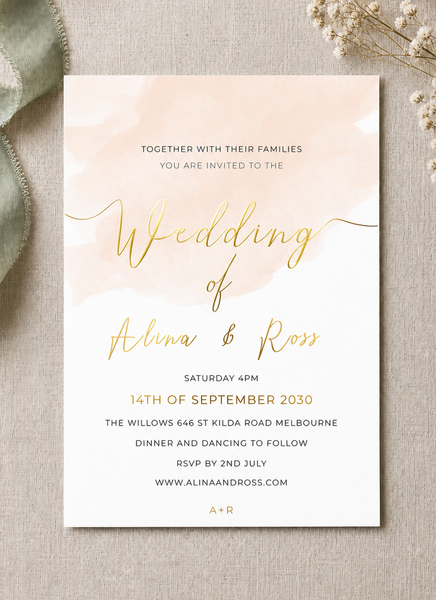
Flat foil uses no custom die and leaves no deboss. It runs on Matte stock, Premium 380gsm, Heavyweight 350gsm, and Colour Stock + Foil (270gsm and 500gsm). Minimum order is 10 for most stocks, 30 for the Heavyweight 350gsm. Flat foil produces a mirror-bright metallic accent that reads as luxurious without the production lead time and cost of a custom die.
Foil stamp requires a custom die, which presses into the paper and leaves a deboss impression alongside the metallic finish. It runs on specialty textured and Wild Cotton stocks. Minimum order is 50. The combination of a metallic surface with a pressed impression is the most tactile and formal finish available for wedding invitations.
Available foil colors for both methods include gold, pale gold, rose gold, silver, copper, red, green, blue, hot pink, celestial blue, and holographic.


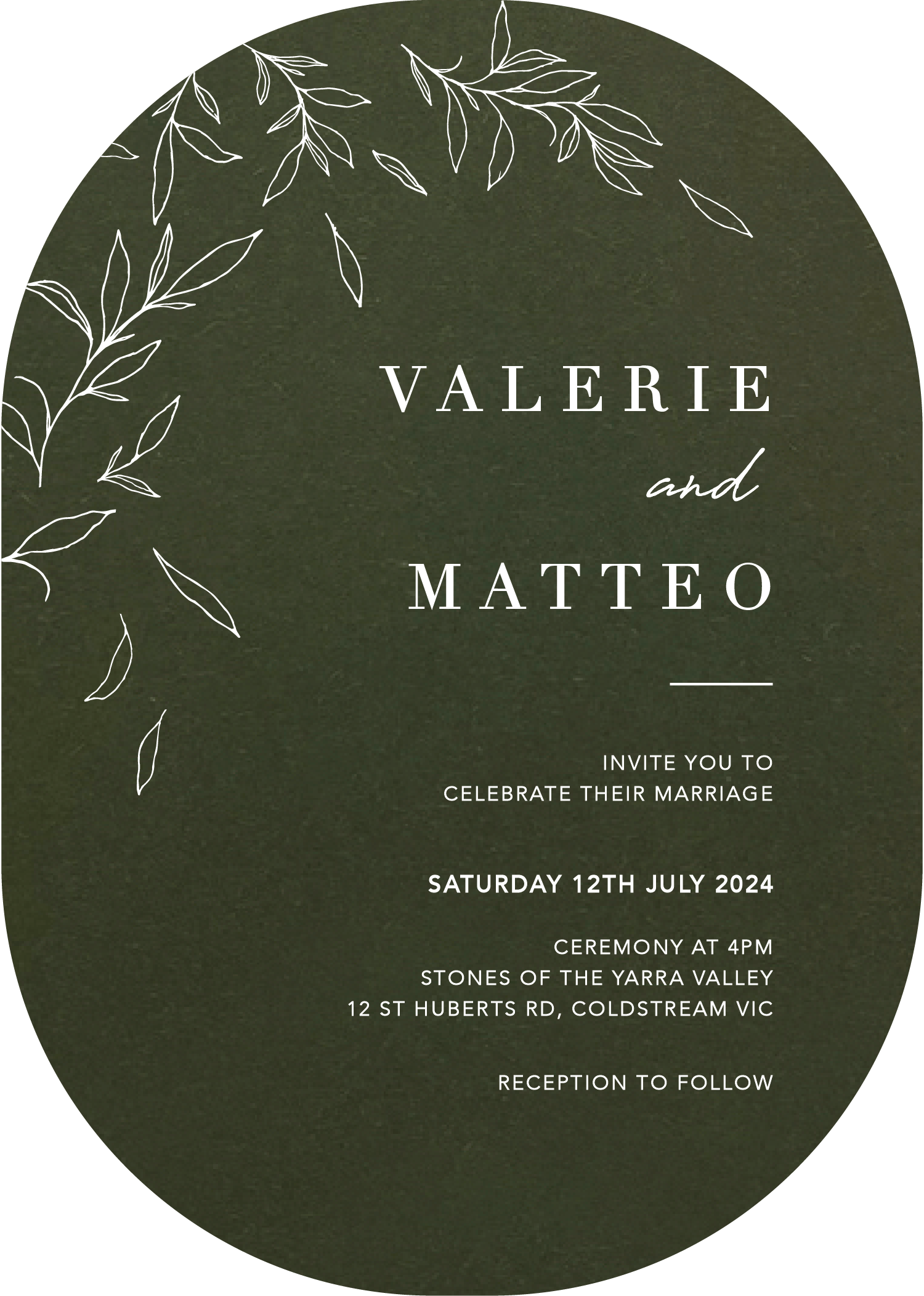
White Ink
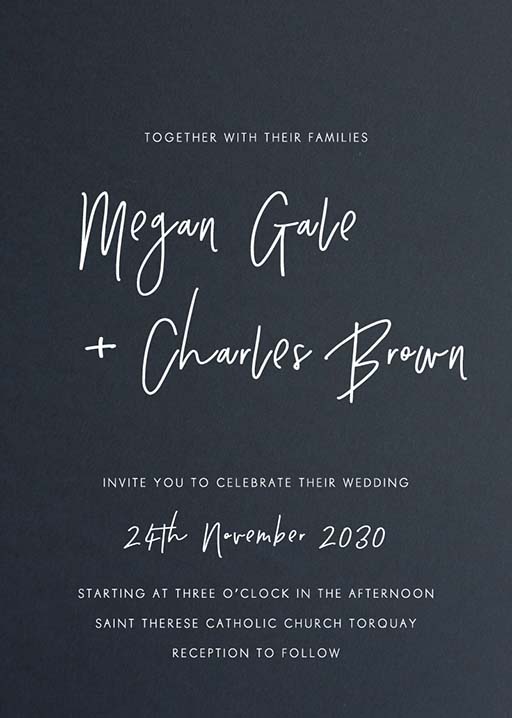
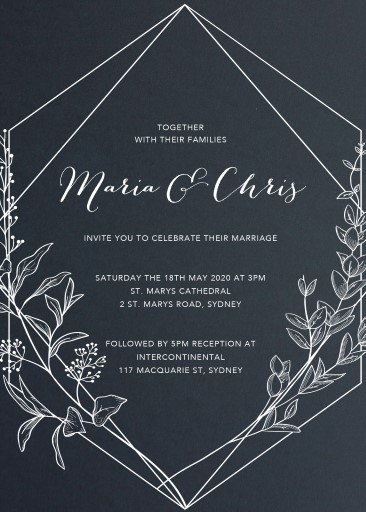
White ink is printed as a fifth color alongside CMYK and can also underlay CMYK for layered effects. It works on dark and colored stocks: Kraft 290gsm, Vellum 180gsm, and Colour Stock 270-300gsm in cobalt, aqua, black, navy, green, violet, burgundy, and gray.
White ink is not available on blush paper. If your design calls for white text or white design elements on a dark or colored background, verify your chosen stock is on this list before finalizing your order.

Metallic Print
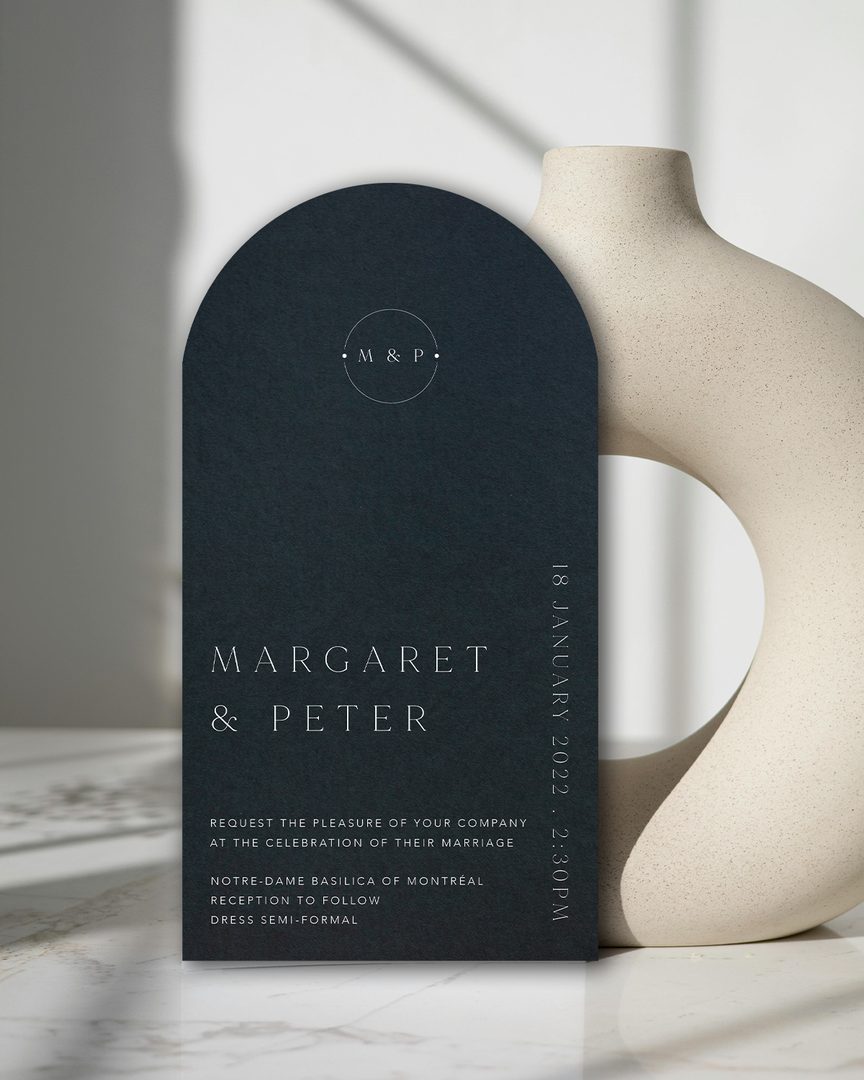
Metallic print uses a gold or silver pigment at a fifth imaging station (dry toner process). The result is a subtle, sophisticated shine, less mirror-bright than foil but more distinctive than flat digital. Available on Matte 300gsm, Linen 300gsm, and Premium 380gsm.
This method is a good fit when a design includes detailed linework or fine typography that would lose definition if printed through a foil die-cutting process.
Why Home-Printer Cardstock Feels Different
If you have printed a design on 110 lb cardstock from an office supply store and held it next to a professionally printed wedding invitation, you know the quality gap exists. The reasons behind it are specific.
Weight and rigidity. Most consumer inkjet and laser printers are rated for stock up to 216gsm (80 lb cover). Some handle 270gsm. Professional invitation stock starts at 300gsm. That gap translates directly to hand feel: a 300gsm card is noticeably more rigid and substantial than the heaviest stock most home printers can process without jamming or feeding unevenly.
Ink adhesion and color depth. Home printer inks, typically dye-based inkjet or standard laser toner, are designed for office paper and basic cardstock. Professional digital presses use pigment inks or toner systems calibrated for heavier, coated invitation stocks. The result is richer color, sharper edge definition, and better long-term stability against fading or smearing when the invitation is handled repeatedly.
Surface coating. Invitation-grade matte stock is finished differently from office cardstock. The surface coating controls how ink sits on the card, how colors reproduce, and how the stock feels when handled. Linen stock requires specific press calibration to print without showing surface artifacts. Cotton stock cannot be fed through a standard home printer at all.
Consistency across a run. Home printers are calibrated for small jobs. Color drift between sheet 1 and sheet 50 is common. Professional presses are color-managed across hundreds or thousands of sheets, producing consistent results across a full print run.
This does not mean home printing is the wrong choice. For certain budgets, timelines, or informal wedding styles, printing at home on a well-chosen cardstock is entirely reasonable. The key is matching your expectations to what the process can deliver, and selecting a stock your specific printer can handle reliably. Most home printers do their best work in the 80-100 lb cover (216-270gsm) range on smooth cardstock.
The Smarter Path: Print Your Own Design on Real Invitation Stock
Paperlust’s Print Your Own Design service is built for couples who want a custom or independently designed invitation printed on real wedding-grade stock using professional presses, without going through a full custom design brief.
You upload your print-ready design file, select your stock and print method, and the Paperlust studio in Melbourne prints it on the same presses and stocks used across the full wedding invitation collection. Access to Wild Cotton 300gsm and 600gsm for letterpress, Matte and Linen for digital, Premium 380gsm for flat foil, Colour Stock for white ink, and all other stocks listed in this guide.
You receive a designer proof within 1-2 business days. Unlimited ordinary proof edits are included at no extra charge, and the full run ships via DHL Express once approved. International orders over $350 USD ship free.
This is the middle ground between fully DIY (home printing on office cardstock) and fully bespoke custom design. You control the artwork. Paperlust handles the stock selection expertise and the professional print output.
For related guidance on file setup and format requirements, see the sibling spoke on preparing a print-ready file for your wedding invitations. For a full view of design and printing costs, the wedding invitation printing costs guide in this cluster covers per-unit pricing by print method.
Paper for RSVP Cards and Enclosure Cards
A complete invitation suite typically includes insert pieces alongside the main card: an RSVP card, a details or directions card, and sometimes an accommodations or wedding website card. These do not need to match the main invitation stock weight exactly, though they should complement it in texture and tone.
A common approach is to print the main invitation on 300-380gsm and the enclosures on a slightly lighter stock, around 270gsm, to manage the total suite weight for postage. If the main card is letterpress on Wild Cotton Double Thick 600gsm, a 300gsm matte or linen enclosure card balances the feel of the suite without adding significant postage weight.
Matching textures across pieces tends to read as more intentional than matching weights exactly. A linen main card alongside a linen enclosure and a linen-textured envelope gives the suite a cohesive material story. Mixing cotton and kraft in the same suite requires careful design coordination but can work well for organic or outdoor wedding themes.
Frequently Asked Questions
What GSM paper is best for wedding invitations?
The professional standard is 300gsm to 380gsm (roughly 110-140 lb cover). At 300gsm, a card feels rigid and substantial, which is the baseline for premium invitations. For letterpress, the premium option is Wild Cotton Double Thick at 600gsm, which allows for a deep, dramatic deboss impression.
Can I use regular cardstock from an office supply store for wedding invitations?
You can, but there is a noticeable quality gap. Office-store cardstock typically runs 65-110 lb cover (roughly 175-300gsm), and most home printers are only reliable up to 80-100 lb cover (216-270gsm). Professional invitation stock starts at 300gsm and uses surface coatings and manufacturing processes that produce better color depth, sharper print edges, and a substantially more luxurious hand feel.
What is the difference between 300gsm and 600gsm Wild Cotton for letterpress?
Both are 100% cotton stocks and both are used for letterpress and foil stamp. The 300gsm produces a noticeable letterpress impression and feels substantial. The 600gsm (Wild Cotton Double Thick) is roughly twice as thick and allows for a much deeper, more dramatic deboss. The 600gsm is the premium option for formal or luxury invitations where the tactile depth of the letterpress impression is central to the design.
What paper stock is required for letterpress wedding invitations?
Letterpress at Paperlust uses Wild Cotton exclusively, either 300gsm or 600gsm. The cotton fiber in this stock is what allows the press plate to compress the surface cleanly and create the characteristic deboss impression. Smooth matte, linen, and premium wood-pulp stocks do not hold a letterpress impression the same way.
Can I print cotton paper on a home printer?
No. Wild Cotton at 300gsm and 600gsm exceeds the weight capacity of standard home inkjet and laser printers. Cotton stock also requires the ink systems used by professional presses for proper color adhesion. For letterpress or foil stamp on cotton stock, a professional press is required.
What paper weight should RSVP cards and enclosure cards be?
Most suites use 270-300gsm (roughly 100-110 lb cover) for RSVP and enclosure cards. Lighter than the main invitation, but still substantial enough to feel consistent with it. Using a slightly lighter stock for inserts also helps manage total postage weight when the suite includes multiple cards.
Is matte or linen paper better for digital print wedding invitations?
Both are strong choices. Matte 300gsm gives the cleanest, sharpest result and is best for designs with fine typography, photography, or watercolor illustrations. Linen 300gsm adds a fine woven texture that gives the invitation a warmer, more handcrafted character even with digital print. The right choice depends on the aesthetic of the design.
What is the difference between flat foil and foil stamp in terms of paper requirements?
Flat foil uses no custom die and runs on Matte stock, Premium 380gsm, Heavyweight 350gsm, and Colour Stock + Foil (270gsm or 500gsm). Foil stamp uses a custom die that presses into the paper, leaving both a metallic finish and a deboss impression. Foil stamp runs on specialty textured and Wild Cotton stocks. They are different methods with different paper lists and different minimum order quantities (flat foil starts at 10 units, foil stamp at 50).
Does white ink work on all colored paper stocks?
No. White ink at Paperlust works on Kraft 290gsm, Vellum 180gsm, and Colour Stock 270-300gsm in specific color options including cobalt, aqua, black, navy, green, violet, burgundy, and gray. It is not available on blush paper. Confirm your chosen stock is on the compatible list before finalizing your order.
What is vellum paper and how is it used for wedding invitations?
Vellum is a translucent, smooth stock at 180gsm. It is typically used as a layered overlay on top of a heavier base card, or as a standalone insert. White ink on vellum creates a refined semi-opaque effect. Vellum is also available as part of the Colour Stock + Foil range for invitation suites that call for an especially detailed finish.
What is seed paper and can it be used for wedding invitations?
Seed paper is a plantable stock embedded with wildflower seeds. Paperlust offers it as a digital print option. It has a naturally textured, organic surface and is popular with couples planning outdoor, garden, or eco-conscious weddings. After the event, guests can plant the invitation and it grows into wildflowers.
How do I get my own design printed on real invitation stock without hiring a designer?
Use the Paperlust Print Your Own Design service. Upload a print-ready file, select your stock and print method, and the Melbourne studio handles the professional printing. A proof is delivered within 1-2 business days and unlimited ordinary proof edits are included at no extra charge. This is the direct path to real invitation-grade stock and professional print methods using your own artwork.
Love your design? Let us print it.
Upload your artwork and our print team quotes you within 24 hours, letterpress, foil, or digital, on luxe paper with premium envelopes included free.