

Browsing from outside the US?
The words on a save the date envelope carry more weight than most couples realize. Addressing a card to “Sarah Mitchell and Guest” tells Sarah she can bring a companion. Addressing it to “Sarah Mitchell” alone sends the opposite message, and changing that signal later, when the formal invitation arrives, causes real awkwardness. Getting your plus-one decisions right before save the dates go out protects your relationships and your budget in equal measure. This guide covers every scenario you will encounter.
- Known partner: Address by both names. “Sarah Lin and David Kim.” Never use “and Guest” when you know the name.
- “And Guest”: Use only when the plus-one is confirmed but you do not know their name.
- No plus-one: Address to the individual only. “Ms. Priya Mehta.” The omission communicates the policy clearly.
- Undecided: Default to the individual name only and revisit at invitation stage.
- Committed couples: Always address both partners. Omitting one is considered rude regardless of guest list size.
- Same-household guests: List all invited adults on one envelope, not one per household.
- Children: Only list them if they are invited. Children not named on the envelope are not invited.
Should You Include “And Guest” on Save the Dates?
The short answer is: only if the plus-one spot is already confirmed and locked in your guest list.
A save the date is a commitment. Once someone receives one addressed to “and Guest,” they reasonably assume that companion seat exists and will begin planning accordingly. They may tell their partner, put the date in their calendar together, book flights for two, or arrange joint childcare. If you later send a formal invitation addressed only to the individual, the switch feels like a retraction, and that dynamic damages relationships in a way that most couples do not anticipate when they are staring at their seating chart spreadsheet.
This is why the standard etiquette guidance is firm: the “and Guest” designation belongs on a save the date only when the plus-one is a confirmed allocation in your finalized (or near-finalized) guest list.
What counts as “confirmed enough”?
You do not need to have a signed contract with your venue before making plus-one decisions, but you should have:
- A realistic total guest count that your venue and budget can support
- A clear policy for who gets plus-ones (all guests? married/engaged couples only? long-term partners?)
- That policy applied consistently so no one in the same tier is treated differently
If you have those three things in place, you are ready to make the call on each guest.
Is it rude to address a save the date without “and Guest”?
No, but only if the guest genuinely is not receiving a plus-one. The etiquette around plus-ones is not about generosity or formality. It is about clarity. Addressing “Ms. Priya Mehta” without “and Guest” is a polite, accepted way to communicate that Priya’s seat is the only seat in her allocation. Guests understand this convention. What feels rude is sending “and Guest” and then retracting it, or being inconsistent across guests in the same situation.
When You Know the Plus-One’s Name, Use It
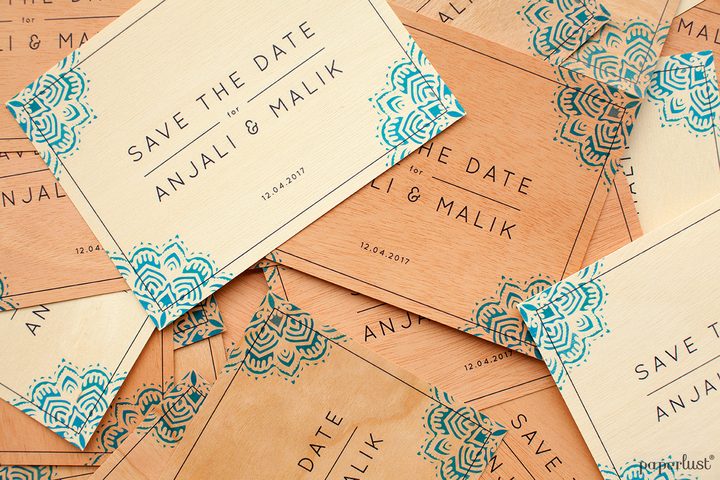

“And Guest” is correct when you do not know the name. The moment you know the name, use it.
This matters for a simple reason: addressing a card to “James Carroll and Guest” when you know his partner is named Maya signals that you do not regard her as an individual at your wedding, she is an anonymous addition. That is not the message you want to send, especially if James and Maya have been together for years.
How to address a save the date for a couple you know well
When both people are known to you and invited as a couple, list both names on the same line:
[Street Address]
[City, State, ZIP]
Or, for a more traditional format using courtesy titles:
[Street Address]
[City, State, ZIP]
Married couples and engaged couples
Married couples share a last name or do not, depending on their preference. Both approaches are equally correct:
For engaged couples, treat them the same as married couples, address both by name.
Long-term partners who share a household
If both people are being invited (which they should be, if they share a household and are in a committed relationship), list both names and use one envelope. Do not send separate save the dates to two people who share an address.
[Shared Address]
Same-sex couples
The same rules apply. Address both partners by name, in alphabetical order by first name or in whichever order feels natural. Do not use gendered default formulas (“Mr. and Mrs.”) unless you know those titles are preferred.
When Plus-One Status Is Not Finalized Yet
This is the most common source of confusion. You are sending save the dates 9 months out, your venue has not confirmed final capacity, and you are not certain whether your single friends will each get a plus-one spot.
The conservative, etiquette-approved approach is: default to the individual name only.
Sending “Chloe Barton” on the save the date does not permanently remove the option of granting Chloe a plus-one at the formal invitation stage. It simply does not commit you to it. If your capacity opens up, or if Chloe enters a serious relationship between the save the date and invitation, you have room to adjust.
The reverse, sending “Chloe Barton and Guest” and then sending the formal invitation to “Chloe Barton” alone, creates an awkward conversation that most couples dread.
How to handle it if a guest asks
If a single guest contacts you after receiving their save the date to ask whether they will have a plus-one, you have a few options:
- If the answer is yes: Confirm it and let them know the formal invitation will reflect that.
- If the answer is no: Be warm and honest. Something like “We are working with a tight guest count for our venue. We love you and want you there, and we are keeping the guest list to immediate family and close friends only.” Most guests understand, and hearing it directly from you is far better than receiving a formal invitation that signals no without any explanation.
- If it is genuinely undecided: “We are still working through final guest counts and will have a clearer picture when formal invitations go out” is a truthful and kind answer.
Saving flexibility with a holding note
Some couples include a small note card with save the dates explaining that “formal invitations with final details and RSVP information to follow.” This creates a natural pause before guests assume everything is locked in. It does not resolve plus-one questions, but it does frame the save the date as an early placeholder rather than the final word.
How to Address Save the Dates for Couples
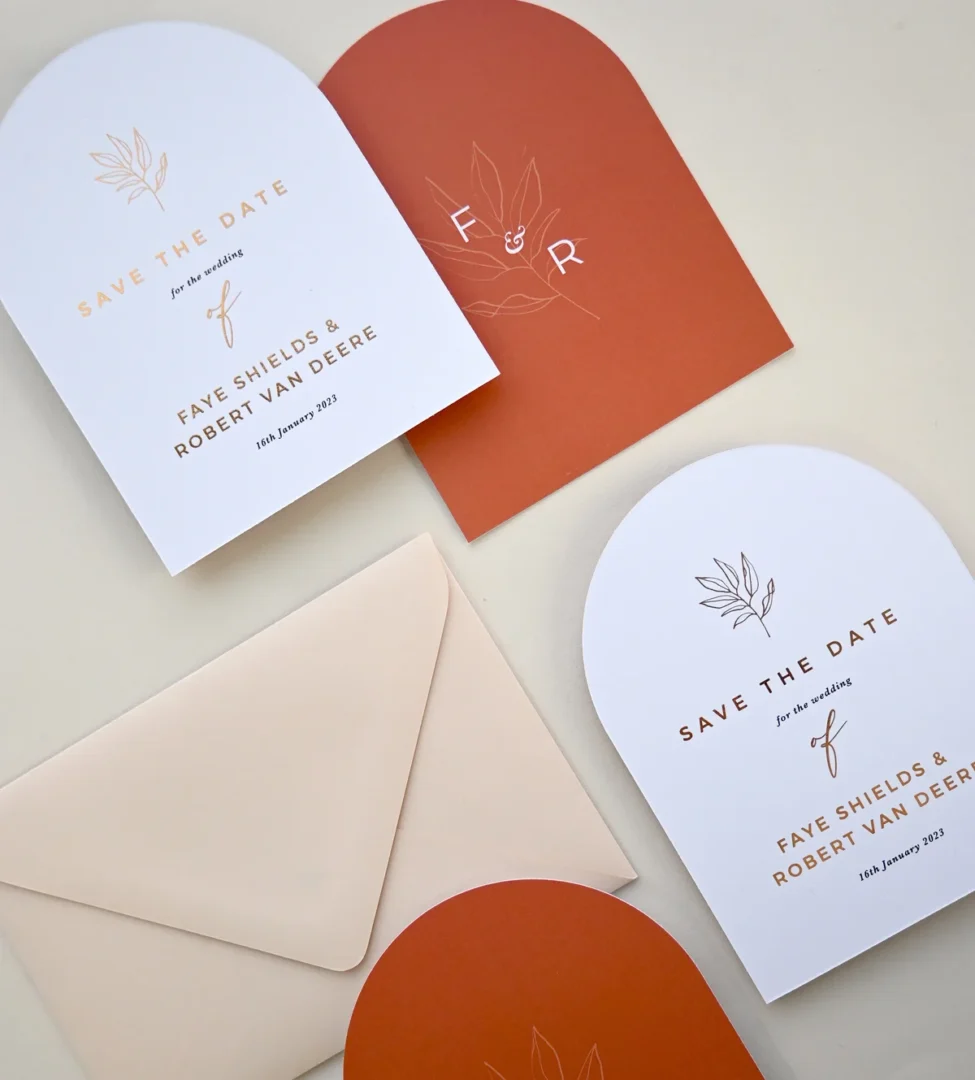
Addressing save the dates for couples is generally straightforward, but a few scenarios trip people up.
Standard format for couples (different last names)
[Address]
Alphabetical order by last name is conventional for different-surname couples, though many couples simply list based on who they know better.
Couples where one person is a doctor or has a professional title
Both are correct. The professional title belongs with the name it applies to.
Married couples sharing a last name
Or, if both use the same last name and one title is sufficient:
Note: “The Kellerman Family” works when you are inviting the whole household including children. If children are NOT invited, do not use “family”, list the adults by name only.
A couple where one partner you do not know well
If you know one person in the couple and have not met their partner, still address both by name if you know it. Use “and Guest” only as a last resort when you genuinely cannot find out the name.
Addressing STDs for Single Guests Without a Plus-One
When a single guest is not receiving a plus-one, the addressing is simply their name and title. Nothing else. No qualifier, no explanation.
[Address]
[Address]
The convention is understood. Guests who do not see “and Guest” on their envelope know their invitation covers only them.
Titles: when to use them and when to skip
Formal titles (Mr., Ms., Dr.) are appropriate for traditional and formal weddings. For casual or modern weddings, many couples skip titles entirely and simply use full names. Both are correct, consistency across your guest list matters more than the choice itself.
[Address]
Non-binary guests and guests whose pronouns you know
Use the title and name the person uses. “Mx.” is the gender-neutral equivalent of Mr./Ms. and is entirely appropriate in formal addressing. If you are unsure of someone’s preference, use their full name without a title:
Or simply:
Guests you know are in a new relationship but whose plus-one status is undecided
Address to the individual only. You are not obligated to grant a plus-one to someone in a new relationship, and naming an unknown partner on the save the date implies a commitment you may not want to make at this stage.
What to Do If Your Guest List Changes After STDs Go Out
If you need to cut someone who received a save the date
This is the most difficult situation. Once someone has received a save the date, they have a reasonable expectation that a formal invitation is coming. Cutting them at the invitation stage, or not sending an invitation at all, requires a direct, personal conversation. A phone call is better than a text. An explanation is better than silence.
This is one of the strongest reasons to finalize your guest list before save the dates go out, even if it means delaying them by a few weeks.
If your venue capacity increases
Good news: you can add guests freely. Sending a save the date (or a “save the date followup” card) to newly added guests is completely acceptable, even if your original save the dates went out months earlier. Just note in conversation or on the card that you are thrilled to now be able to include them.
If a plus-one is removed after a save the date with “and Guest”
This is uncomfortable but manageable. Contact the guest directly before the formal invitation arrives. Explain the situation briefly and warmly, usually something about a reduction in venue capacity or a change in guest list structure. Most guests, when approached with honesty and care, will understand. The formal invitation then reflects the updated allocation.
Proofing errors: wrong name, misspelled name, wrong address
Proofing errors on addressed envelopes are common. If you catch a misspelled name before sending, have the envelope re-addressed or reprinted. If the error is in the save the date card itself (not the envelope), a follow-up email or a note inside the formal invitation package is typically sufficient correction. Do not let a small error stop you from sending, an addressed correction card is a perfectly etiquette-approved solution.
Plus-One Save the Date Etiquette FAQs
Do save the dates have to match the formal invitations?
They do not have to match exactly, but visual consistency strengthens your stationery suite. A save the date in your wedding palette and general aesthetic signals a cohesive vision. Many couples choose a design from the same collection for both pieces. Browse our full range of save the date cards to find designs that can carry through to your invitations.
Can I send digital save the dates to some guests and physical ones to others?
Yes. Many couples send physical save the dates to older relatives and close family, and digital versions to tech-comfortable friends. The key is that the addressing conventions are the same: digital save the dates should still be addressed (in the email subject or message header) to the specific people invited, with “and Guest” only for confirmed plus-one allocations.
What if I already sent “and Guest” save the dates but now need to reduce plus-ones?
Contact those guests directly as soon as you know. Do not wait for the formal invitation to communicate the change. The earlier you have that conversation, the less disruption it causes for travel planning and expectations.
Do same-sex couples follow the same addressing rules?
Yes, exactly the same rules apply. Address both partners by name when both are invited. Use “and Guest” only when you know one person is invited but do not yet know their partner’s name. The gender-neutral title “Mx.” is available for any guest who prefers it.
Is it okay to use a guest’s nickname on the save the date?
If you genuinely call the person by a nickname in your relationship with them, using it is warm and personal. If it is a professional acquaintance or a more formal relationship, use their preferred full name. When in doubt, full name is always safe.
Should children be listed on save the dates?
Only list children by name if they are invited. If children are not invited to your wedding, address the save the date to the parents only. The addressing convention communicates the scope of the invitation, “The Morrison Family” implies all household members are welcome, while “Mr. and Mrs. David and Clara Morrison” leaves children off, which signals clearly (especially when paired with a wedding website note about your adults-only policy).
Can I include a note about my plus-one policy on the save the date itself?
You can, though it is not conventional. Some couples include a small insert that says “Due to venue capacity, we are unable to accommodate additional guests” or direct guests to their wedding website for more information. A wedding website note about your plus-one policy is the most common and least awkward way to set expectations before invitations arrive.
How far in advance should save the dates go out?
For local weddings, 6-8 months before the date is standard. For destination weddings (where guests need to book travel and accommodation), 9-12 months is recommended. Sending earlier is fine; sending closer than 4 months gives guests minimal planning time, which is especially difficult for out-of-town attendees. For a full timeline guide, see Save the Date Etiquette 101.
Ready to design your save the dates?
500+ exclusive designs. Digital print from $1 per card. Flat foil, letterpress, and metallic options. Free DHL Express on orders over $350 USD.