
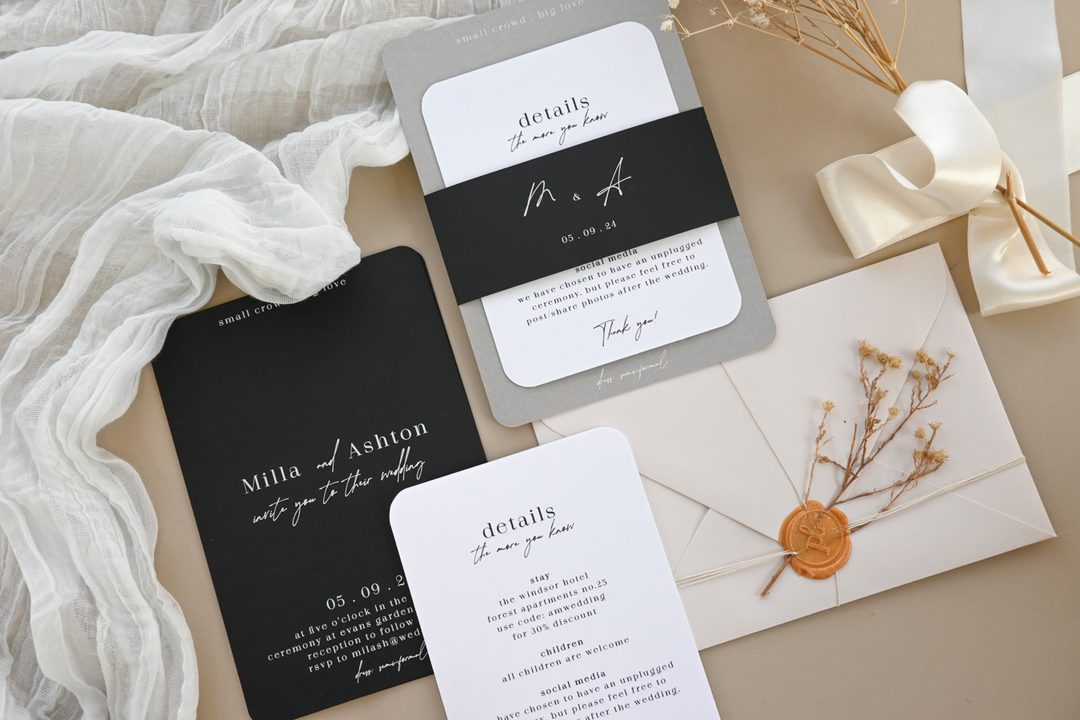
Wedding invitation fonts carry more weight than couples often realize. Before a guest reads a single word, the typeface on the envelope has already told them whether to expect a formal ballroom dinner or a relaxed garden party. Get the typography right, and your entire stationery suite feels cohesive and intentional. Get it wrong, and even the most beautiful paper stock cannot save the design.
This guide covers 40 of the best wedding fonts organized by style category, eight curated pairings with the reasoning behind each combination, and the practical rules every couple should know before finalizing type choices with their designer. Whether you are drawn to flowing calligraphy, sharp modern sans-serifs, or heritage serif letterforms, there is a combination here that fits both your aesthetic and your print method.
- Stick to two fonts maximum: one expressive (script or display) + one neutral (serif or sans-serif)
- Script fonts need at least 14pt minimum for legibility in print; letterpress demands even more weight
- Hairline script strokes below 0.5pt can fill in or break during foil stamping and letterpress
- Your primary font should be on the couple’s names; the secondary font handles all supporting text
- Test your pairing at actual print size (not screen zoom) before approving your designer proof
- Foil-stamped scripts need bolder stroke weights than digital-print versions of the same font
- Paperlust designers customize font sizing, spacing, and layout for every order within 1-2 business days
How to Choose Wedding Invitation Fonts
Font selection comes down to four questions: What is the formality of the event? How legible is the font at invitation size? Which print method will you use? And how does the typeface fit into the overall hierarchy of your design?
Match Formality to Font Category
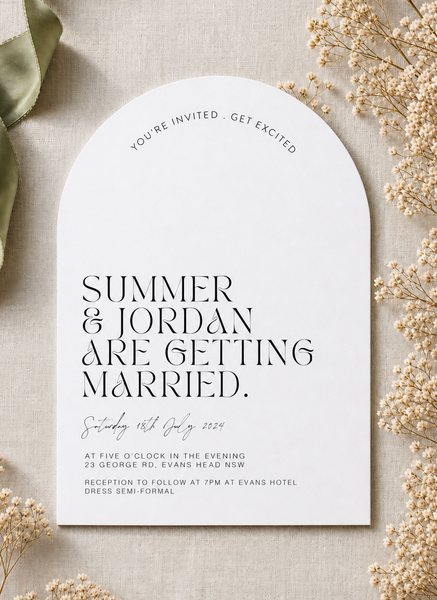
The most reliable guide is pairing the energy of the typeface with the energy of your event. Black-tie galas call for letterforms with heritage and gravitas: think classic serifs like Cormorant Garamond, Didot, or Bodoni, or traditional calligraphic scripts like Bickham Script or Copperplate. Relaxed garden parties work with softer, more whimsical choices: Playfair Display, Great Vibes, or a fluid brush script. Minimalist modern weddings lean on geometric sans-serifs paired with a single-weight script accent.
A useful mental test: imagine the font on the wedding venue’s sign. If it feels out of place, it will feel out of place on your invitation too.
Readability at Print Size
What looks beautiful at 200% zoom on a monitor can become illegible at the 10pt size used for venue addresses and RSVP instructions. Very thin hairline scripts can merge into unreadable smears. Decorative display fonts with highly stylized letterforms often fail at small sizes. The practical rule: any font carrying essential information (date, time, address, RSVP details) needs to be a clean, readable font at sizes from 9 to 12pt. The expressive, decorative font should be reserved for the couple’s names and the heading line, where it will appear at 24pt or larger.
Print Method Changes Everything
This is the section that most typography guides skip entirely, and it is the most important practical consideration for printed invitations.
Digital print is the most forgiving. Hairline strokes, fine details, and complex calligraphic letterforms all reproduce cleanly. You have the widest font latitude with digital printing.
Foil stamping (both flat foil and foil stamp methods) requires fonts with moderate stroke weight. Extremely thin hairline strokes in script fonts can break during the foil application process, leaving gaps in letters. Very intricate swashes can lose definition. As a general guide, choose scripts with slightly bolder stroke weights for foil orders, and avoid fonts with strokes thinner than approximately 0.5pt at your intended print size.
Letterpress pressing requires fonts with sufficient weight and body. The debossing process can cause very fine letterforms to lose crispness at the impression edge. Clean, well-designed serif and sans-serif fonts perform better than highly ornate scripts in letterpress applications. If you want a script element with letterpress, choose one with confident, medium-weight strokes rather than delicate hairlines.
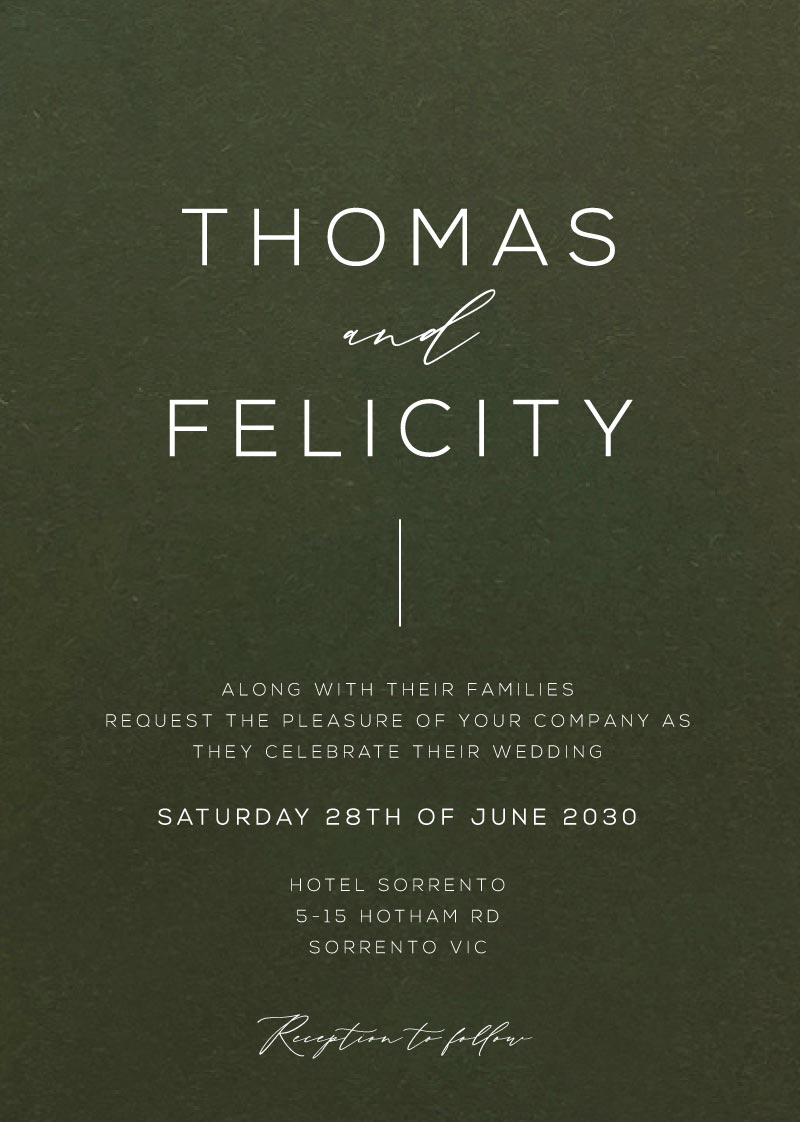
White ink on dark stock benefits from clean, bold letterforms. Fine serifs and thin scripts can lose visibility against deep navy, black, or forest-green stocks. Slightly larger font sizes and bolder weights compensate well.
Typography Hierarchy
A wedding invitation has five levels of information, and each level needs a distinct visual weight:
- Couple’s names, largest, most expressive; your primary display or script font
- Request line (“Together with their families…”), secondary size, your neutral font in regular or italic weight
- Date and time, similar weight to the request line, sometimes given slight emphasis
- Venue name and address, clean, readable, smaller
- RSVP and additional details, smallest, completely legible, neutral font
Most successful invitation designs use only two fonts across all five levels, varying size, weight, and spacing rather than introducing additional typefaces to create hierarchy.
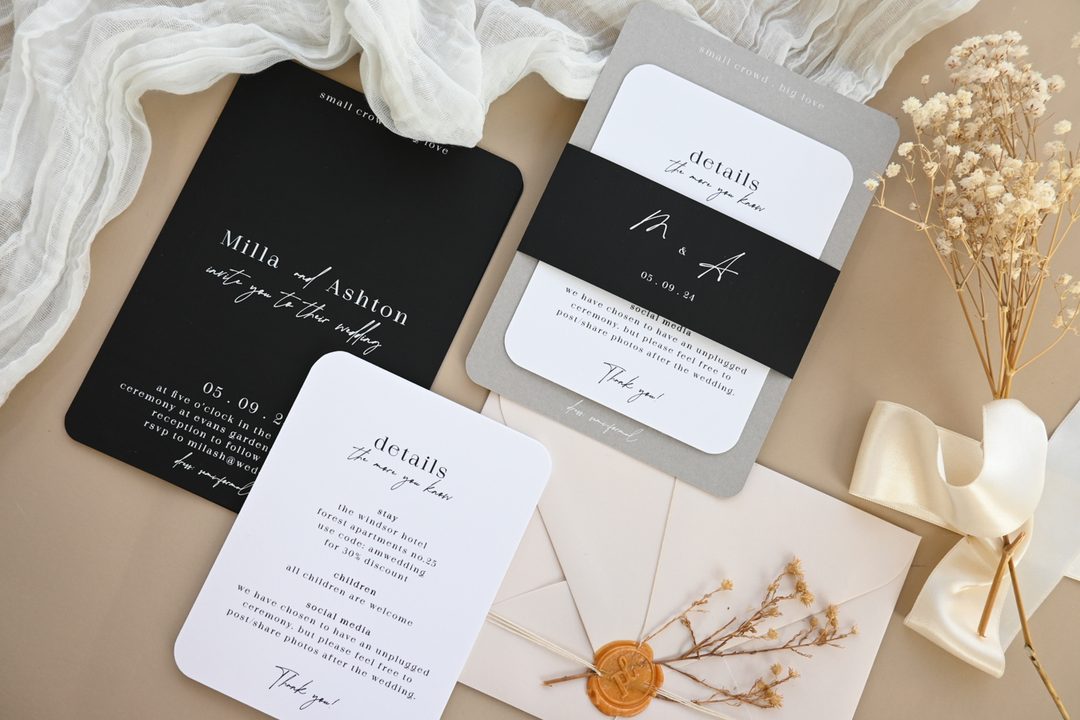

The 40 Best Wedding Fonts by Category
Serif and Traditional Fonts
Serif fonts carry the DNA of formal printing. The small “feet” at the ends of letterstrokes create horizontal rhythm that guides the eye across lines, which is why serifs have dominated book printing and formal correspondence for centuries. For wedding invitations, they convey established elegance without feeling trendy.
| # | Font Name | Character | Best Use | Print Methods |
|---|---|---|---|---|
| 1 | Cormorant Garamond | High contrast, refined, ink-trap details | Body text + display | All methods |
| 2 | Playfair Display | Strong editorial, high thick/thin contrast | Headings, couple names | Digital, foil |
| 3 | Didot | Extreme contrast, luxury fashion feel | Display text only | Digital, foil |
| 4 | Bodoni | Structured geometry, Neoclassical | Display + headings | All methods; excels in foil |
| 5 | Garamond | Moderate contrast, timeless elegance | Display + body text | All methods |
| 6 | EB Garamond | Open-source Garamond, print-optimized | Body text, RSVP cards | Digital, letterpress |
| 7 | Libre Baskerville | Sturdy, generous x-height, reliable | Body text, addresses, RSVP | All methods |
| 8 | Cinzel | Classical Roman inscription, all-caps | Venue names, formal headings | All methods |
| 9 | Trajan | Stately, ceremonial inscription feel | Formal or religious events | Digital, letterpress |
| 10 | Crimson Text | Old-style, calligraphic influence | Longer text passages | Digital |
| 11 | DM Serif Display | Modern serif, large clear letterforms | Headings | Digital, flat foil |
| 12 | Lora | Balanced, brushed curves, flexible | Body + display, wide style range | All methods |
| 13 | Orpheus Pro | Refined proportions, luxury editorial | Display headings, formal | Digital, foil |
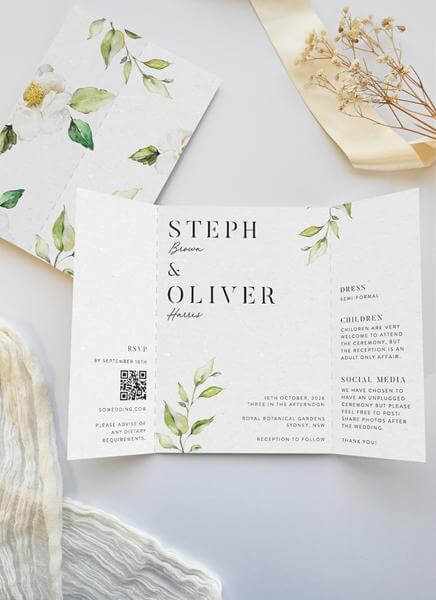
White GardenDigital printing
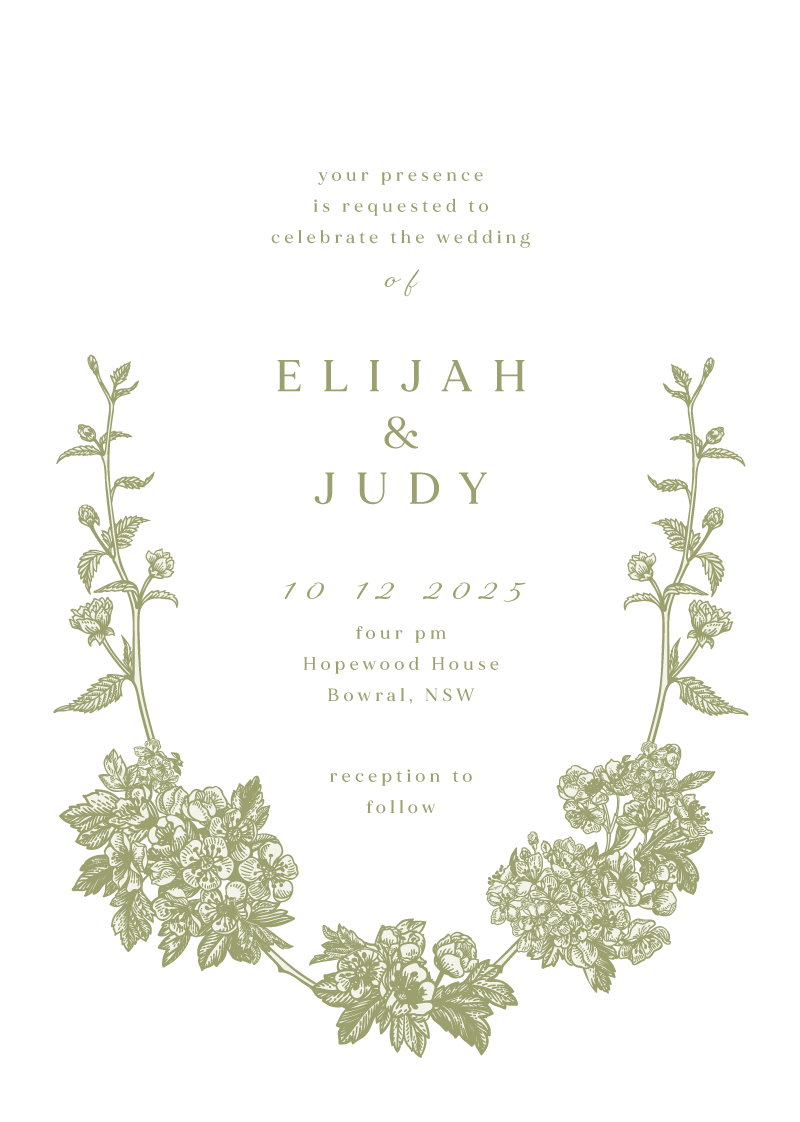
Visco GardenDigital printing

Sweet MagnoliaDigital printing

Half MoonColour Stock + Foil
Modern Sans-Serif Fonts
Sans-serif fonts remove the decorative feet from letterstrokes, resulting in clean, geometric shapes. In wedding typography, they create a contemporary, editorial quality that pairs well with expressive scripts to prevent an overall design from feeling too heavy or ornate.
| # | Font Name | Character | Best Use | Pairs With |
|---|---|---|---|---|
| 14 | Montserrat | Geometric, neutral, versatile | Secondary font for body text | Almost any script |
| 15 | Futura | Pure geometry, circular O’s | Modern/graphic invitations | Flowing calligraphic scripts |
| 16 | Josefin Sans | Geometric, slight vintage flavor | Modern-minimalist to 1920s-inspired | Cinzel, display serifs |
| 17 | Lato | Humanist sans, warm, readable | Body text, envelope addressing | Any script or serif |
| 18 | Work Sans | Clean, print-optimized, versatile | Body text, information cards | Any display font |
| 19 | Raleway | Elegant proportions, distinctive W | Semi-expressive secondary font | Romantic scripts |
| 20 | Nunito | Rounded, friendly, approachable | Casual summer/garden weddings | Brush scripts |
| 21 | Inter | Screen and print optimized, precise | Any legibility-critical text | All display fonts |
| 22 | Metropolis | Editorial feel, slightly elevated | Modern magazine-style designs | Romantic scripts |
Script and Calligraphy Fonts
Script fonts imitate the flow of hand-lettered calligraphy. They range from formal pointed-pen styles that mimic traditional copperplate engraving to loose, casual brush scripts that feel contemporary. For wedding invitations, the couple’s names almost always appear in a script font.
| # | Font Name | Character | Formality | Foil Compatible |
|---|---|---|---|---|
| 23 | Great Vibes | Flowing, generously proportioned, legible | Semi-formal to casual | Yes, moderate strokes |
| 24 | Dancing Script | Bouncing, casual, rhythmic energy | Informal | Check stroke weight |
| 25 | Sacramento | Clean, modern, understated | Modern-minimal to semi-formal | Yes |
| 26 | Alex Brush | Connected, fluid, elegant proportions | Semi-formal to formal | Yes |
| 27 | Bickham Script | Traditional copperplate, ornate swashes | Formal, black-tie | Yes, confident strokes |
| 28 | Adelicia Script | Natural, hand-lettered, personal feel | Semi-formal to casual | Check with designer |
| 29 | Snell Roundhand | 18th-century roundhand, classically “wedding” | Formal, traditional | Yes |
| 30 | Burgues Script | Dramatic ascenders, high contrast | Formal, statement | Yes, bold strokes |
| 31 | Serenity | Contemporary, balanced, reliable legibility | Semi-formal to formal | Yes, designed for it |
| 32 | La Bohemienne | Romantic, organic, hand-lettered warmth | Casual to semi-formal | Check with designer |
| 33 | Abramo Script | Clean, modern calligraphic, confident strokes | Semi-formal to formal | Yes |
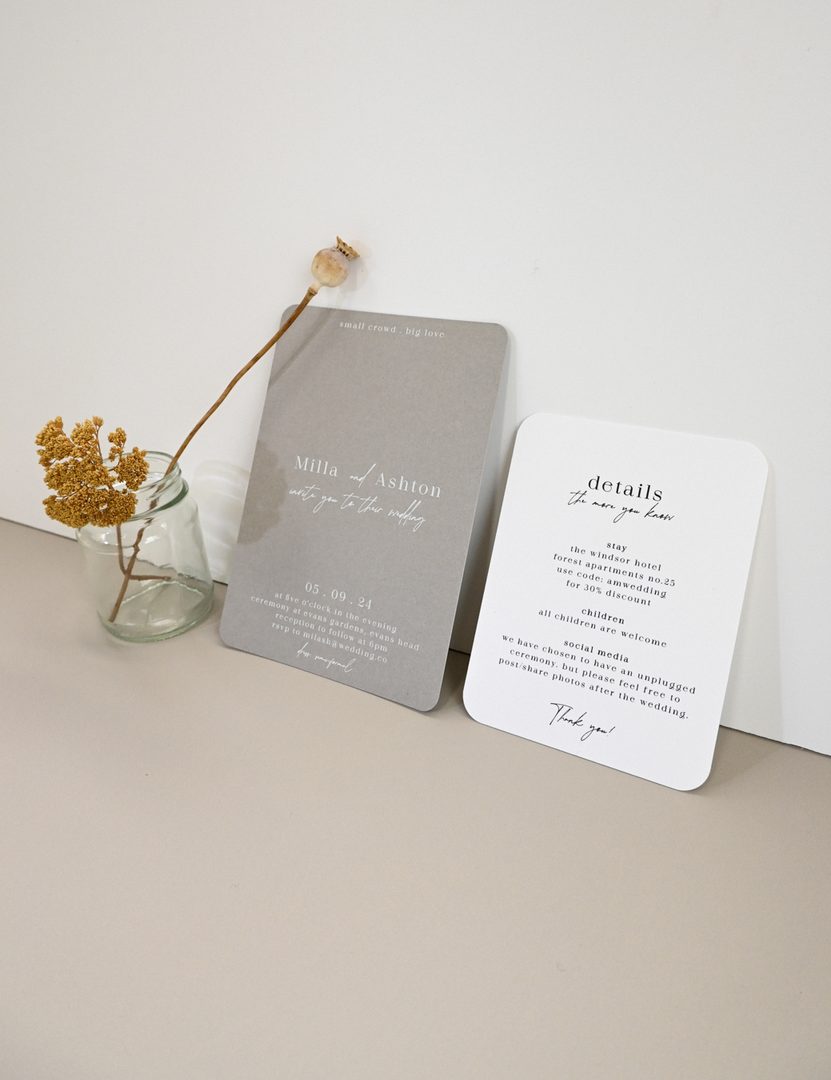
Script and calligraphy wedding invitations →

Rose et GrisFlat foil

Good SpringDigital printing
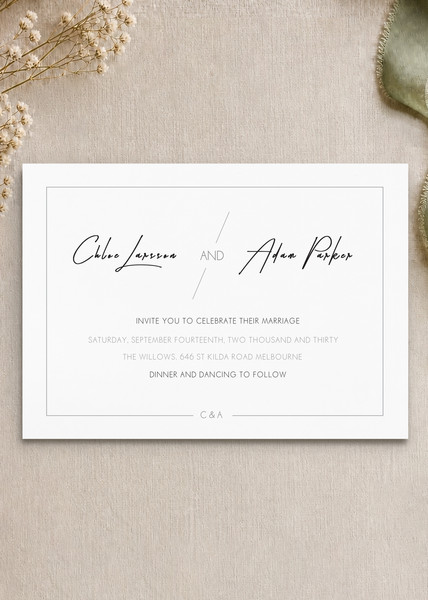
Modern ModeDigital printing
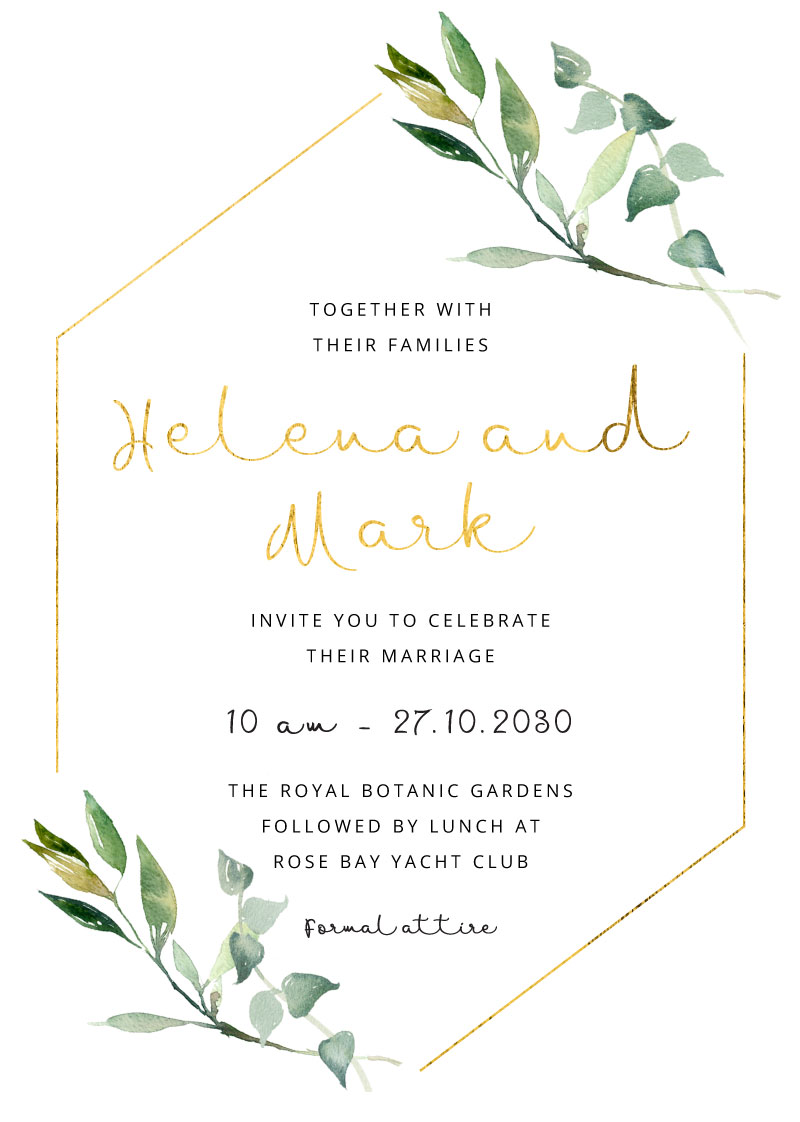
Garden WindowFlat foil
Display and Decorative Fonts
Display fonts are designed to be used at large sizes only. They often incorporate ornamental details, strong stylistic identities, or extreme proportions that make them attention-grabbing at headline scale but unreadable at body text sizes.
| # | Font Name | Character | Ideal Wedding Style |
|---|---|---|---|
| 34 | Cinzel Decorative | Ornate, all-caps, classical Roman | Formal, regal, ceremonial |
| 35 | Amatic SC | Hand-drawn, condensed, artisanal | Rustic barn, informal celebrations |
| 36 | Poiret One | Art Deco, geometric, period flair | Gatsby/twenties-inspired, roaring |
| 37 | Broadway | Classic Art Deco, strong horizontals | Theatrical, glamorous |
| 38 | Ciao Bella | Romantic oversized script, editorial | High-fashion, dramatic statement |
| 39 | Noceur | Contemporary serif, fashion-forward | Modern formal, sophisticated |
| 40 | Ramillas | Elegant serif, italic adds motion | Versatile, text and display range |
8 Curated Font Pairings (and Why Each Works)
The principle behind successful font pairing is contrast: two fonts from the same category (two serifs, two scripts) will feel redundant. Two fonts that differ in category but share compatible spirit create the visual dialogue that makes a design feel considered.
Pairing 1: Cormorant Garamond + Great Vibes
Great Vibes brings a lush, flowing calligraphic script for the couple’s names. Cormorant Garamond’s high-contrast letterforms harmonize with the script’s organic curves while providing crisp legibility for supporting text. Both fonts share an organic warmth, but they differ enough in weight and style to create clear hierarchy. Works beautifully in digital print and flat foil.
Pairing 2: Bodoni + Bickham Script
This is the pairing you would find on a hand-engraved formal invitation from a century ago, updated for modern reproduction. Bickham Script’s copperplate heritage matches Bodoni’s Neoclassical structure. Both fonts carry significant typographic history, creating a formal statement that requires no additional ornamentation. This pairing excels in foil stamping, where Bodoni’s thick main strokes catch the foil beautifully and Bickham’s confident stroke weight holds up during application.
Pairing 3: Montserrat + Sacramento
The ultra-clean geometry of Montserrat grounds the design while Sacramento’s understated calligraphic script adds the warmth that would otherwise be missing from a pure sans-serif invitation. This pairing is the graphic designer’s wedding font combination: intentionally stripped back, with the visual interest coming from size contrast and white space rather than ornate letterforms.
Pairing 4: Playfair Display + Alex Brush
Playfair Display’s strong editorial quality and ink-trap details give it a letterpress-era feel without requiring actual letterpress printing. Alex Brush provides a fluid, graceful script that complements Playfair’s high contrast without competing. Works well with metallic ink printing for a gold-toned look at a more accessible price point than foil.
Pairing 5: Futura + Burgues Script
This is the pairing with the most visual tension, which is also what makes it the most striking. Futura’s pure geometric circles and triangles are as far from organic calligraphy as a font can get. Against that backdrop, Burgues Script’s dramatic ascenders and high contrast feel even more expressive. The contrast is the point: this combination makes a confident stylistic statement rather than blending into safe elegance.
Pairing 6: Lora + Great Vibes
Lora’s calligraphic-influenced serifs create an organic connection with Great Vibes’ flowing script. The pairing feels warmer and less formal than Cormorant Garamond + Great Vibes while maintaining full readability. An excellent choice for couples who want romance without stiffness.
Pairing 7: Cinzel + Josefin Sans
Cinzel’s inscription-derived letterforms evoke the stonework of Roman monuments, lending gravitas to venue names and event headings. Josefin Sans provides the necessary contrast with its lower-key geometric neutrality. The combination creates an invitation that feels both timeless and modern: rooted in classical tradition but designed for a contemporary audience.
Pairing 8: Libre Baskerville + Serenity
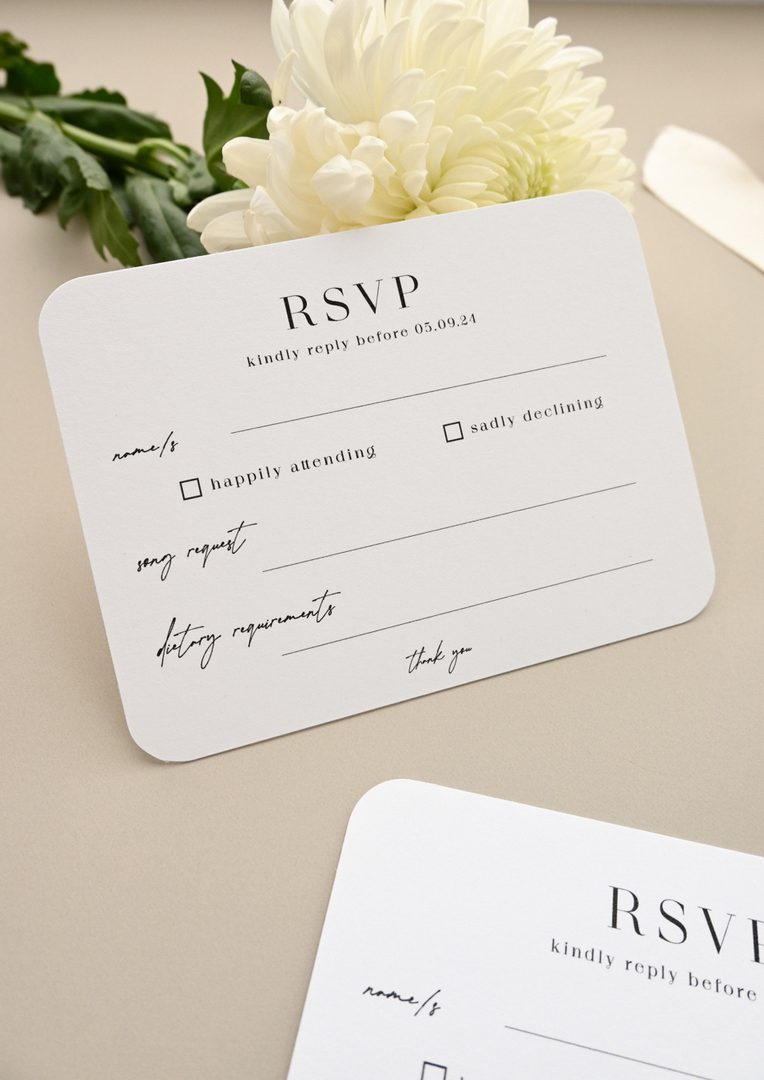
This is the pairing to recommend when legibility is the top priority. Libre Baskerville’s generous x-height and well-optimized letterforms are readable at every size from large display down to fine-print RSVP details. Serenity’s moderate script stroke weight means it holds up across print methods, including foil. A safe and consistently elegant combination.
2026 Wedding Typography Trends
The most notable shift in 2026 wedding typography is a move toward intentional restraint. After several years of maximalist swash scripts and heavily flourished calligraphy dominating invitation design, couples and designers are returning to cleaner, more considered pairings.
Single-weight scripts, Calligraphic scripts with consistent stroke width throughout, rather than the high thick-to-thin contrast of traditional copperplate, are gaining ground. They have a modern freshness while retaining the handcrafted quality that makes scripts feel personal.
High-contrast serif + neutral sans combinations, Pairing a dramatic serif (Didot, Bodoni, Cormorant) with a simple sans for body text creates a fashion-editorial quality that photographs exceptionally well.
Mixed-case hierarchy, Moving away from all-caps venue lines and request lines toward sentence case or lowercase-only secondary text. Creates a softer, less formal page rhythm.
Ink and foil as expressive typographic tools, Rather than applying foil to an entire invitation, designers are using foil selectively to highlight only the couple’s names in script, leaving the rest of the design in digital print. This creates a focal point hierarchy through finish rather than size alone.
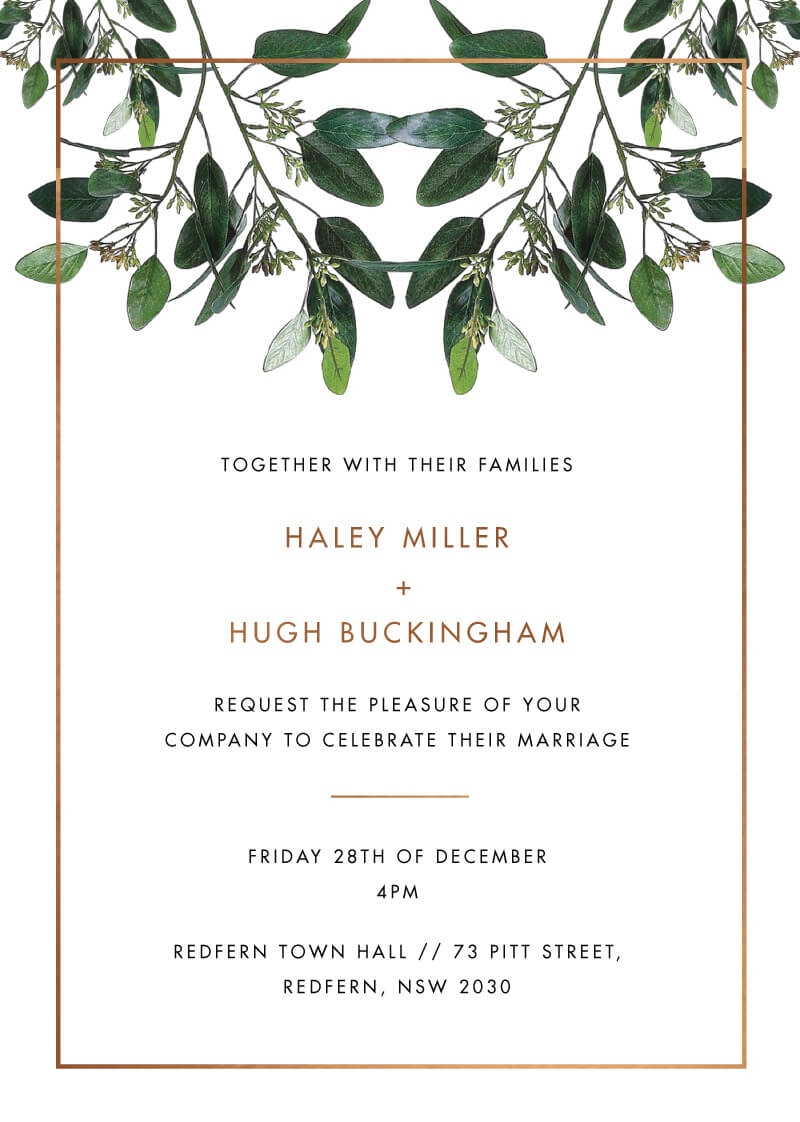
Tonal and earth-palette ink choices, Typography in sage green, warm terracotta, or slate blue ink on off-white stocks rather than the default black on white. The font choice becomes secondary to the ink color selection in defining the visual tone.
Paperlust’s designers work with all of these trends across the full wedding invitation collection, and because every order receives a dedicated designer, typography customization is built into the process rather than being an add-on.
How Paperlust Handles Typography Customization
Every Paperlust order includes a professional designer assigned specifically to your stationery. After you complete your wording and choose your design, your designer interprets your content within the template’s typographic framework, adjusting sizing, spacing, and layout to ensure everything reads correctly and looks balanced.
If you want to adjust fonts from the template default, your designer can discuss options that work within the chosen print method’s technical requirements. For foil or letterpress orders, they will advise on whether a requested script has the stroke weight to perform well at your chosen size.
Designer proofs are delivered within 1-2 business days of placing your order, and two rounds of edits are included at no additional cost. This means you can see your exact font combination at true print size before anything goes to press.
Paperlust offers 500+ exclusive designs from independent artists. You can browse foil wedding invitations to see typography that specifically excels in metallic finishes, or explore the full collection to find designs where the built-in typography already matches your vision.
Ready to Find Your Perfect Wedding Invitation Typography?
Browse 500+ exclusive designs from independent artists. Every order includes a dedicated designer who customizes your font sizing, spacing, and layout.
Frequently Asked Questions
What font do most wedding invitations use?
The most commonly used combination is a calligraphic script for the couple’s names (Great Vibes, Alex Brush, or Sacramento at the accessible end; Bickham Script or Burgues Script at the more formal end) paired with a clean serif for supporting text (Garamond, Cormorant Garamond, or Playfair Display are the most frequent choices). This pairing works because the contrast between expressive script and neutral serif is immediately legible while still feeling distinctly celebratory.
Can I use two different fonts on my wedding invitations?
Two fonts is the professional standard and usually the maximum that works well. Using a single font family across the entire invitation (varying only in size, weight, and style) is an equally valid approach used by designers who want a quieter, more unified design. Three fonts generally creates visual noise unless you are highly experienced with typography. The combination of one expressive font (script or display) for the couple’s names and one neutral font (serif or sans-serif) for all other text is a reliable framework that almost never fails.
Are script fonts hard to read on wedding invitations?
Script fonts can be difficult to read when used at small sizes, set in all-caps (scripts were designed for mixed-case), or chosen for their decoration rather than their legibility. The safest approach: use script only for the couple’s names, keep it at 24pt or larger, and choose a script with clear letter connections and moderate stroke contrast. If you are unsure, your Paperlust designer will flag any readability issues at the proof stage.
What is the best font for foil-stamped wedding invitations?
For foil stamping, fonts with moderate stroke weight perform best. Bickham Script, Serenity, Abramo Script, and Alex Brush all have stroke weights that hold up reliably under foil application. Among serifs, Bodoni and Playfair Display work well because their thick main strokes catch the foil clearly. Extremely delicate fonts with strokes below 0.5pt can lose fine detail or show small breaks in the foil. Your Paperlust designer will advise on the best approach for your specific design during the proof process.
Can I use a Google Font on my wedding invitations?
Google Fonts can be used in digital-format designs and on some print-ready files. Several perform well for wedding invitations: Cormorant Garamond, Playfair Display, Lora, Montserrat, and Great Vibes are all solid choices available through Google Fonts at no cost. Premium font libraries offer superior OpenType features, refined hinting, and alternate character sets that look noticeably better in professional print, but Google Fonts are a reasonable starting point for couples designing their own stationery.
How do I match fonts across my full wedding stationery suite?
The simplest approach is to keep the same two fonts across every piece: invitations, RSVP cards, envelopes, menus, place cards, and programs. Consistency creates a suite feeling without requiring any additional design decisions. Variations in paper stock, print method, and card size will naturally differentiate the pieces visually while the shared typography keeps everything cohesive. Paperlust’s suite system is built around this principle: once you select your design, the same typographic approach carries through to every suite item.