

Whether you are planning a ranch reception under an open sky, a barn celebration surrounded by hay bales and string lights, or an intimate backyard ceremony that feels like the heart of the American South, your invitation is where the whole mood begins. Western wedding invitations have a warmth and personality that formal stationery rarely matches, and choosing the right design, wording, and suite can make your guests feel the atmosphere before they even arrive.
- Best formats: Standard (5×3.5 in), flat card, folded, and rustic kraft
- Top palettes: Terracotta + ivory, denim blue + white, sage + warm cream
- Print methods: Digital on kraft, flat foil for gold accents, white ink on dark stock
- Wording tone: Warm and casual to relaxed formal, skip stiff traditional phrasing
- Suite add-ons: RSVP card, details/information card, save the date, place cards
- Proofs: Ready within 1-2 business days of ordering
- Shipping: Free DHL Express on orders over $350 USD
Western Wedding Invitation Style Overview
Western wedding stationery sits at the intersection of rustic charm and genuine personal style. It is not one look, it is a family of looks that all share the same warm, unpretentious spirit. At the earthier end of the spectrum, you have kraft-paper suites with hand-lettered type, dried wildflower motifs, and wax seals in terracotta. At the more polished end, you have linen-textured white cards with flat foil horseshoe or floral accents and deep burgundy envelopes.
What they share is a rejection of rigid formality. Western invitations invite guests in rather than requesting their presence. The tone is friendly. The design references the natural world, wood, cotton, leather, hay, wildflowers, open sky. And the best ones feel specifically true to the couple and the land where they are getting married.
For couples planning a barn wedding, ranch ceremony, or country backyard reception in the US, this category is doing a lot of work. It signals the dress code (boots and blazers over black tie), hints at the food and music, and builds anticipation for a celebration that feels different from a hotel ballroom wedding.
Browse wedding invitations at Paperlust to find designs that carry the earthy, handcrafted spirit of a western celebration, from kraft-paper digital print to flat foil with gold botanical accents.
Design Elements That Define a Western Invitation
The design vocabulary of a western wedding invitation draws from the physical landscape of rural America, and from decades of folk art, quilting, and country craftsmanship. Here are the elements you will see appearing most consistently across the best-executed western suites.
Natural Textures
Kraft paper is the single most recognizable material in the western stationery world. Its warm brown tone carries the rustic aesthetic without needing any extra design work. You can print clean white ink on kraft for a high-contrast look, or keep a subtle digital print that reads almost like a hand-stamped design.
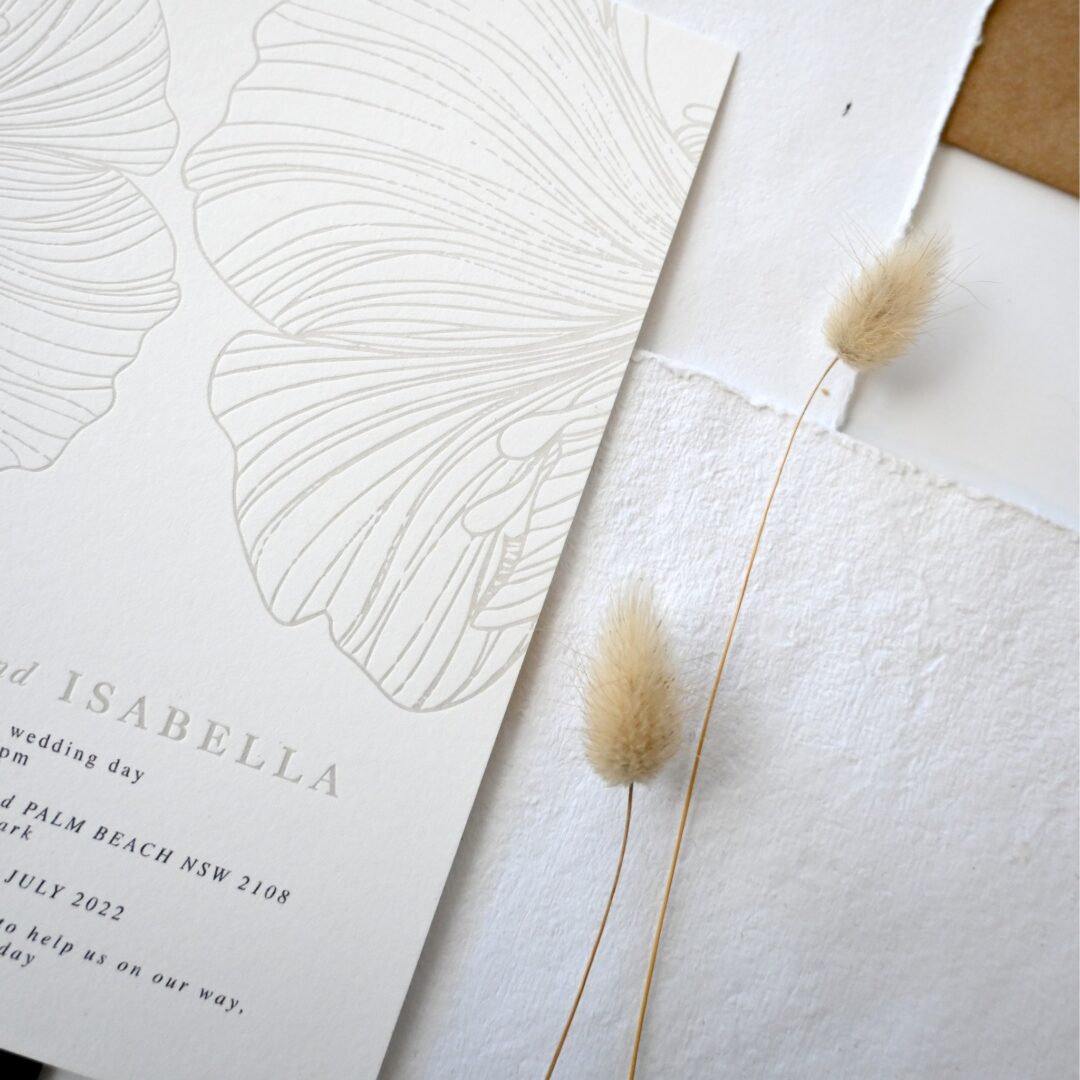
Beyond kraft, look for linen-texture cardstock (a white or cream paper with a woven surface quality) and matte cardstock in warm naturals, bone, oat, and soft cream. These choices read as less slick and more handcrafted than glossy paper, which suits the aesthetic perfectly.
Illustrative Motifs
Western invitations often feature illustrated elements drawn from the natural or agricultural world:
- Wildflowers: sunflowers, bluebonnets, black-eyed Susans, pampas grass
- Botanicals: eucalyptus, cotton stems, dried lavender
- Western icons: horseshoes, lasso rope, cowboy boots, antlers, arrows
- Landscape silhouettes: mountain ranges, barns, fence rails, windmills, cacti
The most elegant western designs avoid the kitsch-western trap by choosing one or two motifs and executing them with restraint. A single hand-drawn cotton stem at the top of the card in a deep sage green is far more sophisticated than a card covered in boots, horses, and rope.
Wax Seals and Ribbon Accents
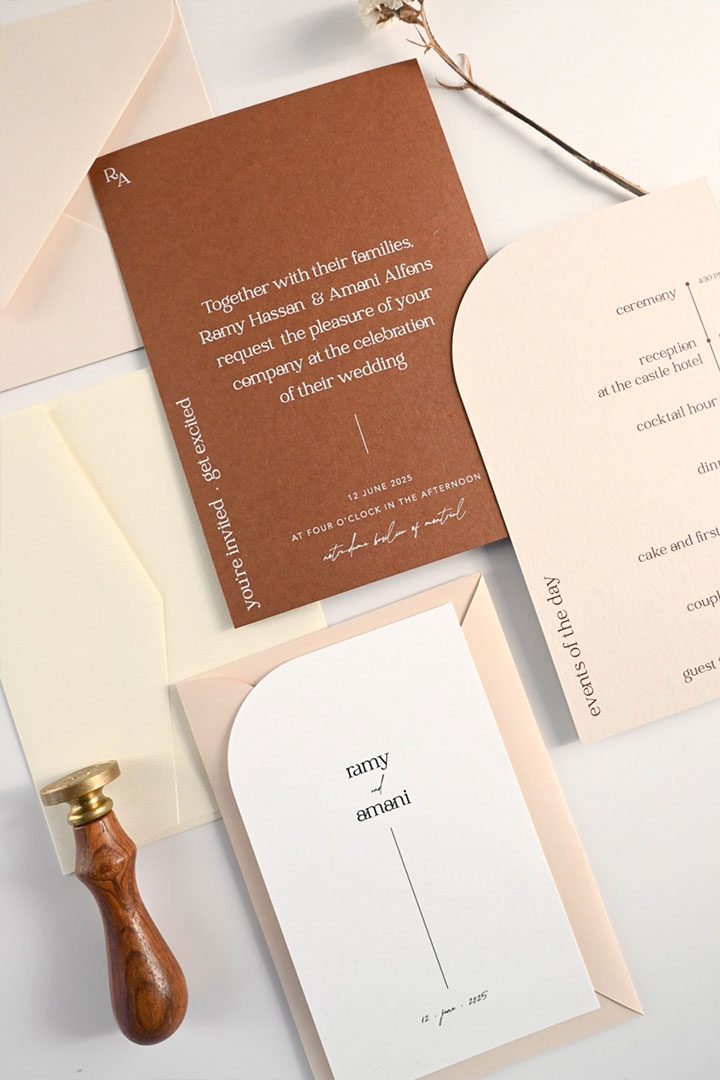
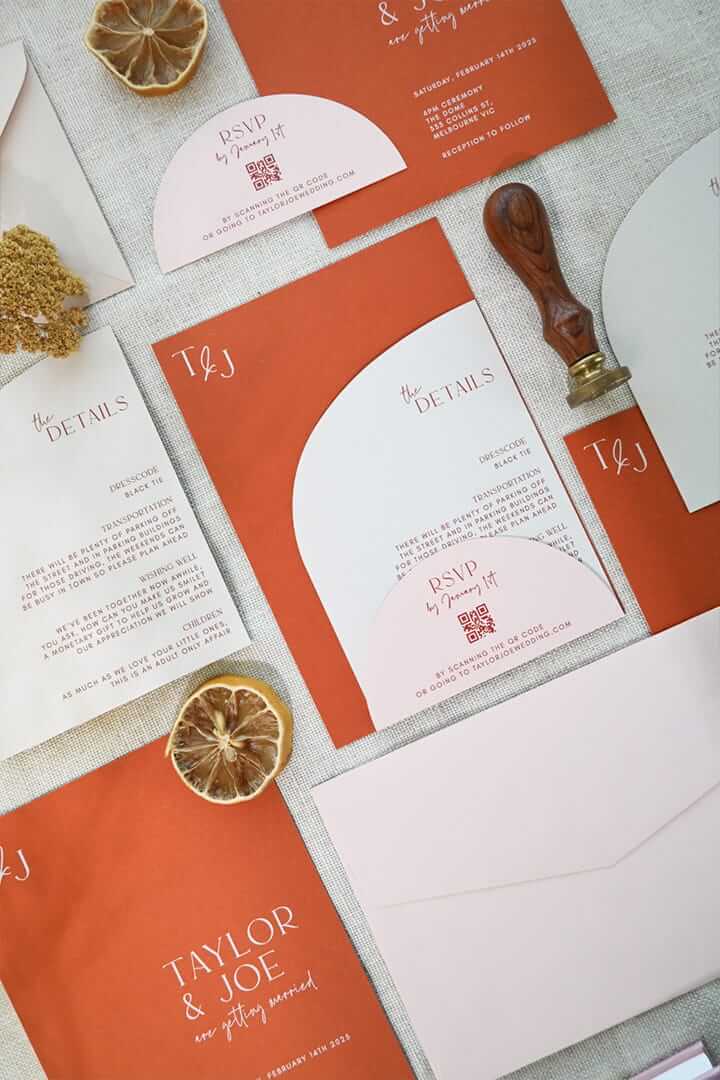
A terracotta or deep burgundy wax seal on the envelope flap is one of the fastest ways to elevate a western suite. It signals craftsmanship and attention to detail, and it photographs beautifully. Similarly, natural jute twine or a piece of leather cord wrapped around the invitation suite and tucked into a kraft envelope creates a tactile, memorable first impression when guests open the mail.
Die-Cut Shapes
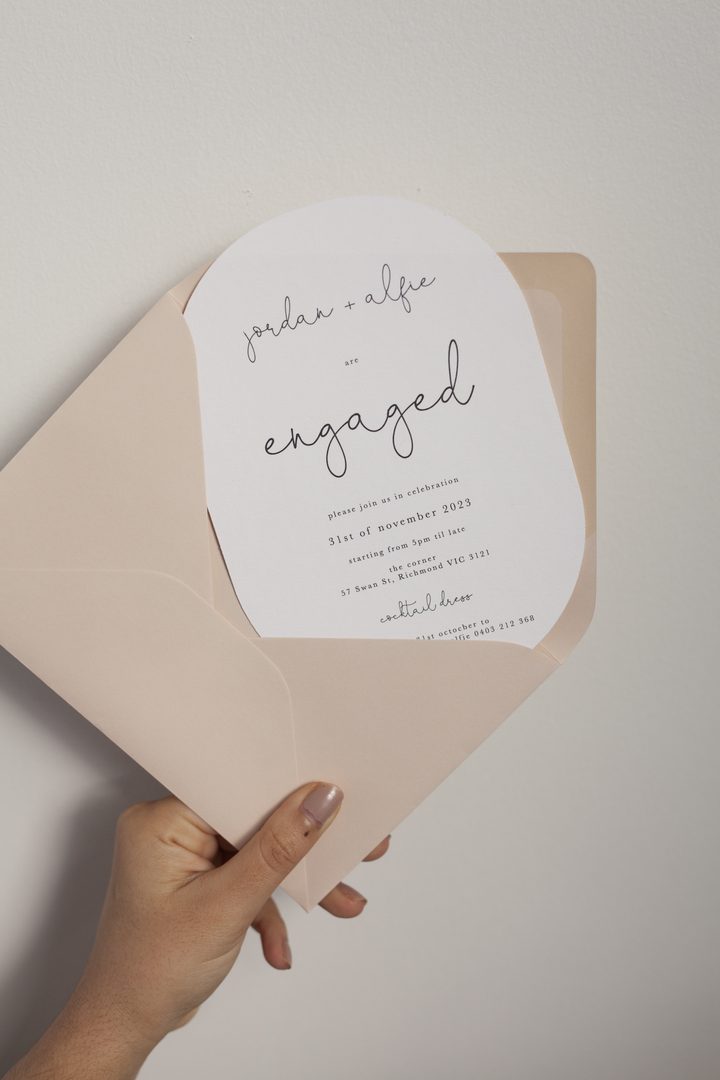
Arch-shaped die-cut invitations have become a mainstay across romantic and rustic categories. For western weddings, an arch top with a warm-toned botanical design reads as both modern and earthy, not kitschy. Other popular die-cut options include rounded corners on standard rectangular cards, which soften the look and feel more handmade.
Color Palettes: Terracotta, Denim Blue, and Sage
Color is one of the fastest signals you can send about the tone of your wedding. Here are the three palettes that work best for western wedding invitations, with guidance on how to build them out into a complete suite.
Terracotta and Ivory
Terracotta has been the defining color of desert and western weddings for the past several years, and it has not lost its resonance. It is warm, unmistakably earthy, and pairs beautifully with both the natural world (sunset light, red rock, dry grasses) and the interior of a barn or tent.
A terracotta and ivory palette uses terracotta as a dominant background or envelope color, ivory or cream for the card stock, and burnt sienna or deep rust as an accent. Gold foil text or a wax seal in terracotta brings the scheme together without tipping into Christmas-red territory.
Works best with: Flat foil gold text on a cream card, white ink on terracotta-colored stock, kraft envelopes lined with a subtle rust-and-sage botanical print.
Denim Blue and White
This palette captures the painted-denim and chambray aesthetic that has grown out of Western ranching culture. Deep denim blue against clean white is striking and gender-neutral, it works equally well for couples who want something more masculine-leaning or for those who want a slightly cooler, less sun-baked feel than the terracotta route.
White ink on a navy or denim-blue card is a particularly effective technique for this palette: the white opaque ink pops against the dark ground with a freshness that no dark-on-light combination can match.
Works best with: White ink on color stock, a white card with deep blue envelope, rope or twine as a tactile accent, silver foil rather than gold.
Sage and Warm Cream
Sage green reads as botanical, fresh, and understated. Paired with warm cream or off-white rather than pure white, it takes on an earthy quality that suits the western aesthetic without leaning on the more dramatic terracotta or denim palettes. This is the palette for couples who want their wedding to feel grounded in nature, garden, meadow, orchard, without loud color drama.
A sage and cream palette works especially well with pressed-botanical or hand-illustrated floral motifs, script typography in a warm charcoal or deep forest green, and kraft envelopes that add depth.
Works best with: Digital print on matte cream cardstock, botanical illustrations in sage and deep forest green, olive or eucalyptus wax seal, no metallic, or a very subtle pale gold foil for one accent word.
| Palette | Card Color | Envelope | Best Print Method |
|---|---|---|---|
| Terracotta + Ivory | Cream or ivory matte | Terracotta or kraft | Flat foil (gold) on cream, or digital |
| Denim Blue + White | Navy or denim color stock | White or pale blue | White ink on color stock |
| Sage + Warm Cream | Matte cream or warm white | Kraft or sage | Digital print with botanical art |
Wording Examples for Western and Country Weddings
Western wedding invitation wording should match the spirit of the event: warm, direct, and unpretentious. Stiff formal phrasing (“We request the honour of your presence”) sits awkwardly on a kraft card with a sunflower motif. But you do not have to go full “Yee-haw!” either. The goal is to sound like yourselves, welcoming, specific, and excited.
Here are wording examples across a range of tones, from relaxed-casual to relaxed-formal.
Casual and Playful
Join us as we swap our boots for dancing shoes and say “I do”
[Bride’s Name] & [Groom’s Name]
Saturday, the [Date]
[Time]
[Venue Name]
[Venue Address]
We are getting married on the ranch and we want you there.
[Bride’s Name] and [Groom’s Name]
[Date] | [Time] | [Location]
Boots encouraged. Dancing required.
Warm and Relaxed-Formal
[Bride’s Full Name]
and
[Groom’s Full Name]
invite you to celebrate their marriage
on [Day], the [Date] of [Month, Year]
at [Time]
[Venue Name]
[Venue Address]
Reception to follow
as we celebrate the marriage of
[Bride’s Name] & [Groom’s Name]
[Day], [Month Date], [Year]
[Time] | [Venue Name]
[City, State]
Dinner and dancing to follow
Country-chic attire welcome
Ranch and Barn-Specific Wording
[Bride’s Name] and [Groom’s Name]
will be married at
[Ranch/Farm Name]
[Day], [Date]
Ceremony at [Time] | Dinner at [Time]
Dress: boots and your finest
The music will be loud.
And we would love for you to be there.
[Bride’s Name] & [Groom’s Name]
[Date], [Time]
[Barn/Venue Name] | [City, State]
Dress Code Lines to Include
Western couples often use the invitation to give guests guidance on dress, this is especially helpful when the venue requires practical footwear or when guests might default to formal attire out of habit. Consider adding one of these lines at the bottom of the invitation or on a separate details card:
Attire: Boots and blazers welcome
Dressy ranch attire encouraged
Boots recommended, the grass is real
Smart casual: leave the ball gown at home
Typography Choices for Western Invitations
Typography carries as much weight as the design motif in a western invitation. The right font combination makes the card feel like it belongs in the landscape. The wrong combination can undermine even a beautiful layout.
Script Fonts
Script fonts that mimic calligraphy or loose handwriting are the most popular choice for western names and headers. Look for scripts that feel relaxed rather than perfectly upright, a slightly slanted, bouncy script reads as warm and personal rather than stiff. Pairing a flowing script name with a clean sans-serif body font is the most versatile combination: elegant enough for a wedding, readable at a glance.
Serif with Character
A well-chosen serif font (particularly one with ink-trap details or a slightly weathered quality) can work beautifully for western invitations that want to avoid script entirely. Think of the typography on a vintage seed packet or a 19th-century broadsheet poster, high contrast strokes, strong serifs, a slightly compressed letterform. Used on a cream card with a simple botanical border, this style reads as genuinely heritage rather than costume-Western.
Western Display Fonts
Slab-serif and condensed western display fonts work well as accent type for short phrases, the venue name, a “Save the Date” header, or a single phrase like “Yee-Haw!”, but use them sparingly. A full invitation body in a display western font becomes hard to read and tips from “rustic” into “themed party.” Keep display fonts to one or two short lines maximum.
What to Avoid
Avoid fonts that are too fine or too formal for the vibe: ultra-thin modern serifs that belong on a minimalist city wedding, Comic Sans or anything that reads as digital-casual, or all-caps block lettering that looks more like a concert poster than a wedding invitation.
Western Wedding Invitation Formats
Western weddings span a wide range of formality levels, and the format of your invitation should match the event. Here is a breakdown of the most popular options.
Standard Flat Card (5 x 3.5 inches)
The classic postcard-style invitation, single-sided or printed front and back, is the most affordable and versatile format for western weddings. On kraft paper, it looks immediately rustic. On a matte cream card with a botanical design, it reads as understated and elegant. This format ships flat, which keeps costs down and makes it easy to tuck into a kraft envelope with a wax seal.
Flat Card (5 x 7 inches)
The 5×7 flat card gives you more room for design elements and wording, which is useful if you have a longer ceremony description, two families hosting, or a venue with multiple components (ceremony here, dinner there, camping after). This is the most popular single format for western invitations that want to make a statement without going to a suite.
Folded Card
A folded invitation opens up to reveal the full wording inside, while the outside panel carries the design. This format works well for western weddings with a lot of practical information, directions to a remote ranch, parking instructions for a farm venue, notes about the terrain. You can print a bold barn illustration or landscape on the cover and keep the inside clean and readable.
Rustic Kraft
Kraft paper as a format choice (rather than white or cream card) is the most distinctly western option. It requires a specific approach to printing: white ink for high contrast, or a subtle digital print that works with the warm brown background. Kraft invitations often use a simple one-color design rather than full-color CMYK because the paper’s warm tone shifts every color.
Die-Cut Formats
Arch-topped die-cut invitations in warm terracotta or botanical designs have become a popular choice for western and rustic couples who want something slightly more contemporary. The arch shape is versatile, it works with a botanical border, a minimalist text layout, or a landscape silhouette of mountains or a barn.
| Format | Size | Best For | Print Method Match |
|---|---|---|---|
| Standard flat card | 5 x 3.5 in | Casual, budget-conscious, postcard feel | Digital, white ink |
| 5×7 flat card | 5 x 7 in | Most detail room, most popular single card | Digital, flat foil, letterpress |
| Folded card | Varies (opens to 5×7 or A5) | Complex logistics, remote venues | Digital, flat foil |
| Rustic kraft flat | 5 x 7 in or 5 x 3.5 in | Maximum rustic impact, barn and ranch | White ink, digital |
| Arch die-cut | Varies | Contemporary rustic, botanical suites | Digital, flat foil |
Building a Western Wedding Stationery Suite
A stationery suite is the full set of pieces guests receive, from the save the date through to the day-of signage. Building a cohesive western suite means choosing a consistent palette, font system, and design motif that carries through every piece.
Save the Date
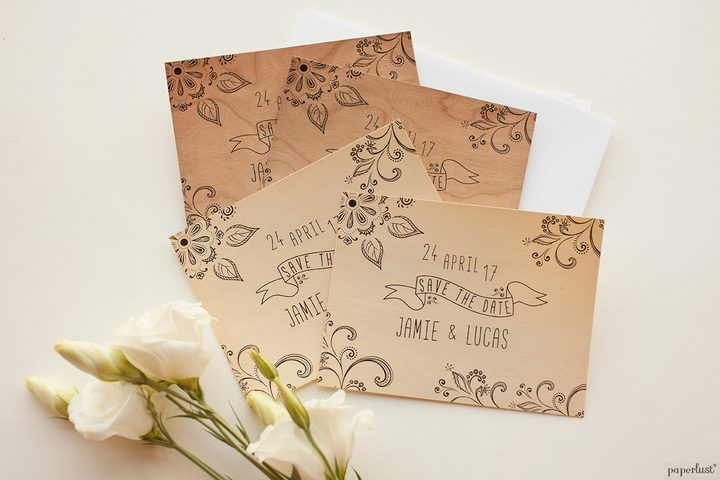
Your save the date is the first piece of western stationery guests will see, and it sets the tone for everything that follows. For western weddings, this is often the most casual piece, a simple kraft postcard, a fun “lasso the date” message, or a landscape-format card with a barn illustration and your names in a big script.
Cross-link: See our guide to western save the dates for specific wording ideas and design tips.
The Invitation Itself
The invitation carries the most design weight and the most practical information. This is where your print method choice, paper choice, and motif come together. If you are printing on kraft, your entire visual system follows from that. If you are going with flat foil on cream, every other piece in the suite should echo the same cream and gold palette.
RSVP Card
Western RSVP cards are an opportunity to continue the personality of your invitation with a light touch. Popular options include:
- “Boots on / Boots off” as a yes/no indicator (creative but memorable)
- A fill-in meal choice with a playful frame: “I reckon I’ll have…”
- A simple rustic-lettered “Kindly reply by [date]” with a wildflower motif
Keep the RSVP card in the same palette as the invitation. If your invitation is kraft + white ink, your RSVP card should be the same, not suddenly a cream-and-sage combination that looks like a different suite.
Details and Information Card
For western and country weddings with remote venues, a details card is often essential. Guests may need directions that go beyond GPS, parking instructions for a gravel lot, information about a shuttle from town, or a note about terrain (uneven ground, outdoor ceremony, no electric outlets for accessories).
Format the details card as a companion to your invitation, same size, same paper, same font system. Keep the copy warm and direct: “The ceremony is held in the field behind the barn. Boots recommended. There is parking for 200 cars on the north paddock.”
Place Cards, Menus, and Day-of Stationery
Western day-of stationery typically extends the earthy palette with smaller botanical or western accent elements. Consider:
- Small wildflower sprigs on each place card
- A hand-lettered menu on a flat cream card with a rope border
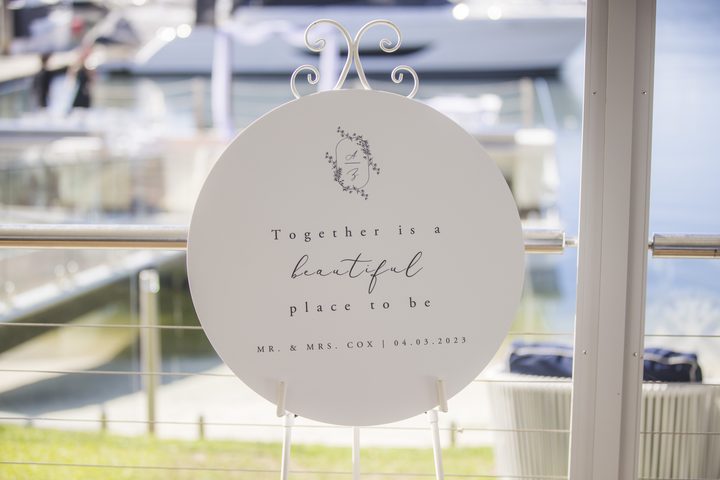
- A welcome sign in matching script typography
- A seating chart printed on a large kraft panel
Paperlust offers a full range of wedding stationery designed to be ordered as a coordinated set. Ordering 3 or more card types gives you 15% off, which helps when you are building out a full western suite.
Ordering Timeline
For western weddings that include remote venues, mail-heavy RSVPs, or hand-assembled suites with wax seals and ribbon, build in extra time:
- Save the dates: 6-8 months out
- Invitations: 8-10 weeks before the wedding (to allow for mailing, RSVPs, and follow-up)
- Proof delivery: within 1-2 business days of placing your order at Paperlust
- Day-of stationery: 4-6 weeks out
Ready to find your western wedding invitations?
Browse hundreds of rustic, country, and botanical designs, digital, flat foil, letterpress, and white ink on kraft.
Frequently Asked Questions
What makes an invitation “western style”?
Western wedding invitations typically use natural textures (kraft paper, linen-textured card), earthy color palettes (terracotta, sage, denim, cream), and illustrated motifs drawn from the rural landscape, wildflowers, botanicals, boots, horseshoes, or barn silhouettes. The wording is warm and casual rather than stiffly formal.
What is the best paper for a western wedding invitation?
Kraft paper is the most recognizably western choice, especially with white ink printing for high contrast. Matte cream cardstock is a close second, it photographs warmly, takes ink beautifully, and pairs with any of the key western palettes. For a premium finish, 380gsm matte or linen stock adds weight and substance without veering into slick territory.
What print method works best for western invitations?
Digital print on kraft or matte card is the most popular and versatile approach. White ink on color stock (navy, denim, or terracotta-colored card) creates a striking high-contrast look. For couples who want a metallic touch, flat foil in gold or copper on cream card adds warmth without the debossed impression of letterpress. White ink on kraft is not available at Paperlust because the warm brown paper shifts color, digital on kraft or white ink on color stock are the correct approaches for dark-background designs.
How should western wedding invitations be worded?
Match your wording to the tone of the event. Barn and ranch weddings with a casual atmosphere suit friendly, direct language: “Y’all are invited” or “Join us under open skies.” For couples who want a warmer but still polished tone, “Together with their families, [Name] and [Name] invite you to celebrate their marriage” translates beautifully onto a rustic card. Avoid ultra-formal phrasing (“We request the honour of your presence”) on a western design, the mismatch reads as awkward rather than elevated.
Should I include a dress code on a western wedding invitation?
Yes, especially if “western” implies practical footwear or significantly different attire than guests would choose by default. Lines like “Western chic attire,” “Boots and blazers welcome,” or “Boots recommended, the grass is real” give guests useful, specific guidance. You can include this on the main invitation or on a separate details card.
How far in advance should I order western wedding invitations?
Order invitations 10-12 weeks before your wedding, aiming to mail them 6-8 weeks out. For western weddings with remote venues or hand-assembled suites (wax seals, twine ties), add an extra week for assembly. Proofs at Paperlust are delivered within 1-2 business days of placing your order, and you get two rounds of edits included.
Can I order a sample before committing to a full print run?
Yes. Paperlust offers a $5 sample pack with 7 designs across different print methods, and a $15 custom sample for most print methods (note: custom samples are not available for letterpress). This is a good way to check how your chosen paper and print method look in person before ordering your full invitation run.
Does Paperlust offer a full western stationery suite?
Paperlust’s range includes invitations, save the dates, RSVP cards, information/details cards, place cards, menus, and signage, all of which can be coordinated into a matching suite. Ordering 3 or more card types qualifies for a 15% discount. Free DHL Express shipping applies to orders over $350 USD.