

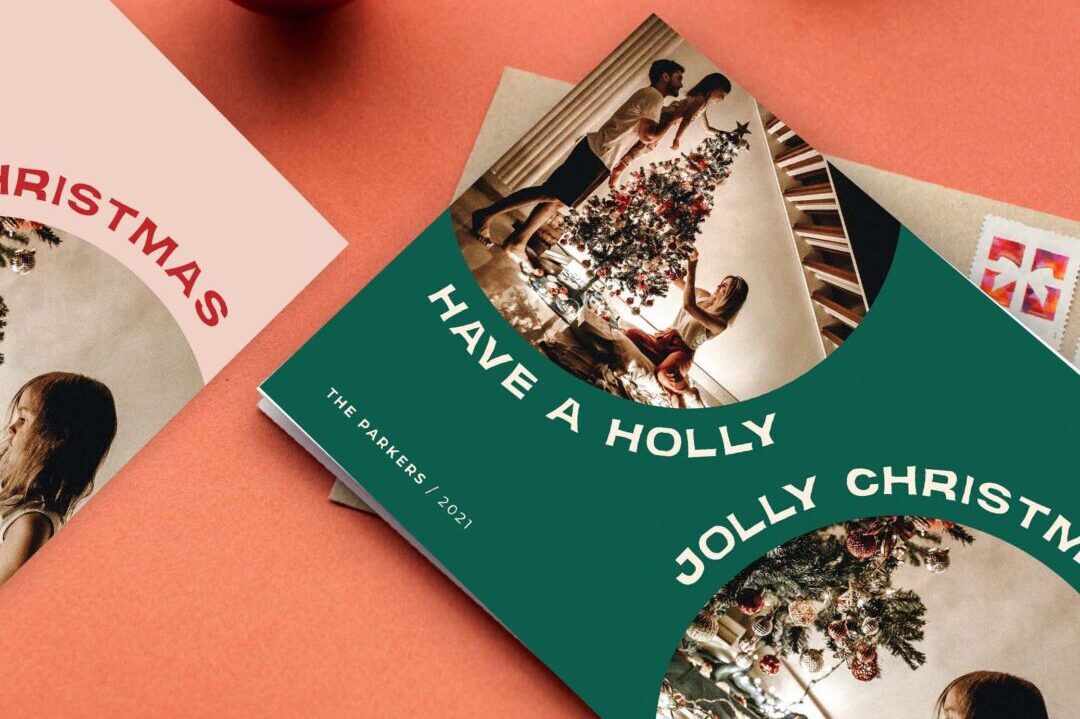
- Post domestic cards by the first week of December (AU) or December 10 (US), allow extra time for regional and rural addresses, and late November for most international destinations.
- One card per household is the standard, address it to “The [Last Name] Family” or list all members by name for a warmer, more personal touch.
- Always handwrite the envelope, even a beautifully printed card feels more meaningful when the address is in your own handwriting.
- Match formality to the recipient, “Mr. and Mrs.” for formal contacts; first names for close friends and family.
- Include a return address on the back flap, so undeliverable cards find their way back and recipients can update their lists for next year.
- Digital cards are acceptable but carry different weight, suitable for colleagues and acquaintances; close friends and family still treasure paper.
Sending Christmas cards is one of the most enduring holiday traditions, a chance to pause, reflect on the people who matter most, and let them know they are remembered. As the most cherished of all greeting cards, a Christmas card carries a warmth that lasts long after the season. Done well, a card says far more than a text message or social post ever could. Whether you are navigating formal address conventions or searching for the right words to write inside, this guide covers everything you need to feel confident about Christmas card etiquette from start to finish.
When to Send Christmas Cards
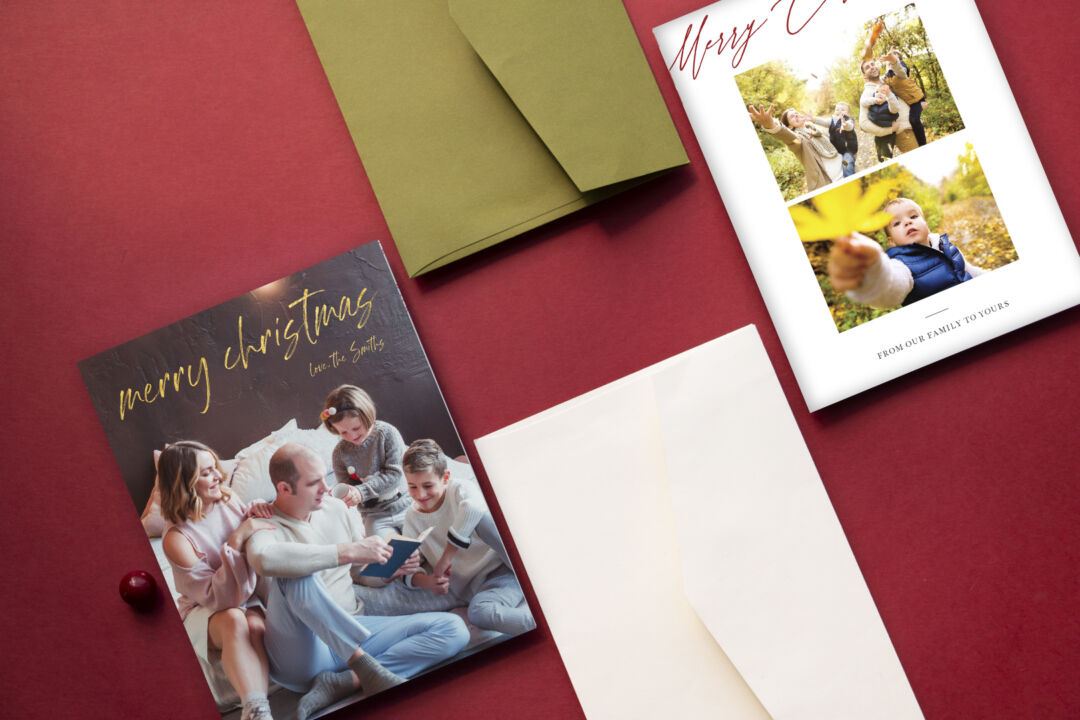

Timing is everything with Christmas cards. Most people underestimate how long mail takes during the holiday season, when postal services worldwide handle a significant surge in volume that can extend delivery times by days or longer.
For recipients within Australia, aim to have your cards in the post by the first week of December. For regional and remote addresses, posting by late November gives you the best chance of arriving before Christmas Day. Within major cities, two weeks’ lead time is usually sufficient, but building in extra time is always wise during a period when postal delays are common.
For senders in Australia, international card deadlines are earlier than most people expect. Cards to the UK, USA, Europe, and Asia ideally need to leave Australia by late November for reliable holiday delivery. Australia Post publishes specific country cut-off dates each year on their website, and these can shift depending on carrier arrangements and destination processing times, worth checking in early November.
A practical tip: order your cards early enough to have them in hand by mid-November. That gives you time to write personal messages, address envelopes carefully, and post in batches rather than scrambling at the last minute.
How to Send Christmas Cards: A Mailing and Ordering Timeline
If you are mailing from the United States, USPS handles a significant volume surge from Thanksgiving through Christmas. First-Class Mail typically delivers within 2-5 business days domestically, but transit times extend during peak season. For domestic cards, aim to have them in the mail by December 10. Cards to distant states, rural addresses, PO Boxes, and APO/FPO destinations should go out even earlier, by early December. For international mail from the US, target late November for most countries. USPS publishes its official holiday shipping deadlines annually at USPS.com, generally in October or November, and these are the definitive reference for the current year.
Ordering your Christmas cards with enough lead time to allow for writing, addressing, and comfortable posting is the single most effective thing you can do to get your cards there on time. The table below gives a general planning framework for US and Australian senders.
| Step | United States | Australia |
|---|---|---|
| Order your cards | By early November (allow 2-4 weeks production time) | By early November (allow 2-4 weeks production time) |
| Write and address envelopes | Mid-November | Mid-November |
| Mail to international destinations | Mid-to-late November. Check USPS.com for current year cutoffs. | Late November. Check Australia Post website for current year cutoffs. |
| Mail to distant or regional addresses | Early December, allowing 7-10 days transit | Late November, allowing 2-3 weeks for regional/remote addresses |
| Mail to local or metro addresses | By December 10 | By the first week of December |
| Check official cutoff dates | USPS.com (published October/November annually) | Australia Post website (updated each year) |
Who to Include on Your Christmas Card List
The question of who makes the list is one many people revisit every year. A useful rule of thumb: send a card to anyone who has been a meaningful presence in your life over the past twelve months. Beyond that, consider the following groups.
- Family and close friends, Always the priority. A personal note alongside your card makes it feel considered rather than obligatory.
- Neighbours, A card to a neighbour is a warm, low-key gesture that builds goodwill in your street or apartment building, particularly if you don’t see each other often.
- Colleagues and professional contacts, A card is a gracious way to close out the working year. Keep the tone appropriately professional and, where possible, add a brief handwritten note.
- Community members, Teachers, coaches, your local cafe owner, a doctor’s receptionist who always greets you warmly, people who contribute to your daily life often appreciate being remembered at Christmas.
- People you’ve drifted from, Christmas is a natural moment to reach out. A card is lower pressure than a phone call, and sometimes that is exactly what a lapsed friendship needs to restart.
- Anyone who sent you a card last year, There is an unspoken social understanding that cards are reciprocated. If someone made the effort, it is courteous to return it.
One thing worth noting: you don’t need to send a card to everyone in your contacts list. Quality and thoughtfulness matter far more than volume.
Keeping Your List Current
A Christmas card list works best as a living document rather than a static one. After the season ends, take a few minutes to note any addresses that bounced back, add anyone who sent you a card and was not already on your list, and update names for recipients who have married, moved, or changed their circumstances.
Once a year, a quick scan of your list will reveal names you are sending to out of habit rather than genuine connection. There is no obligation to prune those names, but if a card feels like a chore rather than a genuine gesture, it may be worth reconsidering. Conversely, a moment of realization in February that you forgot someone important is a useful prompt to add them now, before the next season arrives.
Keeping the list in a spreadsheet with columns for full address, preferred name format, and any children or pets worth mentioning in your sign-off saves significant time when November comes around.
Browse Christmas cards
Foil, metallic and digital print finishes designed in Australia.
How to Address Christmas Cards
How you address an envelope is the first impression your card makes. Thoughtful addressing signals respect and care, before the recipient has even broken the seal. The golden rule: write the full name and address, avoid abbreviations where possible, and use a title that reflects both the relationship and the context.
Married couples with the same last name
The traditional and widely accepted format is:
If you know both partners well, using first names is equally acceptable and often warmer in tone: James and Sarah Henderson. For same-sex couples, use the appropriate shared title, “Mr. and Mr.” or “Ms. and Ms.” as relevant.
Families with children
The simplest and most inclusive approach for a family unit:
If you want to include the children explicitly, particularly if you know them well, list everyone by name with parents first and children in age order:
Single recipients
For a formal approach, use the appropriate title and last name:
- Women: “Ms. [Last Name]”, unless you know she prefers “Mrs.” or “Miss”
- Men: “Mr. [Last Name]”
For close friends, a first name only is entirely appropriate and feels more personal than a formal title.
Professional contacts and companies
For a named individual at a company, address them directly:
For a whole team or organisation:
If you are sending business Christmas cards to clients or suppliers, always double-check you have the correct salutation and spelling. Small details matter when the purpose is to strengthen a professional relationship.
Formal titles: doctors, judges, and clergy
When addressing someone with a formal professional title, always use it. Omitting a title that someone has earned can feel dismissive, even unintentionally.
- Doctors: “Dr. Sarah Mitchell” or “Dr. and Mrs. Mitchell” for a couple; “Dr. and Dr. Mitchell” if both hold the title
- Judges: “The Honourable [First Name] [Last Name]”, the Australian convention is to spell it in full, not abbreviate to “Hon.”
- Catholic priests: “Father [Last Name]”
- Protestant ministers: “Rev. [Last Name]” or “Pastor [Last Name]” depending on denomination
- Rabbis: “Rabbi [Last Name]”
- Anglican clergy: “The Rev. [First Name] [Last Name]”
- Couple where one is clergy: “Rev. and Mrs. [Last Name]”
When in doubt, a formal title is always safer than omitting one.
Couples with different last names or hyphenated surnames
When a couple has different last names, list both partners individually on the envelope:
For a hyphenated surname, use the full hyphenated name, never shorten it. Abbreviating to just one name can feel like you are dismissing half of someone’s identity.
Divorced or widowed recipients
For divorced or separated individuals, send two separate cards. This removes any potential awkwardness and shows you regard each person as an individual in their own right.
For a widowed person, continue to use their preferred form of address. Many widowed women still use “Mrs. [First Name] [Last Name]”, this remains correct etiquette and is the safest choice unless you know they prefer something different.
Including children’s names on the envelope
For young children, addressing the family as a whole is entirely appropriate. If you want to acknowledge the children by name, add them on a line below the parents:
Ella and Tom
For older teenagers, including their names individually signals that you regard them as individuals, a gesture most teens genuinely appreciate. Young adults living at home often prefer their own card.
Return address etiquette
Always include a return address. It allows Australia Post to return undeliverable cards to you, and it lets recipients add your current address to their list for next year. In Australia, the return address is most commonly placed on the back flap of the envelope, either printed or handwritten in a slightly smaller size than the recipient’s address on the front. The top left corner of the envelope front is equally acceptable.
Use the table below as a quick reference when addressing your list:
| Recipient Type | Formal Envelope Address | Casual / Close Relationship | Key Notes |
|---|---|---|---|
| Married couple, same last name | Mr. and Mrs. Henderson | James and Sarah Henderson | Use “Mr. and Mr.” or “Ms. and Ms.” for same-sex couples |
| Married couple, different last names | Mr. James Taylor and Ms. Rachel Brown | James and Rachel | List both names; never abbreviate to one |
| Family with children | The Henderson Family | James, Sarah, Ella and Tom | Add children by name for a more personal touch |
| Single woman | Ms. Williams | Emily | “Miss” for younger; “Ms.” is the safest default |
| Single man | Mr. Patel | Rohan | First name only for close friends |
| Business or company | The Bloom Florists Team | N/A | Add a named individual if you know the contact |
| Doctor (and partner) | Dr. and Mrs. Mitchell | Sarah and James | “Dr. and Dr.” if both hold the title |
| Clergy | Rev. Thomas Clarke | N/A | Check denomination: Father, Pastor, Rabbi vary |
| Judge | The Honourable Mary Chen | N/A | Australian convention: spell out “The Honourable” in full |
What to Write Inside Your Christmas Card
The message inside your Christmas card carries more weight than the design. Even a short handwritten note can leave a lasting impression, and that is really the whole point of sending a card rather than a text message.
The etiquette here is less about strict rules and more about matching your message to the relationship and the context.
Religious versus secular wording
If you know the recipient celebrates Christmas as a religious occasion, a message with spiritual warmth is appropriate and appreciated:
For recipients whose beliefs you are unsure of, a warm secular message is inclusive without feeling forced:
Professional tone for colleagues and clients
For clients, colleagues, or formal contacts, keep the message brief and positive. Thank them for the year gone by, wish them a restful break, and express enthusiasm for the year ahead. Avoid personal references you wouldn’t include in a work email, the card’s warmth should come from its sincerity, not its familiarity.
When someone is grieving
If the recipient has lost someone close this year, acknowledging it briefly and warmly is the right thing to do. You don’t need to dwell on the loss, a single line that says “We know this Christmas will feel different, and we are thinking of you” can mean everything to someone navigating their first Christmas without a loved one. Avoid defaulting to pure festive cheer as though nothing has changed.
For wording templates covering every situation, formal, heartfelt, funny, professional, and more, visit our complete Christmas greetings guide with over 100 message examples.
Signing Your Card
How you sign a Christmas card is a small detail with a meaningful effect. A typed signature, or no signature at all, can make an otherwise beautiful card feel impersonal and mass-produced.
Handwriting matters
Sign each card by hand, even if it is just your first name. The physical act of handwriting reinforces that you made the card personally, it is something a pre-printed message can never replicate and something most recipients genuinely notice.
Signing for a couple
Convention is to list the person writing the cards first, followed by their partner:
Some couples prefer alphabetical order or go by who the recipient knows best. There is no strict rule, but consistency across your card list keeps things tidy and avoids any awkward omissions.
Signing for a family
For family cards, sign the parents’ names first, then list children in age order from oldest to youngest. Pets at the end, with an exclamation mark, is one of the more charming holiday traditions around.
Signing for businesses
Business cards should be signed with an individual’s name, not just the company name. A card that arrives signed only as “The Team at [Company]” with no personal name attached feels more like a marketing communication than a genuine gesture. Include your name and, if relevant, your role or department.
Photo Christmas cards
Share your year with a personalised photo card, add a foil finish for a result that feels like a keepsake.
How to Choose a Christmas Card That Fits the Etiquette
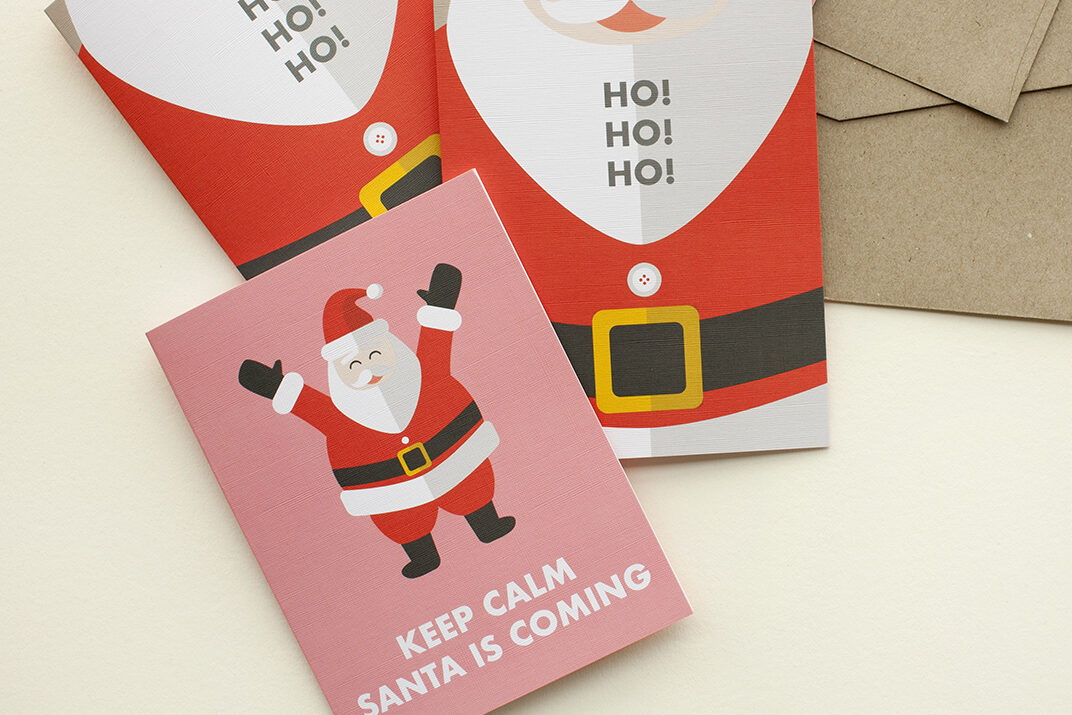
The right card for your employer is not the same card as the right choice for your grandmother or your best friend. Here is how to match your design to the occasion and the recipient.
1. Match the formality of the recipient
For formal recipients, employers, professional mentors, clients, and older family members you address by title, choose a design that feels polished rather than playful. Clean typography, a restrained colour palette, and a premium finish all signal respect and care. A flat foil card in gold or silver is a classic choice for this audience and works well across corporate and formal social contexts. Browse Paperlust’s Christmas card range for designs that suit formal and casual recipients alike.
2. Choose a print finish that reflects the message
Not all finishes suit all recipients or messages.
- Digital print is warm, versatile, and ideal for family photo cards and casual designs. The colour reproduction is excellent, and it is the most affordable option for larger card lists.
- Flat foil, with a mirror-bright metallic finish in gold, silver, rose gold, copper, and more, makes a strong impression for clients, employers, and anyone you want to impress. If you are sending across a large professional list, a consistent flat foil design in a single style presents a unified, polished image.
- Metallic print offers a middle ground: a subtle gold or silver tone that works for both festive and professional contexts without the full mirror-bright effect of foil.
3. Decide between a photo card and a typography design
Photo cards are ideal for family and friends who want to see how your year has unfolded. Paperlust’s flat foil technology allows you to add custom foil text directly over your photo, a gold, silver, or rose gold greeting printed over the image for a result that looks like a professionally produced product, not a home print-out. This is one of the most distinctive finishes available for photo Christmas cards and is particularly striking combined with a strong, well-composed hero photograph. Explore the photo Christmas card collection to see how this effect works across different designs.
For professional contacts, or for recipients who may not know your family, a pure typography design, centred on a warm seasonal greeting rather than your photo, is often the stronger choice. It is personal without being overly familiar.
A single recipient list rarely needs one design: the photo card that suits close family and friends is not the typography card that suits professional contacts, so Christmas card ideas by recipient sort each option by who will open it.
4. Consider an illustrated or holiday-themed design
A third option worth considering: illustrated or seasonal designs without a photo. These work well for professional contacts and for anyone on a mixed list where a family photo feels overly personal, but a plain typography card still seems impersonal. A beautifully illustrated winter scene, a festive botanical print, or a typographic design with flat foil lettering reads as considered and intentional without requiring any personal photography. For senders with large, varied card lists, a strong illustrated design also creates a consistent impression across every recipient. Browse the full range of Christmas cards to find illustrated, photo, and typography options across every available print finish.
Business and Corporate Christmas Cards
For business senders, a Christmas card carries a different kind of weight than a personal one. It is one of the few professional gestures delivered on a personal medium, and when done well, it can strengthen a client relationship, acknowledge a supplier partnership, or keep a lapsed professional connection warm heading into a new year.
Who to prioritize on your business card list
Focus on clients you have worked with over the past 12 months, key suppliers and service providers, referral sources and strategic partners, and any professional relationships you actively want to maintain. Cards to prospects you have not yet worked with are a different calculation and can feel premature if the relationship is not yet established.
Send business cards earlier than personal ones
Timing matters more for business cards than personal ones. Many offices close or slow down in the second or third week of December, and a card that arrives during the pre-holiday scramble can get lost in the noise. Aim to post business cards in late November or the first week of December, so they land on desks during the last proper working weeks of the year when they can actually be appreciated.
What to write in a business Christmas card
Keep the message brief, warm, and specific. Thank the recipient for the year, express genuine appreciation for the relationship, and wish them a restful break. If you can add a single sentence that references a specific project or moment from the past year, it transforms a standard message into one that gets noticed. Avoid templates that read as mass-produced, even when sending in high volume: a one-line personalization makes a real difference.
Design choices for corporate Christmas cards
For a consistent, professional result across a large business list, a clean typographic design with flat foil in gold or silver projects a premium impression without being ostentatious. Keep imagery neutral and seasonally warm rather than explicitly religious, particularly for clients and colleagues from diverse backgrounds. The cards themselves are printed as folded A6 on matte 300 gsm board with a premium white envelope included, and the company name, logo and greeting are printed inside at no extra cost. Explore professionally designed Christmas cards in foil and metallic finishes that work equally well for corporate and personal sending. If you’re based in Australia, visit this corporate Christmas cards page, which delivers to Australian addresses; if you’re in the United States, visit this corporate Christmas cards page, shipped by our US shop.
Christmas Party Invitations: Planning the Season’s Social Calendar
A Christmas party invitation is a fundamentally different piece from a Christmas card. The card says you are thinking of someone; the invitation says you want them in the room with you. If you are hosting a holiday gathering this season, the invitation deserves its own consideration alongside your card list.
When to send Christmas party invitations
For a December party, aim to send invitations 4-6 weeks in advance. December is the busiest social month of the year, and guests who receive a last-minute invitation often cannot accept, not because they do not want to attend, but because their calendar is already committed. For formal events or larger gatherings, 6-8 weeks is a safer window. For a casual get-together with close friends, 3 weeks can work, but 4 weeks gives everyone a more comfortable runway to respond.
Who receives an invitation versus who gets a card
Your Christmas card list and your party guest list are separate decisions. Most people send Christmas cards to a much wider circle than they could realistically invite to any event. Not everyone on your card list needs an invitation, and not every party guest is necessarily on your card list. Think of them as two parallel tracks with some overlap, rather than one automatically informing the other.
RSVP etiquette for holiday parties
Always include an RSVP request, even for casual events. The holiday season creates enough scheduling complexity that a clear deadline and a simple response method are genuinely useful to guests. Set your RSVP deadline at least 10-14 days before the event. Make the process as easy as possible: a text, an email reply, or a simple online form all work. The more friction-free you make responding, the faster you get the numbers you need to plan catering, seating, and logistics.
Finding the right invitation design
A holiday party invitation reflects the tone of the event. A formal corporate dinner calls for something polished and restrained; a neighborhood potluck suits something playful and festive. Coordinated stationery across an invitation and any accompanying pieces creates a cohesive first impression before anyone arrives. Browse Christmas party invitations for designs that span the full range from formal foil-finished to warmly casual. If you are sending both cards and invitations this season, look for Christmas party invitations that complement your card choice for a coordinated seasonal suite.
Modern Christmas Card Etiquette
Digital technology has introduced new questions about what is and is not acceptable. Here is where current etiquette stands on the most common modern dilemmas.
Digital cards versus paper
Digital Christmas cards have become genuinely mainstream, particularly for colleagues, acquaintances, and large professional contact lists where sending individual paper cards would be impractical. They are not inherently rude, but they carry a different weight than a physical card. For close friends and immediate family, most people still feel that a paper card says more.
If you choose to send digitally, put care into the message. A digital card with a thoughtful personal note is more meaningful than a generic paper card with a pre-printed greeting and no signature.
Photo cards and children’s privacy
Photo cards featuring children or grandchildren are enormously popular, and for good reason. They are personal, joyful, and give recipients a snapshot of your family’s year. A few considerations worth keeping in mind:
- If your card list includes acquaintances, professional contacts, or anyone you don’t know well, think carefully about sharing images of young children with people outside your inner circle.
- For close family and trusted friends, photo cards remain a beloved and entirely appropriate tradition.
- The quality of the photo matters. A well-lit, well-composed family photo makes a card feel like a keepsake; a poorly lit snapshot in a beautiful design still looks like a snapshot.
One card per household
When two people share a home, as a couple, housemates, or family members, one card addressed to both is the standard. Sending two individual cards to the same address is unnecessary and can signal that you haven’t kept up with someone’s living situation.
When not to send
There are situations where a Christmas card is more likely to cause discomfort than joy. Consider holding off if:
- Someone is in the immediate aftermath of a significant bereavement, the first Christmas after a loss is often the most difficult, and a card that leads with festive cheer can land badly
- There is an unresolved conflict with a colleague or professional contact that a card may feel like it glosses over
- You are sending to an ex-partner without clear, mutual understanding that the contact is welcome
In these cases, a kind note at a different time of year is often more appropriate and more appreciated.
Common Christmas Card Etiquette Mistakes to Avoid
Even with the best intentions, small missteps can undermine an otherwise lovely gesture. These are the most common ones to watch for.
Outdated names or addresses
People get married, divorced, move house, and change their names. If you are working from an old address book, take a moment to verify the current details, particularly for people you send to every year but don’t see or speak with often. Getting someone’s name wrong, or using a maiden name after a marriage, can cause unintended offence.
A printed greeting with no personal message
A card that arrives with only a pre-printed message and a typed signature feels more like a corporate circular than a personal gesture. Even a single handwritten sentence makes a significant difference to how the card is received.
Sending too close to Christmas Day
A card that arrives on 23 December has missed most of the festive lead-up. It can feel like an afterthought rather than a considered gesture. Aim to have your cards delivered by the second week of December at the latest.
Forgetting the return address
Without a return address, undeliverable cards are discarded rather than returned to you. You also lose the opportunity for recipients to add your current address to their own list for next year.
Using Christmas-specific imagery for non-Christian recipients
For Jewish, Muslim, or non-Christian recipients, a neutral holiday card is a more inclusive and thoughtful choice than a card with explicitly Christmas-specific religious imagery. A little awareness here goes a long way.
Forgetting to sign
It sounds obvious, but in the rush of writing dozens of cards, signatures get missed. Check each card before sealing the envelope. A card without a signature is not much better than no card at all.
Frequently Asked Questions
How do you address a Christmas card to a family?
The most inclusive and widely accepted approach is to address the envelope to “The [Last Name] Family”, for example, “The Henderson Family.” If you want to personalise it further, list the family members by name with parents first and children in age order from oldest to youngest: “James, Sarah, Ella and Tom Henderson.” For very young children, addressing the parents and letting the greeting inside cover the whole family is perfectly fine. Whatever approach you choose, writing the address by hand rather than printing a label adds a personal touch that most families genuinely appreciate.
Is it rude to send a digital Christmas card instead of a paper one?
Not at all, but context matters. Digital cards are widely accepted for colleagues, professional contacts, and large acquaintance lists where sending individual paper cards would be impractical. For close friends and immediate family, a paper card carries more warmth and intentionality. The key is the message: a digital card with a heartfelt, personal note will always outperform a paper card with a generic pre-printed greeting and no signature.
When should I send Christmas cards in the United States?
For domestic recipients within the United States, aim to have your cards in the mail by December 10. USPS First-Class Mail typically delivers within 2-5 business days domestically, but transit times extend during the holiday season when mail volume peaks significantly. For recipients in distant states, rural areas, or at APO/FPO addresses, allow extra time and aim for early December. For international destinations from the US, late November is the safer target for most countries. USPS publishes its official holiday shipping deadlines each year at USPS.com, generally in October or November. Those published deadlines are the definitive reference for the current year’s specific cutoffs.
When should I send Christmas cards in Australia?
For recipients within Australia, aim to post your cards by the first week of December. Australia Post experiences a significant increase in mail volume during the holiday period, and allowing two to three weeks for delivery is wise, particularly for regional and remote addresses. For international cards, most destinations require posting by late November for reliable delivery before Christmas. Check the Australia Post website each year for specific country cut-off dates, which are updated annually.
How do you sign a Christmas card from a couple or family?
Convention is for the person writing the cards to list their own name first, followed by their partner’s, then children in age order from oldest to youngest. So if Sarah is doing the writing, she would sign “With love, Sarah, James, Ella and Tom.” For businesses, sign with an individual’s name rather than just the company name, it is warmer and more personal. If you would prefer a simpler format, “With love from the Hendersons” covers the whole family without requiring individual names.
What do you write in a Christmas card for someone who has lost a loved one?
Acknowledge the loss briefly and with warmth, without making grief the centrepiece of your message. Something like “We are thinking of you especially this Christmas and sending our love” is gentle and caring. You don’t need to explain or resolve anything, the act of remembering them is what matters most. Avoid defaulting to pure festive cheer as if the loss has not happened, as this can feel unintentionally dismissive to someone navigating a difficult Christmas.
Should you send Christmas cards to coworkers and clients?
Yes, with some thoughtfulness. A Christmas card to a client is a gracious way to close the working year and express genuine appreciation for the relationship. Keep the message professional and warm. For coworkers, a card is a welcome gesture, particularly for those you work closely with. If your workplace has diverse religious backgrounds, a neutral holiday greeting is more inclusive than an explicitly religious one.
How do you address a Christmas card to a doctor, judge, or member of the clergy?
Use the formal title in all cases. For doctors, “Dr. [First Name] [Last Name]” is correct; for a couple where both hold the title, use “Dr. and Dr. [Last Name].” For an Australian judge, the convention is “The Honourable [First Name] [Last Name]”, spell it out in full rather than abbreviating. For clergy, the title depends on the denomination: “Father” for Catholic priests, “Rev.” or “Pastor” for Protestant ministers, “Rabbi” for Jewish clergy. When in doubt, a formal approach is always safer than omitting a title.
Do you put a return address on Christmas cards?
Yes, always. A return address serves two practical purposes: it allows Australia Post to return undeliverable cards to you, and it lets recipients add your current address to their list for next year. In Australia, the return address is most commonly placed on the back flap of the envelope, either printed or handwritten in a slightly smaller size than the recipient’s address on the front. The top left corner of the envelope front is equally acceptable.
What is the difference between a Christmas card and a Christmas party invitation?
A Christmas card maintains a relationship; a party invitation activates one. Cards go to your broader network to say you are thinking of them. Invitations go to people you want to gather with in person for a specific event. Most people send cards to a much larger circle than they could ever invite to a party, and the two lists usually have only partial overlap. If you are sending both this season, think of them as complementary pieces rather than competing ones.