

Vintage save the dates set the tone for a wedding before a single guest steps through the door. Whether you are drawn to the geometric glamour of Art Deco, the ornate romance of Victorian illustration, or the faded warmth of a mid-century postcard, there is a vintage aesthetic to match every couple’s story. This guide covers the styles, design elements, paper finishes, and wording that bring the vintage vision to life.
- Art Deco, geometric motifs, gold or black palette, bold serif or inline fonts, flat foil finish
- Victorian, botanical engravings, black ink on cream, ornate flourishes, letterpress on Wild Cotton
- Mid-Century Modern, retro sans-serif type, pastel color blocks, illustrated icons
- Antique Postcard, postcard format, distressed script, sepia or duotone photography
- 1920s Gatsby, black and champagne palette, sunburst motifs, rose gold flat foil
- Photo Vintage, engagement photo with aged filter, vignette edges, retro serif overlay
Send timeline: 8-12 months before the date for destination weddings; 6-8 months for local.
What Is a Vintage Save the Date?
A vintage save the date is a pre-wedding announcement card designed to evoke an earlier era. The word “vintage” covers a broad spectrum in wedding stationery, from the geometric precision of 1920s Art Deco to the hand-engraved florals of Victorian calling cards and the playful retro type of the 1950s and 1960s. What connects all of these styles is a deliberate nod to the past: aged textures, classic typographic conventions, ornamentation that has fallen out of mainstream fashion, and a color palette that favors deep creams, blacks, sepia tones, and metal finishes.
Couples choose vintage save the dates for a variety of reasons. Some are marrying at a heritage venue, a restored mansion, a vineyard estate, a Victorian-era ballroom, and want stationery that mirrors the architecture. Others simply love the tactile richness that vintage-influenced paper and printing techniques provide. And many couples want their stationery to stand out in a digital-first world: receiving a beautifully aged card in the mail creates a moment that a notification on a phone never can.
Vintage is also one of the most flexible wedding themes from a design standpoint. It pairs naturally with rustic, garden, and formal aesthetics, and it scales from a tight budget (a well-designed digital print with aged typography) to the top of the market (letterpress-pressed into thick Wild Cotton paper).
Vintage Save the Date Styles: Art Deco, Victorian, Mid-Century, and More
Art Deco (1920s-1930s)
Art Deco is defined by symmetry, bold geometry, and an unapologetically glamorous color palette. On a save the date, Art Deco signatures include:
- Sunburst or fan motifs in a header or border
- Geometric diamond or chevron repeat patterns as backgrounds
- High-contrast black and gold or black and white color scheme
- Inline or engraved-style typefaces with strong vertical and horizontal strokes
- Thin ornamental rules separating blocks of text
The Great Gatsby era comes to mind immediately, and gold flat foil makes a natural pairing for this style. The mirror-bright foil finish plays perfectly against a deep black or ivory matte card stock. For couples wanting a more tactile approach, letterpress on Wild Cotton paper adds a pressed-into-paper impression, delivering physical depth alongside striking typography.
Victorian and Edwardian Romance (1837-1914)
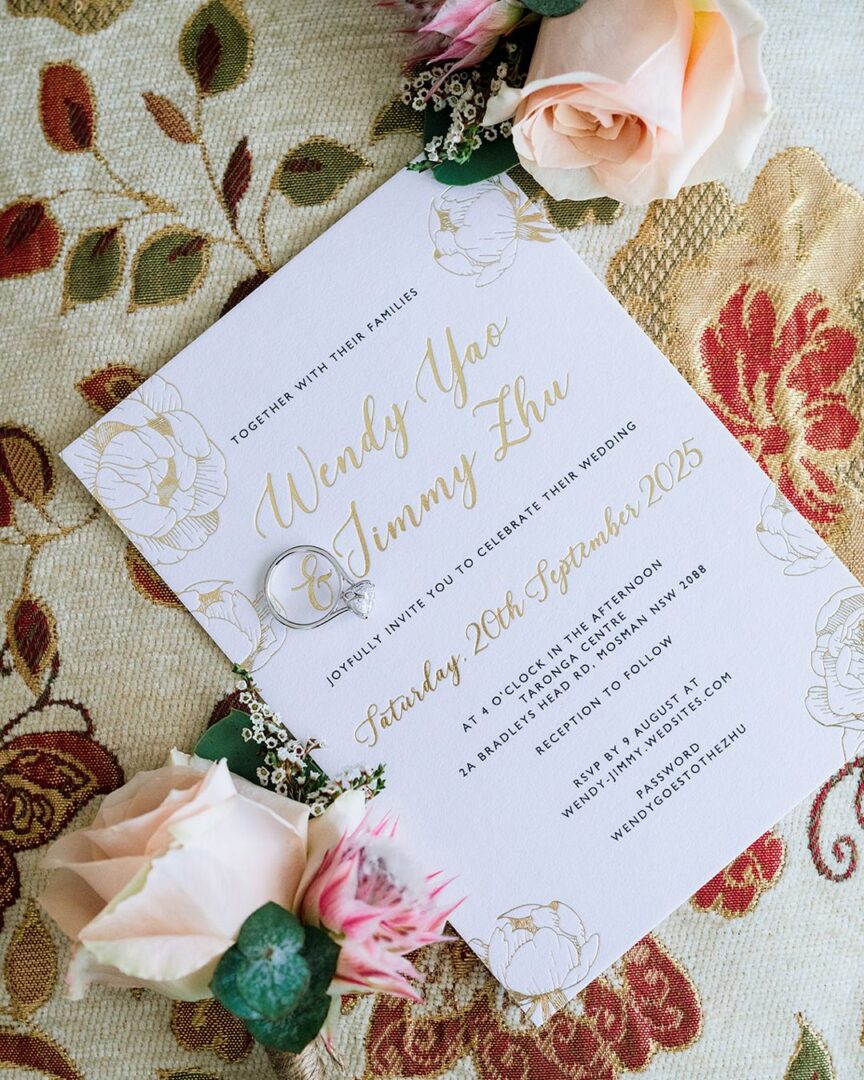
Victorian-era design favors intricate botanical illustration, swirling calligraphy scripts, and dense ornamentation. Key elements include:
- Hand-drawn or engraved floral and fauna motifs (roses, ferns, peacock feathers)
- Dark ivy green, burgundy, dusty mauve, and black against cream backgrounds
- Script typefaces with exaggerated ascenders and descenders
- Decorative frames and corner flourishes
- Postage-stamp motif details
Letterpress printing is the natural fit for Victorian-style stationery. The physical impression left in thick cotton paper replicates the intaglio printing of the era, and Wild Cotton paper stock at 300gsm or 600gsm adds the substantial, hand-pressed feel that defines this aesthetic. A 600gsm Wild Cotton card has a presence in the hand that few modern printing methods can match.
Mid-Century Modern and Retro (1940s-1960s)
Mid-century vintage leans lighter and more playful than Art Deco or Victorian. Design characteristics include:
- Bold, rounded sans-serif typefaces (reminiscent of mid-century poster art)
- Pastel color blocks: dusty pink, sage green, pale butter yellow
- Simple illustrated motifs: cocktail glasses, martini olives, retro cameras, Airstream trailers
- Postcard format with a divided back panel
- Minimalist layout with generous white space
This aesthetic works beautifully for couples hosting a backyard reception, a venue with 1960s architecture, or anyone who loves the stylized illustration of the era. Digital printing allows for the full-color pastels that define mid-century design at an accessible price point.
Antique Postcard Style
Antique postcard save the dates mimic the thin, aged cards that crossed the Atlantic in the early 1900s. Key visual elements include:
- Sepia or two-tone photography treatments on the front
- Divided postcard back with a ruled line and “Place Stamp Here” corner box
- Distressed or hand-lettered script fonts
- A rounded corner trim
- Postmark-style date stamps
Couples love this format because it doubles as a piece of art guests want to keep. The postcard format also means the card can be mailed without an envelope, reducing costs. Browse Paperlust’s full range of save the date invitations to find postcard formats alongside traditional card sizes.
Design Elements That Create a Vintage Feel
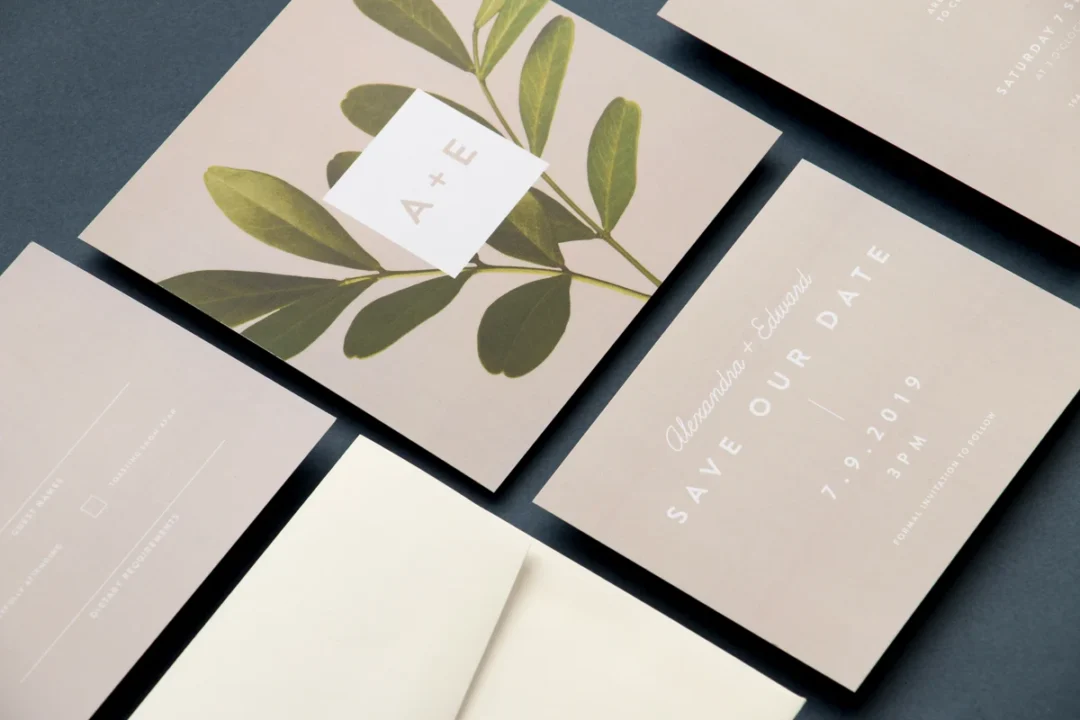
The difference between a card that looks genuinely vintage and one that looks like a failed attempt usually comes down to the execution of four specific design elements.
Typography
Typography is the most powerful vintage signal. The typeface choice communicates the era before anything else is read.
- Script fonts with high contrast strokes, thick downstrokes and thin upstrokes, signal Victorian or Edwardian formality
- Inline or engraved serif fonts, letters with a second thinner line drawn inside the stroke, immediately read as Art Deco
- Slab serifs with rounded corners, think old-fashioned circus or general store signage, evoke late 1800s Americana
- Humanist sans-serifs with slightly irregular letter spacing, suggest mid-century modernism
Avoid overly clean, digital-native typefaces. A font that was designed in the 2010s for screen rendering, even if it has serifs, rarely looks authentically old.
Motifs and Illustration
The right ornamental motif instantly grounds a design in a specific era. For vintage save the dates, the highest-impact motif choices are:
- Botanical line drawings (ferns, roses, magnolias, wisteria), Victorian, garden-romantic
- Geometric borders and sunbursts, Art Deco
- Cameo or portrait silhouettes, Victorian, Edwardian
- Postmark stamps or cancellation marks, antique postcard
- Film-reel or typewriter graphics, 1940s-1950s
- Ampersands with elaborate swash details, spans multiple eras, particularly effective in letterpress
Avoid mixing motifs from very different periods on the same card. A sunburst next to a Victorian botanical illustration reads as cluttered rather than layered.
Color Palette
Vintage color palettes are restrained compared to contemporary wedding stationery. The most authentic combinations are:
- Ivory/cream + black + gold, Art Deco, universally elegant
- Cream + deep burgundy or forest green, Victorian, formal
- Sepia + rust + navy, antique Americana, postcard style
- Pale butter + sage + warm brown, mid-century, relaxed
- Champagne + rose gold, 1920s Gatsby, romantic
Avoid pure white backgrounds (too clean for vintage) and neon or highly saturated accent colors (anachronistic).
Texture and Aging Effects
Texture matters enormously in vintage stationery. A design that looks perfectly period-appropriate on screen can fall flat when printed on smooth, bright white card. Vintage-authentic printing should include at least one of:
- A textured paper stock (cotton, linen)
- An ink or finish that adds a tactile element (letterpress deboss, metallic pigment, foil)
- A design element that simulates aging (distressed typefaces, faux watercolor washes, mottled ink effects)
Typography and Color Choices for Vintage Save the Dates
Serif and Script Combination Layouts
The most versatile vintage layout pairs a display serif or script typeface for the couple’s names and a second complementary serif for the date and location details. This hierarchy mimics the typographic conventions of historical printing.
A well-executed vintage layout typically contains:
- Names, set in a script or display serif at the largest size
- “Save the Date”, set in small caps or a condensed display font, often in a contrasting weight
- Date, city, and URL, set in a small, clean serif with generous tracking (letter spacing)
- Decorative rule or ornament, used to divide the names section from the date details
Avoid more than three typeface families on a single card. Vintage design relied on the printer’s limited typeface inventory as a natural constraint, and modern vintage stationery looks most authentic when it follows that discipline.
Best Color Pairings by Era
| Era | Primary Color | Accent | Best Print Method |
|---|---|---|---|
| Art Deco (1920s) | Black or deep navy | Gold or champagne | Flat foil, letterpress |
| Victorian (1850s-1900s) | Ivory or cream | Forest green or burgundy | Letterpress on Wild Cotton |
| Gatsby/Jazz Age (1920s) | Champagne or blush | Rose gold | Flat foil, metallic |
| Mid-Century (1950s-1960s) | Pastel (sage, blush, butter) | Warm tan or rust | Digital print |
| Antique Postcard (1900s-1920s) | Sepia or aged cream | Rust or dark brown | Digital print, metallic |
Vintage Photo Save the Date Ideas
Engagement photos are often the centerpiece of a save the date, and vintage styling transforms a contemporary photograph into something that looks like it could have been taken in another era.
Editing Styles for a Vintage Photo Feel
The edit matters as much as the design overlay. Vintage photo save the dates typically use one of these editing approaches:
Film Grain and Fade
A slight film grain overlay and lifted shadows (faded blacks rather than true black) gives any photograph the feel of a print from a 35mm roll. This works especially well for outdoor engagement sessions shot in natural light.
Sepia or Duotone Processing
Sepia treatment replaces the color information in a photograph with warm brown tones, referencing early photographic printing processes. Duotone (two-color photography) allows for a more controlled vintage palette, such as pairing deep navy with warm cream.
Vignette and Light Leak Effects
Soft vignette edges, where the image darkens slightly toward the corners, evoke the optical properties of older camera lenses. Light leak overlays add a streak of warm amber or pink light across one edge of the image, referencing the actual light leaks that occurred in improperly loaded film cameras.
Matching the Photo Style to the Card Design
A photo save the date succeeds when the edit and the design treatment share the same era reference. Some pairings that work well:
- Art Deco design + high-contrast black-and-white photo with a vignette
- Victorian or garden-romantic design + soft warm-toned edit with film grain
- Mid-century design + desaturated color with a slight color shift toward green or amber
- Antique postcard design + sepia or duotone photo treatment
If the couple’s engagement session was shot in natural light at a historic venue or garden, the existing background already does much of the vintage work. In that case, a lighter edit that preserves the authentic atmosphere of the location is often more effective than a heavy digital vintage filter.
Paperlust’s designers can apply basic photo enhancements, brightness, contrast, and color adjustments, when helping finalize a save the date design. If you want a specific vintage edit applied to your photo, note it as a special request when placing your order.
Paper and Print Finishes That Enhance Vintage Designs
The print method and paper stock are where a vintage save the date moves from attractive to genuinely memorable. Here is how each major Paperlust print method serves different vintage aesthetics.
Letterpress on Wild Cotton: The Heritage Standard
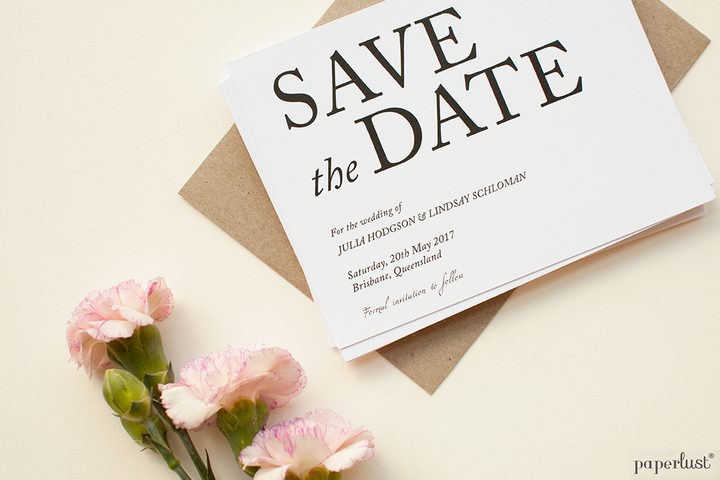
Letterpress is the most authentic vintage printing method available today. The process uses a metal or polymer plate pressed with force into thick paper stock, leaving a visible debossed impression where ink was applied. This pressed quality is the defining physical characteristic of historical stationery.
Wild Cotton paper, available at 300gsm and 600gsm, is the only stock used for letterpress at Paperlust. The 600gsm Double Thick version is particularly well suited to Victorian and Art Deco designs: the sheer mass of the card in the hand communicates quality before the design is even fully examined. Wild Cotton has a natural texture that reads as premium and slightly aged, not rough, but not the antiseptic smoothness of a modern office card.
Letterpress is best for: Victorian, Art Deco (two-color or black ink), antique Americana designs. It works less well for designs that require photographic elements or more than two or three ink colors, since letterpress is inherently a one-or-two-color process.
Flat Foil: Mirror-Bright Metallic Without a Die
Flat foil applies a metallic film to the card surface, creating a mirror-bright finish. Available foil colors that suit vintage aesthetics include gold, pale gold, rose gold, copper, and silver. Flat foil does not require a custom metal die (unlike custom-die foil stamp techniques used by some trade printers) and is available from a minimum of 10 cards, making it accessible for smaller orders.
Flat foil is the most effective match for 1920s Art Deco and Gatsby-inspired designs, where the emphasis is on brilliant metallic accents rather than a physically textured impression. A black matte card stock with gold flat foil lettering achieves the high-contrast sophistication of the era without any emboss or deboss.
Metallic Print: Subtle Gold for Postcard and Mid-Century Styles
Metallic print uses a dry-toner gold pigment applied at a fifth imaging station alongside the standard CMYK process. The result is a subtle, warm metallic sheen rather than the mirror-bright finish of foil. This understated quality suits antique postcard designs and mid-century typography-led designs where the goal is warmth rather than glamour.
Metallic print is available on 300gsm Matte, 300gsm Linen, and 380gsm Premium card stocks.
Digital Print on Textured and Toned Stocks
For vintage styles where texture and color do most of the work, mid-century pastels, aged sepia tones, kraft paper Americana, digital print on the right stock achieves excellent results at the most accessible price point. Linen stock (300gsm) has a subtle woven texture that reads as softly vintage. Kraft paper creates an immediate earthy, aged feel with no design work required.
| Vintage Style | Recommended Method | Recommended Paper | Min. Order |
|---|---|---|---|
| Victorian / Edwardian | Letterpress | Wild Cotton 300gsm or 600gsm | 10 |
| Art Deco / 1920s Gatsby | Flat foil or letterpress | Matte 380gsm or Wild Cotton | 10 (flat foil) / 10 (letterpress) |
| Mid-Century Retro | Digital print | Matte 300gsm or Linen 300gsm | 10 |
| Antique Postcard | Digital print or metallic | Matte 300gsm or Linen 300gsm | 10 |
| Romantic Botanical | Letterpress or flat foil | Wild Cotton 300gsm or Matte 300gsm | 10 (letterpress) / 10 (flat foil) |
Wording Examples for Vintage Save the Dates
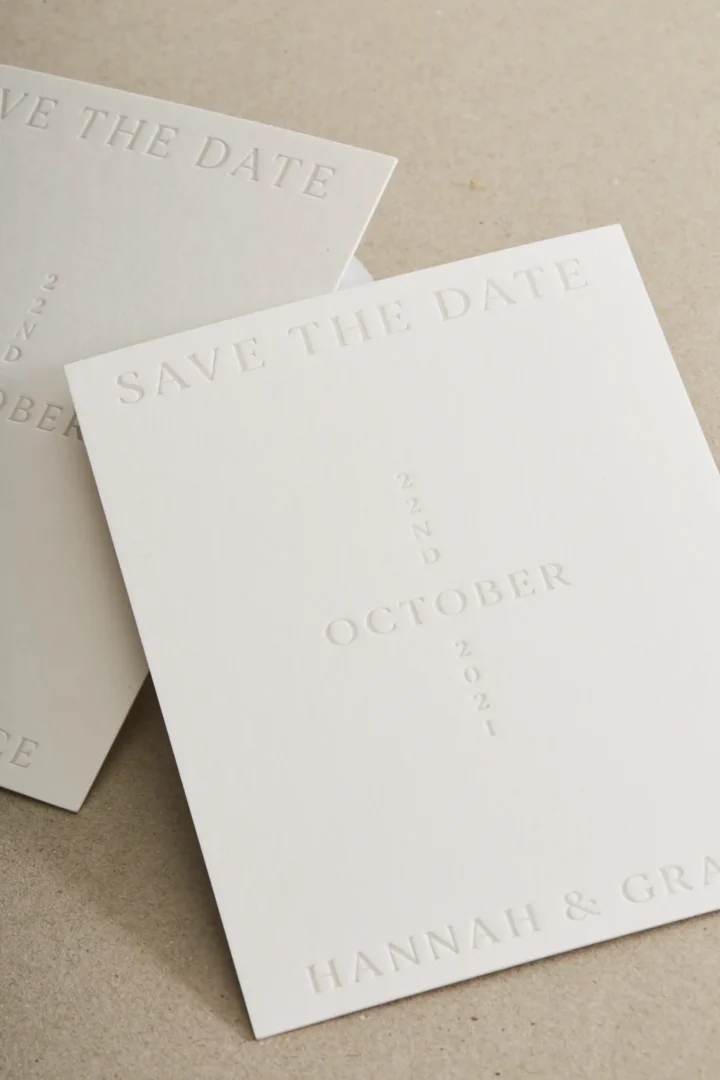
Wording that matches the visual era of the card is often overlooked. A Victorian-illustrated card carrying casual modern phrasing creates a jarring disconnect. The examples below are organized by aesthetic.
Formal Victorian Wording
Formal Victorian wording uses full names, a structured three-line format, and elevated language. No contractions.
request the honour of your presence
as their daughter
Eleanor Jane Hartley
is united in marriage to
Mr. George Edward Calloway
Saturday, the fourteenth of June
Two thousand and twenty-six
Briarwood Estate, Savannah, Georgia
Formal invitation to follow
Note: “honour” is the period-correct British spelling. For American formal Victorian, “honor” is equally acceptable.
Art Deco and Gatsby-Era Wording
Art Deco wording is shorter and punchier than Victorian, more headline, less proclamation.
ARE GETTING MARRIED
JUNE 14, 2026
THE GRAND HALL, NEW YORK CITY
SAVE THE DATE
invitation to follow
The all-caps treatment references the typesetting conventions of the Art Deco era, where uppercase lettering with generous tracking was standard for headlines and display text.
Mid-Century and Retro Wording
Mid-century wording balances warmth with brevity. The tone is celebratory and personal without being overly casual.
Eleanor and George are tying the knot
Saturday, June 14, 2026
The Rosewood Barn, Austin, Texas
Formal invitation coming soon
Antique Postcard Wording
Postcard wording should be concise, since the format limits available space. The front typically carries just the couple’s names and a single-line headline. All essential details go on the address-side panel.
Back address side:
Please save the date for our wedding
Saturday, June 14, 2026
Charleston, South Carolina
Formal invitation to follow
[weddinghashtagorURL.com]
Romantic and Garden-Vintage Wording
For designs that blend vintage with floral or garden aesthetics, the wording can be slightly more poetic without sacrificing clarity.
Eleanor Jane Hartley
and
George Edward Calloway
invite you to celebrate their wedding
Saturday, June 14, 2026
Magnolia Gardens Estate
Charleston, South Carolina
Dinner and dancing to follow
Formal invitation to come
What to Include (and What to Leave Out)
Every vintage save the date should contain:
- Both full names or first names (first names only suits mid-century and casual-vintage styles)
- The date in full (day of week + full date; spelled-out format suits Victorian/formal)
- City and state or country
- “Formal invitation to follow” or equivalent
Optional to include:
- Wedding website URL
- Venue name (if the venue itself is a selling point)
- Dress code hint (black tie, cocktail attire)
Leave off: registry information, gift requests, and RSVP details (these belong on the formal invitation, not the save the date).
Browse Vintage Save the Dates
Explore 500+ designs across Art Deco, Victorian, mid-century, and romantic styles. From letterpress on Wild Cotton to gold flat foil, every aesthetic has a matching print method.
Order a sample pack to feel the paper before you commit ($5)
Frequently Asked Questions About Vintage Save the Dates
What print method is best for vintage save the dates?
It depends on the specific vintage style. Letterpress on Wild Cotton paper is best for Victorian and romantic botanical designs where physical texture and a pressed-into-paper impression are central. Flat foil is ideal for 1920s Art Deco and Gatsby-inspired designs where mirror-bright metallic is the priority. Metallic print suits antique postcard and mid-century styles where warmth rather than full gloss is the goal. Digital print on linen or matte card stock works well for mid-century retro and antique postcard styles.
What paper is most authentic for vintage wedding stationery?
Wild Cotton is the most historically authentic option. It is used exclusively for letterpress at Paperlust and is available at 300gsm and 600gsm. The 600gsm Double Thick version is particularly associated with heritage printing. Linen stock (300gsm) is a more accessible option that provides a subtle woven texture reminiscent of older card stocks. Kraft paper suits Americana and rustic-vintage styles.
How is flat foil different from letterpress for vintage designs?
Flat foil applies a metallic film to the card surface for a mirror-bright finish with no physical impression in the paper. Letterpress presses a plate into thick Wild Cotton paper, leaving a visible debossed impression, with no metallic shine. For vintage designs, flat foil suits Art Deco and Gatsby styles where brilliant metallic is the priority. Letterpress suits Victorian and romantic botanical styles where tactile texture and a pressed-paper feel enhance the heritage aesthetic. Both have a minimum order of 10 cards at Paperlust. (Note: custom-die foil stamping is a different trade technique not offered by Paperlust.)
Can I use an engagement photo on a vintage save the date?
Yes. Vintage photo save the dates are a popular format. The key is matching the photo edit to the design’s era. Black-and-white with a vignette suits Art Deco and Victorian designs. A sepia or duotone treatment works well for antique postcard and early 1900s styles. Film grain and slightly faded tones suit mid-century and romantic garden aesthetics. Paperlust designers can apply basic photo enhancements as a special request when you place your order.
When should I send vintage save the dates?
Send save the dates 6-8 months before a local wedding, or 8-12 months before a destination wedding. The physical mailing timeline matters more for letterpress and foil-printed cards, since production for these methods takes approximately 20 business days compared to around 8-10 business days for digital print. For orders over $350 USD, DHL Express international shipping is included free.
What wording is appropriate for a formal Victorian save the date?
Formal Victorian wording uses full names, spelled-out dates (“the fourteenth of June, Two thousand and twenty-six”), and elevated language such as “request the honour of your presence” or “united in marriage.” Contractions are avoided. The format typically begins with the host line (the couple’s family) and works down through names, date, and location, closing with “Formal invitation to follow.”
What vintage color palette works best for save the dates?
The most effective vintage palettes are: ivory and black with gold (Art Deco, universally elegant); cream with deep burgundy or forest green (Victorian, formal); champagne and rose gold (1920s Gatsby); pastel sage, blush, or butter with warm tan accents (mid-century); and sepia with rust or dark brown (antique postcard). Avoid pure white backgrounds and highly saturated modern colors, which undermine the vintage effect.
Do letterpress save the dates cost more than digital?
Yes. Letterpress is a premium print method that requires specialty Wild Cotton paper stock and a hand-crafted production process. Digital print save the dates start from around $1 per card, while letterpress pricing is higher and varies based on ink colors, paper weight, and quantity. Letterpress also has a longer production timeline of approximately 20 business days versus around 8-10 business days for digital. You can request a $5 sample pack to compare letterpress and digital print quality before committing to an order.