
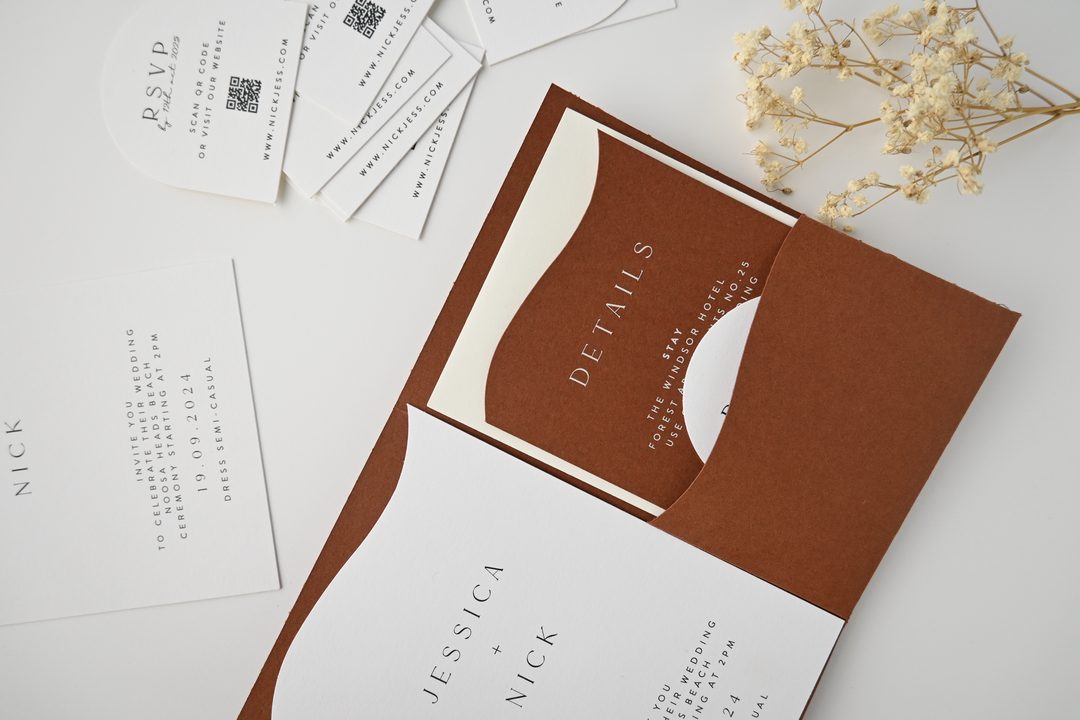
Winter weddings have a quiet magic that no other season can match: the early dusk that makes candlelight glow warmer, the crispness in the air that makes every indoor venue feel more intimate, and a color palette that ranges from powdery frost to the deepest midnight blue. Your wedding invitation is the first glimpse guests get of all that. Done right, it sets the tone before a single decoration goes up.
This guide is built for couples planning a non-holiday winter wedding, typically January or February, where the aesthetic is icy elegance rather than Christmas cheer. You will find the 2026 design trends that are reshaping winter stationery, four complete color palettes with matching print method recommendations, wording templates you can copy and adapt, planning timelines specific to the season, and answers to the questions couples ask most.
- Best palettes for 2026: Icy blue + silver, deep plum + grey, midnight navy + gold, evergreen + white
- Top print methods for a winter feel: Foil stamp (mirror-bright metallic), flat foil (no deboss, lower MOQ), metallic ink (subtle shimmer)
- When to send save-the-dates: 8-10 months before a January/February date (March-May of the prior year)
- When to send invitations: 8-10 weeks before the wedding
- Paperlust digital print starts at: $2.04 per card
- Free DHL express shipping on orders over $350 USD
- Designer proof delivered within 1-2 business days of ordering
What Makes a Winter Invitation Distinct (From a Holiday One)
January and February weddings sit fully outside the December holiday window, which means your stationery does not need tinsel, red berries, or a single reindeer. The aesthetic that resonates for non-holiday winter is closer to a luxury ski chalet: texture you can feel, finishes that catch the light, and a palette drawn from ice, fog, dark sky, and bare silver birch.
The distinction matters because it shapes every design decision. Where a holiday invitation leans warm (cranberry, hunter green, gold on cream), a winter invitation leans cool or richly saturated: silver over gold, plum over red, pale blue over ivory. Motifs shift from pine boughs and holly to bare branches, celestial stars, frosted botanicals, and geometric snowflake-adjacent patterns that read as architectural rather than festive.
Getting that distinction right signals taste and intentionality. It tells guests: this is a considered aesthetic, not a default season-adjacent choice.
2026 Design Trends for Winter Wedding Invitations
Foil on Vellum Overlays
Vellum overlays were a 2024 accent. In 2026, they are moving into the role of primary invitation layer. A semi-sheer vellum sheet printed with the invitation text, layered over a solid cotton card printed with a botanical or celestial motif, creates a depth effect that photographs beautifully and feels genuinely luxurious to hold. Paired with silver or pale gold flat foil for the couple’s names, this combination is the single strongest design signal of winter without leaning into holiday.
Frosted and Ice Textures
Texture-forward design is having a strong year in wedding stationery. For winter specifically, this means stocks that feel cool and substantial: heavier cotton, textured linen, and papers that have a faint grain you can feel under your fingertips. Printed with white ink on dark stocks like cobalt or navy, or with metallic ink on matte white, these create the tactile equivalent of a frost-covered windowpane.
Celestial Motifs
Moons, constellations, and starscapes have moved from the bohemian category into mainstream winter wedding design. A navy card with silver foil stars and a crescent moon works as winter without being overtly wintery. It pairs naturally with evening ceremonies that play up the early January or February darkness.
Minimalist with a Single Metallic Moment
Not every couple wants a maximalist foil-on-vellum suite. The clean minimalist approach, a single sans-serif or modern calligraphy typeface on thick matte white cotton, with one foil detail, whether that is the monogram, a botanical motif, or a thin border, is very much on trend for 2026. The restraint reads as confident.
Deep Jewel Tones with Velvet-Like Weight
Plum, midnight, burgundy, and forest green are all natural winter colors, and they are seeing a surge in popularity as couples move away from blush. These work best on 500gsm colour stock with foil accents, creating an invitation that feels more like a piece of luxury packaging than a traditional card.
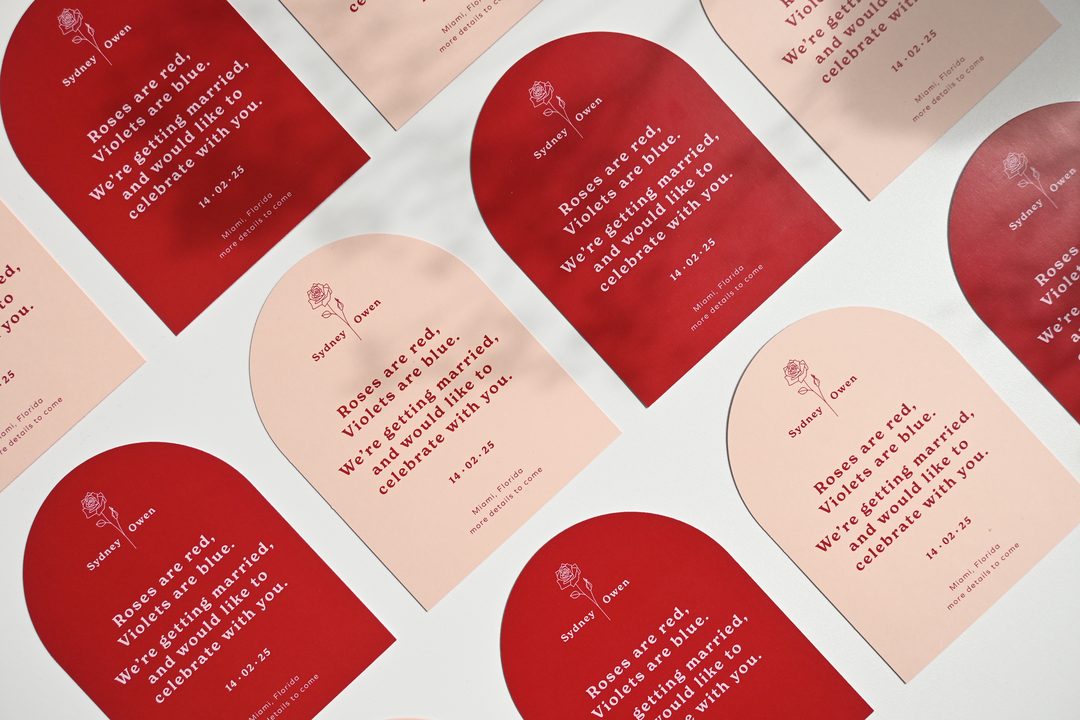

The Four Core Winter Palettes for 2026
1. Icy Blue + Silver
The most literal translation of winter elegance. Works across formal and modern styles. Best print approach: silver flat foil or foil stamp on 380gsm premium white stock, or white ink on cobalt colour stock. Motif options: geometric snowflake borders, bare branch illustrations, fine-line circular monograms.
Pair with: silver ribbon, white wax seals, pearl-finish envelope liners.
2. Deep Plum + Grey
Sophisticated and unexpected. Plum reads as winter without reading as Christmas. Works beautifully with grey-toned typography and gold or copper foil for warmth. Best stock: 500gsm colour stock in burgundy or violet with gold flat foil text and motifs. Alternatively, digital print on 300gsm matte white with plum ink and a fine metallic detail.
Pair with: dusty lavender or grey envelope liners, deep plum wax seals, eucalyptus sprigs in the suite.
3. Midnight Navy + Gold
The most classic and universally flattering winter combination. Navy grounds the design; gold foil lifts it. Works for black-tie, candlelit ballrooms, and intimate small-venue dinners equally. Best print: foil stamp on Wild Cotton for a pressed, tactile effect, or flat foil on 380gsm premium for a cleaner, more modern look.
Pair with: navy vellum envelope liners, gold wax seals, navy satin ribbon.
4. Evergreen + White
For couples drawn to winter greenery rather than icy tones. Think frosted eucalyptus, white berries, and deep forest imagery rather than Christmas pine. White ink on 270gsm forest green colour stock is the cleanest execution. Alternatively, digital print on cotton white with botanical line-art illustration and a green or white ink accent.
Pair with: sage or moss envelope liners, white wax seals, dried greenery tucked into the suite.
Paperlust Print Methods for Winter Invitations
Winter aesthetics lend themselves to print methods that add physical dimension. Here is how each Paperlust method translates to a winter look.
| Print Method | Winter Effect | Best For |
|---|---|---|
| Foil Stamp | Mirror-bright pressed impression, tactile deboss | Navy + gold, plum + copper, formal black-tie |
| Flat Foil | Mirror-bright metallic, no deboss, cleaner look, lower MOQ (min 10) | Icy blue + silver, minimalist styles |
| Metallic Ink | Subtle shimmer, softer than foil, more affordable | Modern and understated winter palettes |
| White Ink | Striking contrast on dark stocks | Dark colour stocks (navy, forest green, plum) |
| Letterpress | Deep pressed impression on 300gsm or 600gsm Wild Cotton | Rustic winter, tactile luxury without metallic finish |
| Colour Stock + Foil | European coloured card with real foil | Jewel-tone invitations (plum, navy, forest) |
Winter Wedding Invitation Wording
Winter weddings do not require special wording conventions. The standard invitation components apply: host line, request line, couple’s names, date, time, venue, and reception details. What you can do is lean into the season with your phrasing choices, particularly in the tone of the request line and any additional card copy.
Below are four wording examples across the formality spectrum.
Formal (Traditional Host Line)
request the honour of your presence
at the marriage of their daughter
Charlotte Harrington
to
James William Pearce
son of Mr. and Mrs. Robert Pearce
Saturday, the twenty-fourth of January
two thousand and twenty-seven
at half past four in the afternoon
The Langham Hotel
Chicago, Illinois
Reception to follow
Modern Couple-Hosted
Charlotte Harrington & James Pearce
invite you to celebrate their marriage
Saturday, January 24, 2027
4:30 in the afternoon
The Langham Hotel, Chicago
Dinner and dancing to follow
Seasonal (With Winter Atmosphere Note)
invite you to warm yourself by their side
on the occasion of their wedding
Saturday, January 24th, 2027
Four-thirty in the evening
The Langham Hotel
Chicago, Illinois
Dinner, dancing, and a very good red to follow
Intimate / Small Gathering
and we want you in the room.
Charlotte + James
January 24, 2027
Four-thirty in the afternoon
The Langham Hotel, Chicago
Come hungry. Stay late.
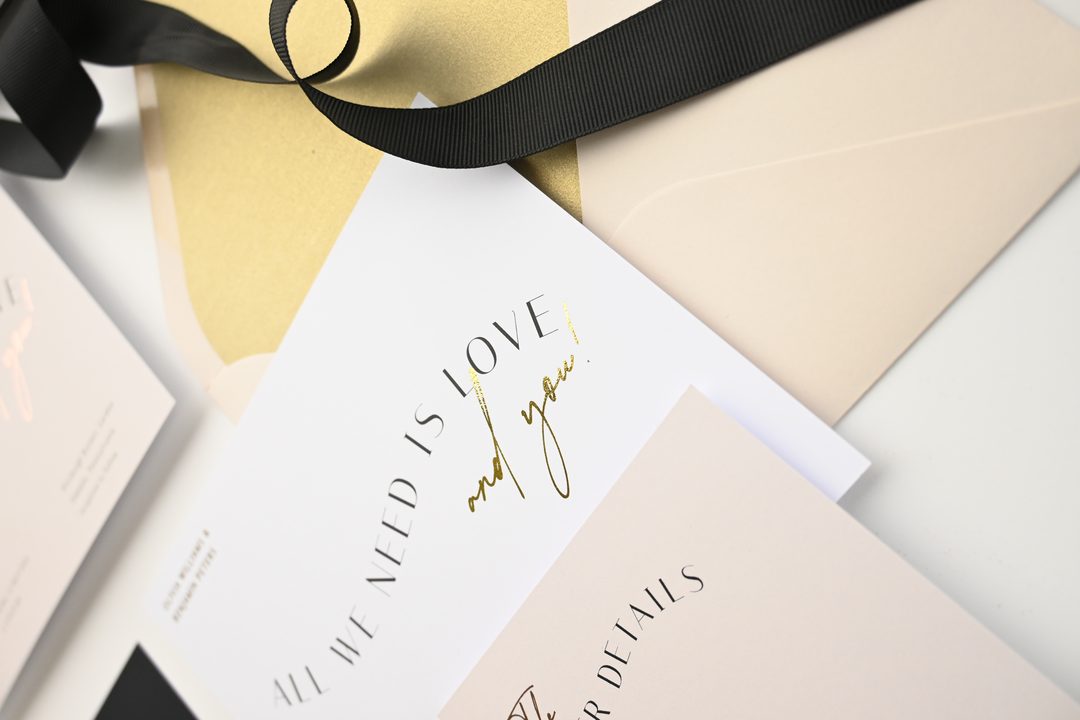
Planning Notes: Winter Wedding Timing
When to Send Save-the-Dates
January and February weddings present two planning challenges that push timelines earlier: holiday blackouts (many guests are already committed in November and December) and potential travel disruption from winter weather.
The rule of thumb for local and regional winter weddings is 8-10 months before the date. For a January wedding, that means save-the-dates should go out by March or April of the prior year, well before the summer and fall invitation rush.
For a destination winter wedding or any event where guests need to book flights and accommodation, extend to 10-12 months. Getting ahead of the holiday travel surge matters.
Paperlust save-the-dates start from $1.00 per card. Browse the full collection at Save-the-Dates.
When to Send Invitations
Send wedding invitations 8-10 weeks before the date. For a January wedding, that is late October to early November, which means your design and print timeline needs to start well before the holiday period to avoid any production delays. Ordering in September or early October is the safest approach.
Paperlust delivers designer proofs within 1-2 business days of placing your order. From proof approval, production timelines vary by print method, with digital print being the fastest.
Weather and Daylight Considerations
January and February offer short daylight hours in most US cities. If your ceremony falls near or after sunset, lean into it on your invitation: use evening language (“as the day dims,” “by candlelight”), consider a darker stock with foil that photographs beautifully in low light, and include practical information for guests on parking and hotel proximity, since navigating an unfamiliar area after dark adds friction.
Include a line on your detail card or website note about winter weather contingency. You do not need to alarm guests, but a brief note such as “in the event of severe weather, please check our website for updates” removes uncertainty.
Choosing Paperlust for Your Winter Invitations
Paperlust carries 500+ invitation designs from independent Australian and international artists, with full access to foil stamp, flat foil, metallic ink, letterpress, white ink, and colour stock + foil print methods. Every order is handled by a professional designer who delivers a proof within 1-2 business days and includes two rounds of revisions at no extra cost.
Orders over $350 USD ship free via DHL Express. The $5 sample pack lets you feel the paper stocks and print methods before committing. A custom sample of most print methods is available for $15 (the $15 custom sample is not available for letterpress; letterpress samples are included in the $5 pack and $20 full swatch kit).
Browse winter-ready wedding invitations, including foil and metallic options, at Wedding Invitations.
Frequently Asked Questions
What colors work best for a January or February non-holiday winter wedding?
The strongest non-holiday winter palettes are icy blue with silver, deep plum with grey, midnight navy with gold, and evergreen with white. All read as winter without suggesting Christmas or a holiday theme. Avoid red-green combinations and warm red berries if you want to sidestep the holiday association.
What is the best print method for an icy, frost-inspired look?
For the most literal icy effect, silver flat foil or foil stamp on bright white premium or cotton stock is the gold standard. White ink on a cobalt or navy colour stock creates a stark frost-on-dark effect. Metallic ink is a more affordable middle ground with a soft shimmer. All three are available on Paperlust wedding invitations.
When should I send save-the-dates for a winter wedding?
For a January or February wedding, send save-the-dates 8-10 months before the date. That means March to May of the prior year for a January wedding. For destination weddings or any event requiring flights and accommodation, aim for 10-12 months to get guests ahead of holiday travel booking.
How far in advance should I order winter wedding invitations?
Order at least 10-12 weeks before your planned mail date. For a January wedding targeting an October-November send, place your order in July or August. This gives enough runway for designer proof review (1-2 business days), any revision rounds, production, and shipping. Orders over $350 USD ship free via DHL Express.
Can I get a snowy or icy design without it looking like a Christmas invitation?
Yes. The key is palette and motif discipline. Use silver over gold, blue-grey over warm cream, and choose motifs that are geometric (snowflake-inspired borders, crystal-like patterns) or celestial (stars, moons) rather than botanical (pine, holly, poinsettia). Paperlust’s filter by color and style makes it straightforward to narrow to non-holiday winter aesthetics.
Does Paperlust offer vellum for winter invitations?
Yes. Paperlust offers vellum as a paper stock option. White ink on vellum creates a soft, frosted look. Vellum is also available as a colour stock + foil option, allowing for a translucent layer with metallic foil text, a popular combination for layered winter suites.