
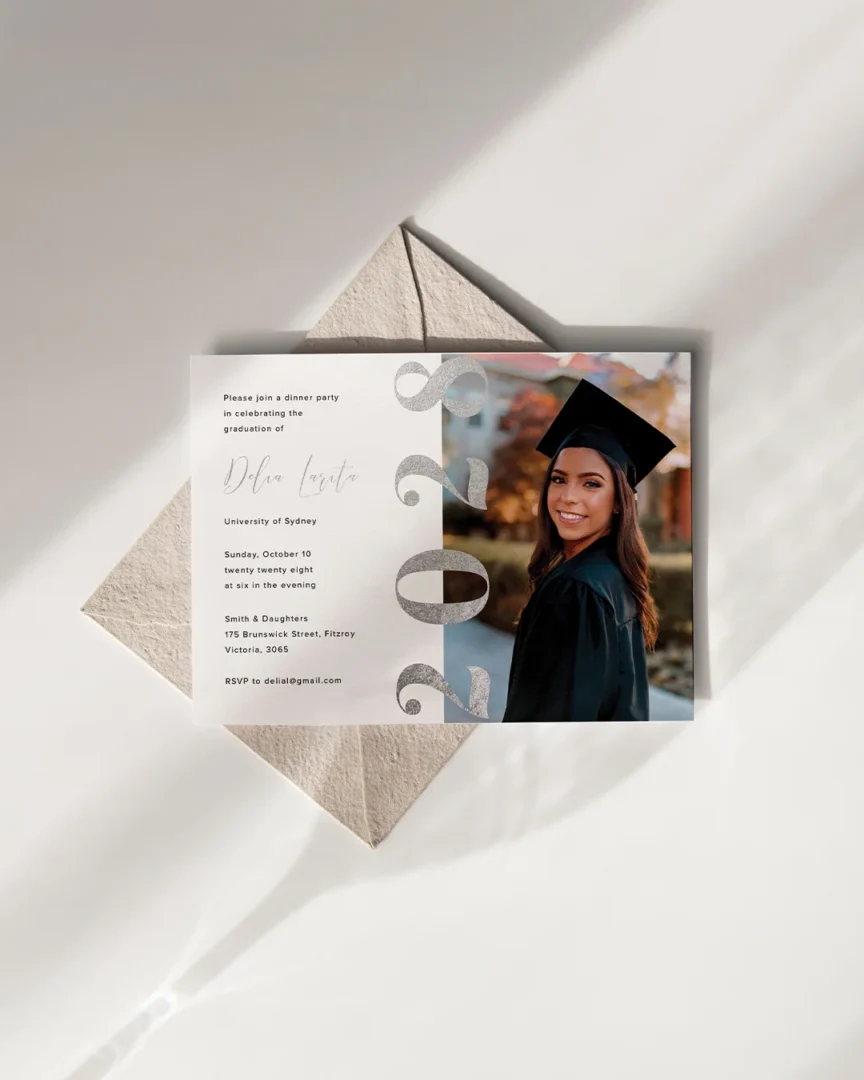
Graduation is one of the biggest milestones in a person’s life, and the invitation you send sets the tone for the entire celebration. Whether you are planning a formal ceremony dinner or a relaxed backyard party, how you address the envelope matters more than you might think. A well-addressed invitation tells your guests what to expect before they even open it. This guide walks you through the essentials of addressing graduation invitations for both formal and casual events, with examples and tips to make the process straightforward.
What’s covered in this guide:
- Formal vs casual: choosing the right tone
- How to address formal graduation invitations
- How to address casual graduation invitations
- Addressing tips that work for every style
- Simplify it with Paperlust
At a Glance: Addressing Graduation Invitations
- Formality first: match the envelope to the ceremony, full titles for college and graduate school, first names for casual celebrations
- Outer + inner for formal: outer envelope handles titles and surnames; inner envelope drops to first names for warmth
- Avoid abbreviations on formal: spell out ‘Street’, ‘Avenue’, state names, and titles (Doctor, not Dr.) for formal graduation invitations
- Send 4-6 weeks ahead: matches RSVP timing; for milestone graduations consider 6-8 weeks if guests need to travel
- Add a graduation-specific touch: include the graduate’s name, school, and degree on the envelope’s return address line if formal
Formal vs Casual: Choosing the Right Tone
Shop Graduation Invitations
Personalised graduation invitation designs for high school, college, and milestone ceremonies.
Before you start writing on envelopes, decide whether your celebration leans formal or casual. The style of your event should guide the way you address every invitation, from the titles you use to the way you write the address.
- Formal graduation celebrations suit black-tie or semi-formal dinners, university ceremonies, and events where a polished tone is expected. Think printed invitations on premium card stock with foil accents.
- Casual graduation celebrations are better suited to house parties, barbecues, and relaxed get-togethers where the vibe is fun and personal. A simpler, more conversational addressing style works here.
At Paperlust, you can browse hundreds of graduation invitation designs that cover every formality level, from elegant foil-stamped cards to playful photo-forward layouts.
Formal vs Casual: Addressing Comparison
| Element | Formal | Casual |
|---|---|---|
| Recipient name | Dr. James Carter and Mrs. Sarah Carter | James & Sarah |
| Street address | 122 Maple Street | 122 Maple St |
| State | New South Wales | NSW |
| Title | Doctor / Mister / Missus / Miss | Dr. / Mr. / Mrs. / Ms. or no title |
| Inner envelope | Yes, with first names only | Single envelope only |
How to Address Formal Graduation Invitations
Formal invitations call for a structured, respectful approach. The goal is to make every guest feel valued while signaling the tone of your event clearly.
Use full titles and names
Always include titles such as Mr., Mrs., Ms., or Dr. Use the guest’s full legal name rather than nicknames or abbreviations. If someone holds an academic or professional title, include it.
Example:
Dr. and Mrs. James Richardson
24 Collins Street
Melbourne, VIC 3000
Spell everything out
Avoid abbreviations in formal addressing. Write “Street” instead of “St,” “Victoria” instead of “VIC” if you want maximum formality, and spell out apartment or suite numbers. The extra effort signals that your event is polished and intentional.
Address couples and families correctly
For married couples, traditionally use both names. For a family, address the envelope to the parents and add “and Family” if children are invited.
Example:
Mr. and Mrs. David Thompson and Family
45 Oak Avenue
Toorak, Victoria 3142
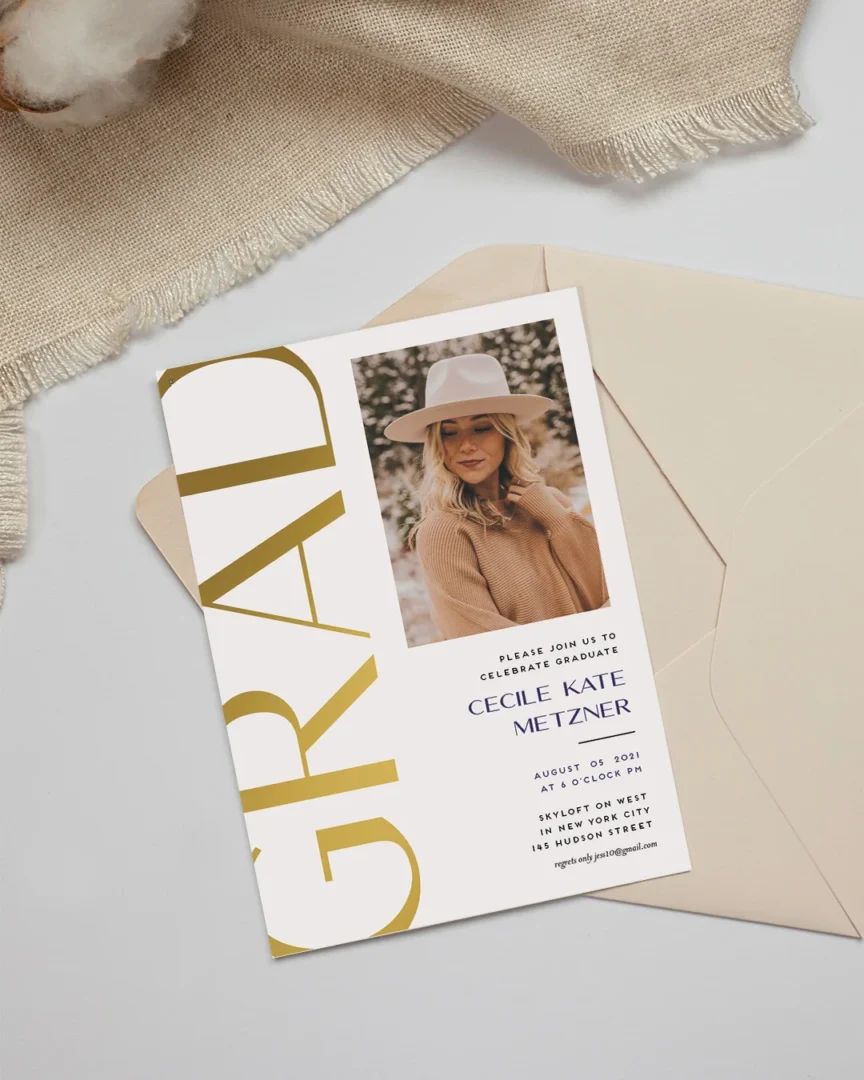

How to Address Casual Graduation Invitations
Casual invitations give you room to be personal and relaxed. The addressing style should match the easy-going energy of your celebration.
First names work
Depending on your relationship with the guest, first names or even nicknames are perfectly fine. Skip the titles if the vibe is laid-back.
Example:
John and Jane
123 Main Street
Sydney, NSW 2000
Keep it simple
Casual does not mean sloppy, but it does mean you can relax the rules. Abbreviations for street types and state names are fine. You can even handwrite addresses for a more personal touch.
Digital invitations follow the same idea
If you are sending digital graduation invitations, the “addressing” is the greeting line in the message itself. Keep it warm and personal. “Hey Sarah, come celebrate!” works perfectly for a casual gathering.
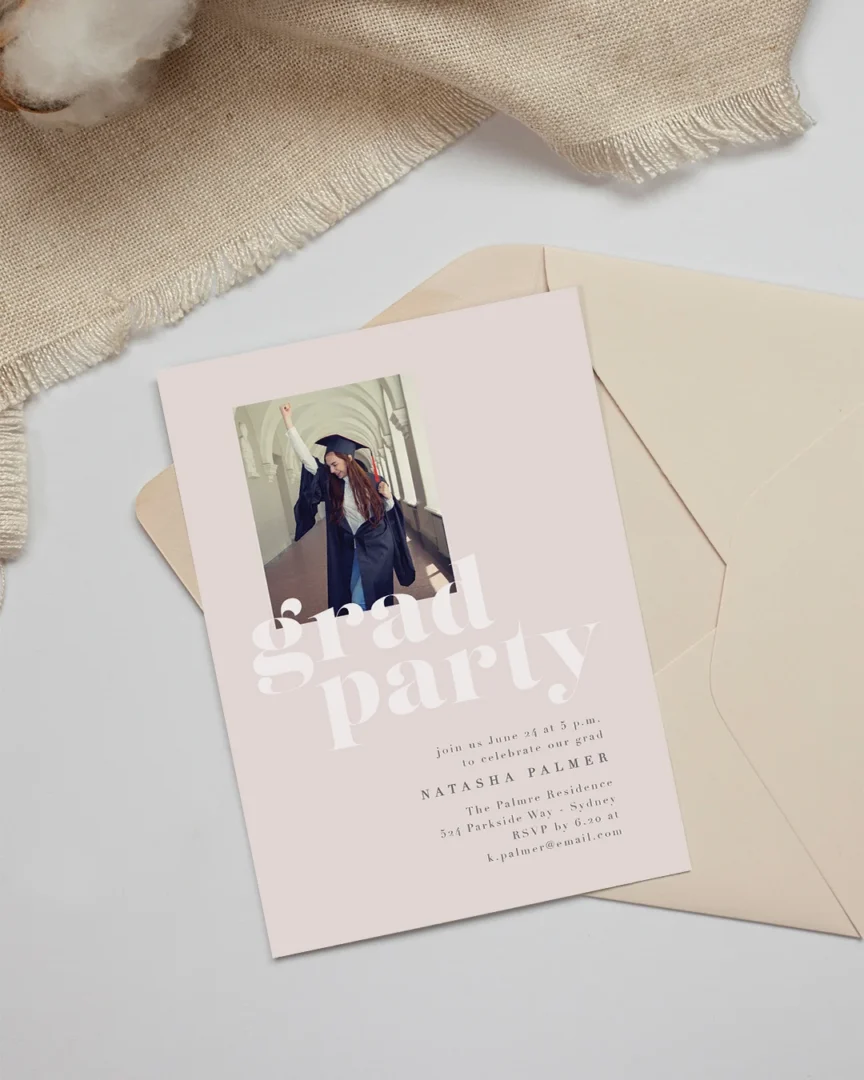
Addressing Tips That Work for Every Style
- Double-check spelling. Nothing undercuts a beautiful invitation faster than a misspelled name. Verify every name and address before you start.
- Include a return address. This helps with RSVPs and ensures undeliverable mail finds its way back to you. Place it on the back flap or upper left corner of the envelope.
- Match addressing to design. A formal script font on a casual invite (or vice versa) creates a disconnect. Make sure the envelope style complements the card inside.
- Send them on time. Graduation invitations should go out four to six weeks before the event. That gives guests enough time to plan, especially if travel is involved. For more detailed timelines, check out our guide on planning a graduation party.
- Seal with a sticker. A decorative sticker or wax seal on the envelope adds a stylish finishing touch and keeps everything secure. Browse our full range of graduation announcement designs to find the right look for your celebration.
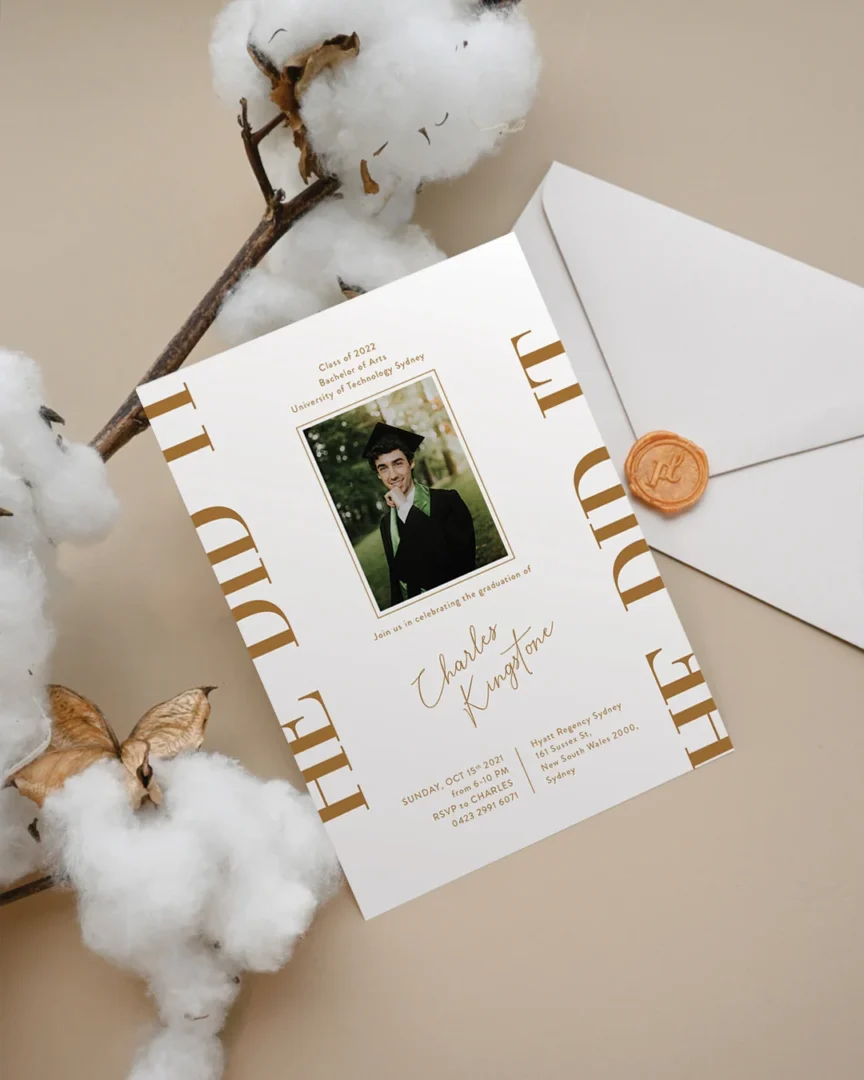
Shop Custom Graduation Invitations
Match the invitation tone to the celebration, formal foil, soft watercolour, or modern minimalist.
Simplify the Process with Paperlust
Addressing dozens of envelopes by hand can be time-consuming, but it does not have to be. With Paperlust’s Address Manager, you can upload your guest list after ordering and we will print the names and addresses directly onto your envelopes. Every envelope looks neat, consistent, and professional without the hand cramps.
Whether your graduation celebration is a formal sit-down dinner or a relaxed afternoon with friends, the way you address your invitations is the first impression your guests receive. Take the time to get it right and let the envelope set the stage for a celebration worth remembering.
How to Decide Between Formal and Casual Graduation Addressing
Three factors set the formality level: the type of graduation, where the celebration is held, and who is on the guest list.
1. Match the graduation type
PhD, medical school, and law school graduations almost always warrant formal addressing, guests at these milestones expect the etiquette to match the achievement. High school and undergraduate graduations are mixed; if the celebration is a sit-down dinner at a venue, lean formal. If it’s a backyard barbecue, casual addressing keeps the tone right.
2. Read the venue and dress code
Hosting at a country club, hotel ballroom, or restaurant with a dress code? Formal addressing reinforces the night’s tone. A backyard, park, or family-home celebration takes casual addressing, overformalising mismatches the actual experience guests will have.
3. Consider the relationship mix on the guest list
If your list is mostly family and close friends, casual addressing works well. If you’re inviting professors, mentors, or older relatives who know the graduate’s mentor by title, formal addressing signals respect. Browse graduation invitation designs in formal and casual styles to see how addressing pairs with the front-of-card design.
Common Graduation Invitation Addressing Mistakes
Most addressing errors on graduation invitations come from copying wedding-invite conventions without thinking about how the celebration differs. Graduations are warmer and less formal than weddings, even formal graduations don’t require the same envelope etiquette. Avoid these recurring mistakes:
Using “and Family” on formal invites
“And Family” is a casual phrasing that breaks the tone of a formal graduation invitation. For a formal celebration, list every invited adult by name on the outer envelope, and only use the inner envelope to write children’s first names. If you don’t want to list each child individually, send the invitation to the parents only, guests will infer that children are not expected.
Misspelling academic titles
Graduation invitations are read by educators, mentors, and academic family, they will notice every misspelled title. “Doctor” is spelled out for formal invites, “Dr.” is fine for casual. “Professor” is never abbreviated. “PhD” goes after the name, not before. Take the extra five minutes to confirm spelling for every titled guest before printing.
Mixing addressing styles within one batch
The most common mistake on graduation invitations is starting with formal addressing for the first 10 envelopes, then drifting to casual phrasing as fatigue sets in. Sort your guest list by relationship bucket, lock the phrasing for each bucket, and address in batches of one bucket at a time, that single change eliminates 90% of mid-batch drift.
Forgetting the return address
Every graduation invitation envelope should have a return address. The graduate’s name on the return address line is a small but meaningful trust signal, guests can verify the invite is legitimate at a glance. Place the return address on the back flap (formal) or the top-left corner of the front (casual).
Frequently Asked Questions
Should I use titles on graduation invitations?
For formal graduation celebrations, yes. Use titles such as Mr., Mrs., Ms., or Dr. along with the guest’s full name. For casual events, first names or nicknames are perfectly acceptable.
How far in advance should I send graduation invitations?
Graduation invitations should be sent four to six weeks before the event. This gives guests enough time to RSVP and make travel arrangements if needed.
Can I address graduation invitations digitally?
Yes. If you are sending digital graduation invitations, the addressing is the greeting line in your message. Keep it warm and personal for casual events, or include full names and titles for formal ones.
Shop Graduation Invitations at Paperlust
Graduation invitation designs you can personalize online, printed on premium stock.