

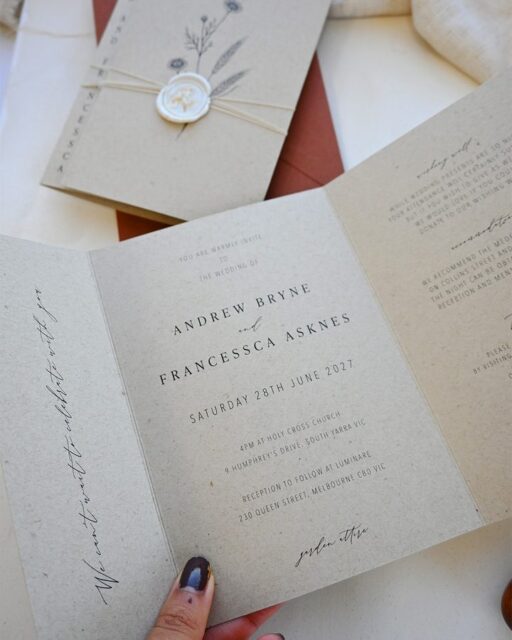
Ordering too few wedding invitations is a more common and more painful mistake than most couples expect. Reordering a small batch later almost always costs significantly more per unit than getting the right number upfront – and if your design uses a custom die for foil or letterpress, the die charge applies again. Getting your …
Wedding Invite Blogs
Paperlust is about the latest on trend wedding invitations. Below you will find a series of articles giving ideas and inspiration for your wedding cards.
Your own wedding Invitations
We also custom design and print wedding invitations and other wedding stationary, click here to sample our wedding invitations and get your sample pack dispatched today.
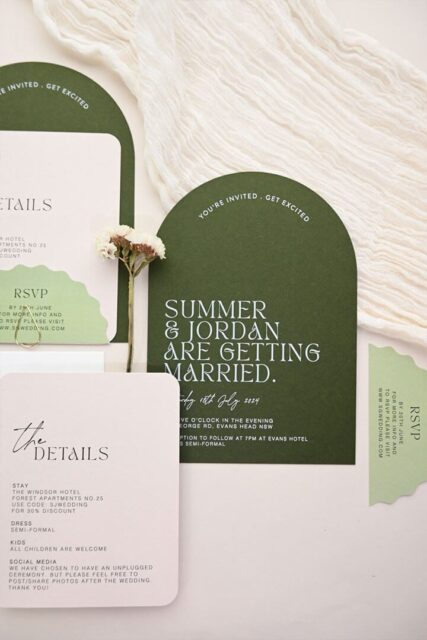
Envelope Addressing for Wedding Invitations: Etiquette Rules and 60+ Examples
At a glance Outer envelopes use full formal addressing (Mr. and Mrs. Thomas Hollis); inner envelopes are more casual (Thomas and Margaret). Never abbreviate street names on formal outer envelopes: “Street” not “St.”, “Avenue” not “Ave.” Each invited guest should be named – writing “and Family” only works if you intend to invite the whole …
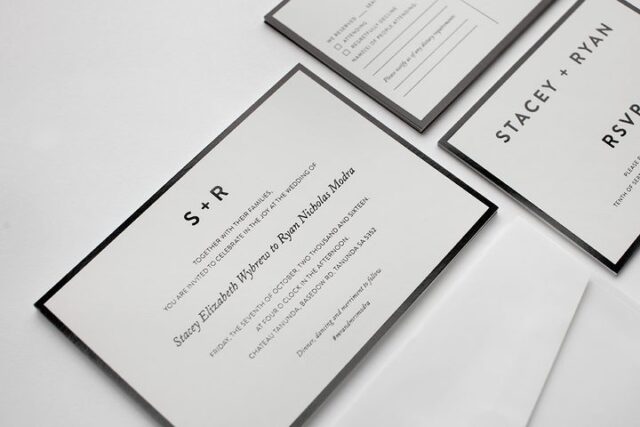
Wedding Invitation Suite Essentials 2026
Your wedding invitation suite is the first physical object your guests will hold in their hands. It signals the formality, the aesthetic, and the care you’ve put into every detail before anyone sets foot in a ceremony space. Getting the suite right means knowing which pieces are essential, which are optional but impactful, and how …
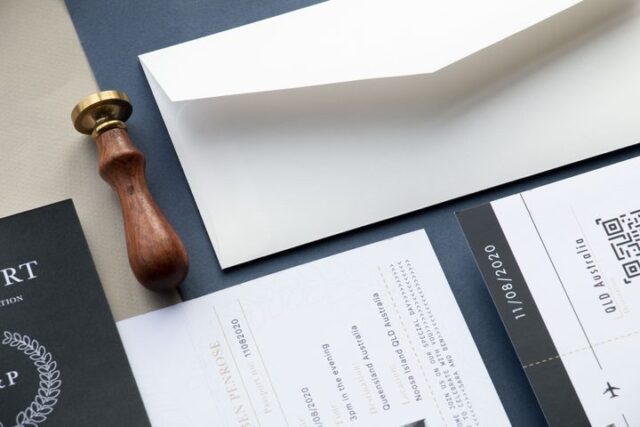
Letterpress vs Foil vs Digital Wedding Invitations: Which to Choose
Three couples walk into a stationery studio. One wants something they can feel. One wants something that catches the light. One wants vivid color and a faster timeline. All three walk out with completely different invitations, and all three are right. Choosing between letterpress, foil, and digital printing is not about which method is best …
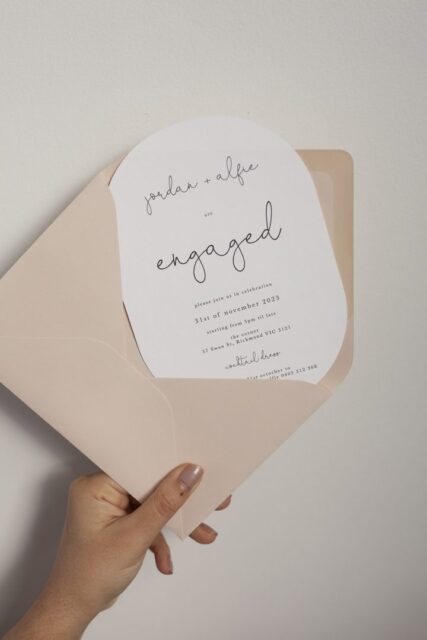
Engagement Party Invitation Wording Examples: 30+ Ideas for Every Style
At a glance Send engagement party invitations 4-6 weeks in advance for local gatherings, 6-8 weeks for holiday-season events, 8-10 weeks for destination celebrations. Always mention it is an engagement party (not just a “party”) so guests understand the occasion and know gifts are optional. Include the couple’s names, date, time, and location: RSVP details …
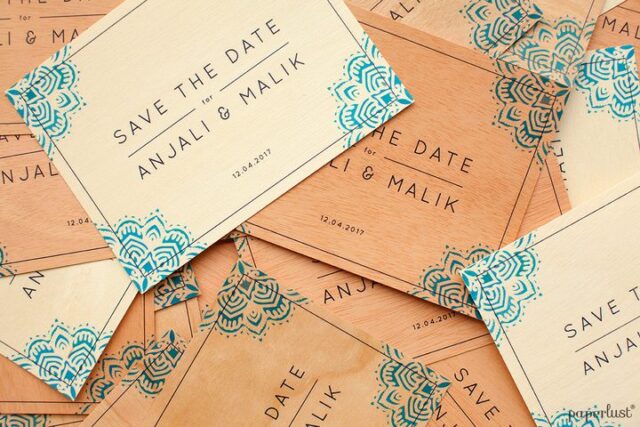
Save the Date Message Examples: 35+ Wording Ideas for Every Style
At a glance Save the dates go out 6-12 months before the wedding, 12 months for destination weddings, 6-8 months for local events. Must-have information: couple’s names, wedding date, city and state, and “formal invitation to follow”. Wording is simpler than a wedding invitation, no times, venue details, or RSVP needed (those come later). For …
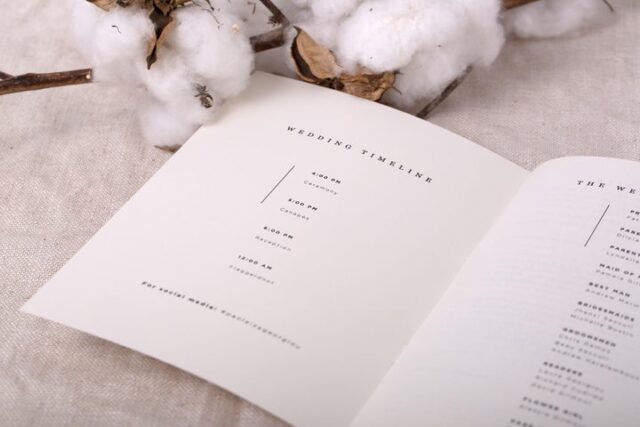
Order of Service Wording Examples: Complete Templates for Every Ceremony
At a glance An order of service lists the ceremony sequence so guests can follow along without confusion. Standard sections include processional, welcome, readings, vows, ring exchange, and recessional – customize freely. Most programs run 4-8 sections; religious ceremonies typically have more than civil ones. Wording tone should match your invitation suite: formal programs use …
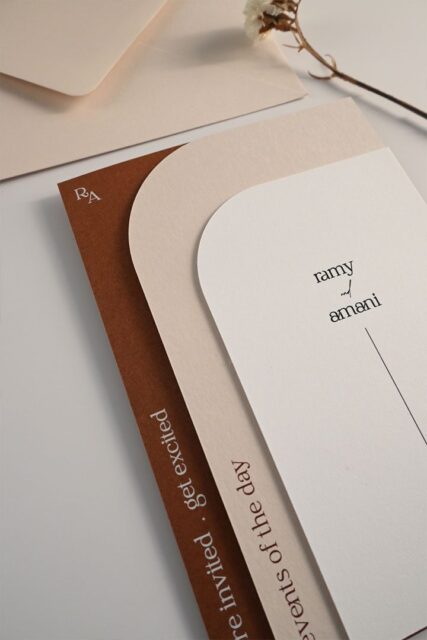
Place Card Wording Ideas: How to Write Names, Titles, and Meal Codes
At a glance Place cards show guests exactly where to sit – they reduce confusion and help staff seat people efficiently. Match your name format to your wedding tone: formal uses honorifics (Mr. James Hollis); casual uses first names only (James). For plated dinners, add a meal code dot or symbol to the back or …
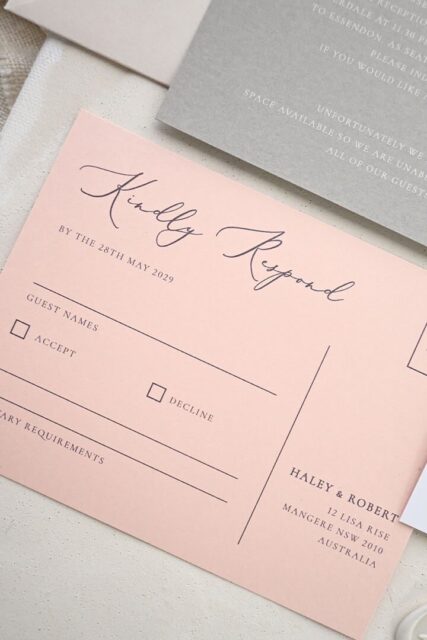
Casual Wedding Invitation Wording Examples: 45+ Templates for Relaxed Celebrations
At a glance Casual invitations use first-person phrasing (“Join us,” “We’re getting married”) instead of third-person hosting lines. You can skip the hosting line entirely if the couple is self-hosting or parents are not prominently involved. Dates and times can be written as numerals: October 18, 2026 at 4:30 PM is perfectly acceptable. Casual does …
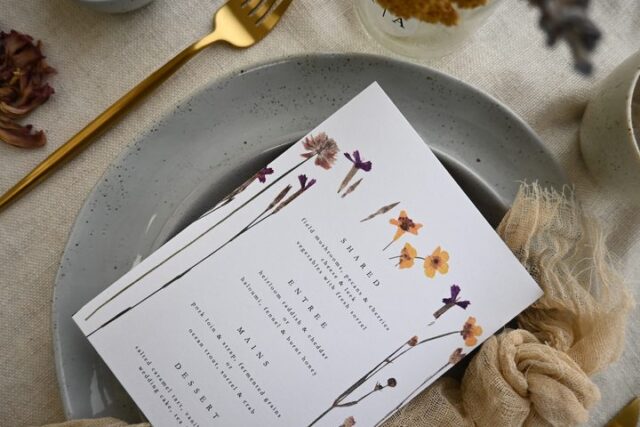
Wedding Menu Wording Examples: 40+ Templates for Every Style and Course
At a glance A wedding menu card typically includes: a header, course names, dish descriptions, and optional dietary symbols. Plated dinner menus list each course separately; buffet menus list station or category groupings. Keep dish descriptions to one or two lines – menus are read standing up or in dim light. Standard dietary symbols: (V) …