

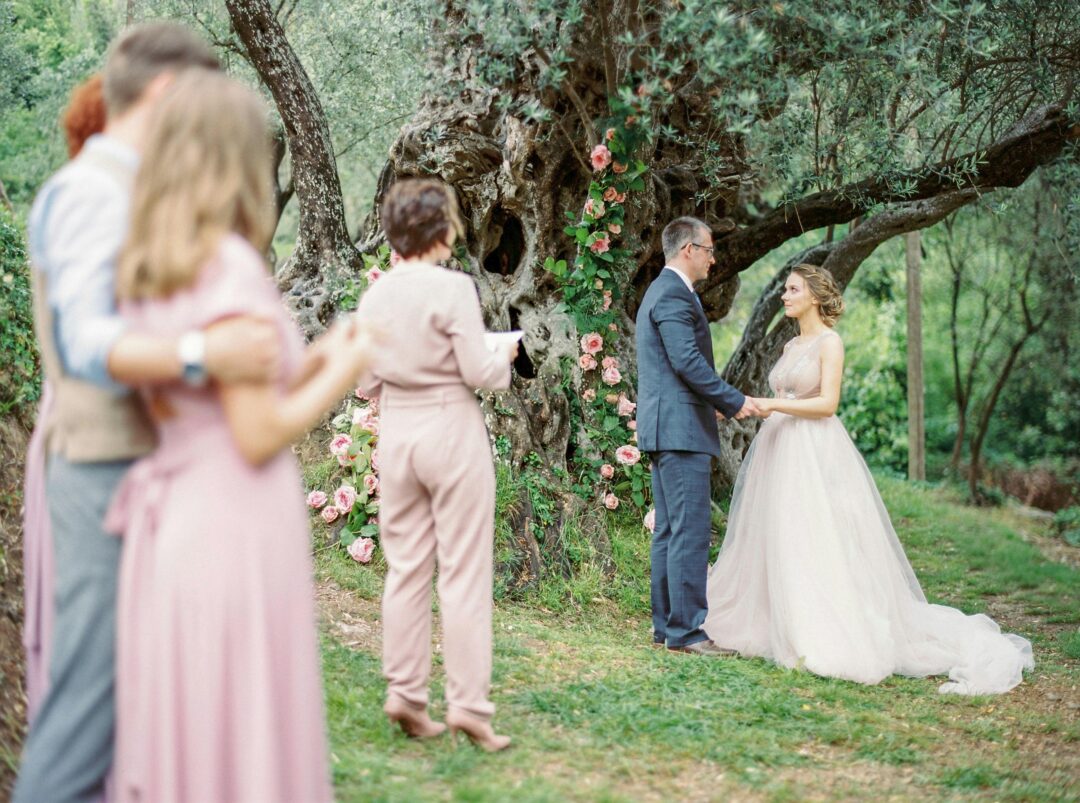

- Modern wedding vows are conversational, personal, and present-tense – written in plain language that sounds like you, not a legal document from another century.
- They work best for secular ceremonies, outdoor weddings, civil celebrations, and any couple who wants genuine words over inherited scripts.
- A strong modern vow has three parts: a specific observation about your partner, a set of promises grounded in real life, and a closing commitment that ties it together.
- Aim for 200-300 words each and rehearse aloud – modern vows often trip people up more than traditional ones because there’s no familiar rhythm to fall back on.
- Cultural-fusion couples can blend modern language with meaningful elements from each partner’s background – this section covers how to do it without the result feeling like a compromise.
- The 25 example snippets in this guide are starting points, not scripts – take what fits, rewrite the rest, and make them yours.
Modern wedding vows are having a moment – and for good reason. More couples today want to stand up in front of their guests and say something that actually sounds like them, not like a script their great-grandparents recited in a church hall. But “modern” doesn’t mean casual, and it doesn’t mean easy. The best modern vows take real thought and real editing. This guide gives you 25 example snippets, complete templates, a section on cultural-fusion language, and answers to the questions couples ask most.
If you’re still deciding which vow style is right for you, our complete wedding vows guide covers all five styles side by side and helps you choose before you put a single word on paper.
What Makes Vows “Modern”?
The word gets used loosely, so it’s worth being specific. Modern wedding vows share three defining qualities – and understanding them is the difference between vows that land and vows that feel like a Pinterest caption read at full volume.
Contemporary, not archaic
Traditional vows pull from centuries-old liturgy: “to have and to hold,” “till death do us part,” “with this ring I thee wed.” That language carries real weight – but it was written for a different era, in a different register. Modern vows replace the formal and archaic with plain contemporary English. “I promise to support you” instead of “I thee endow.” “I choose you every day” instead of “forsaking all others.” The meaning is often identical; the voice is unmistakably present-day.
Conversational, not performative
Modern vows sound like a real person talking, not a decree being read aloud. They use contractions. They reference specific, grounded details – not sweeping abstractions. “I promise to make you coffee before I make my own, even on the hardest mornings” works because it’s concrete. “I promise to love you through all of life’s challenges” doesn’t work because it says nothing anyone couldn’t say about anyone.
Secular-leaning, not necessarily secular
Modern vows are not the same as secular vows – though the two overlap significantly. A modern vow can reference shared spiritual values without invoking a specific religion. It can acknowledge the sacred weight of marriage without attributing that weight to a deity. This flexibility is part of what makes the modern style so widely appealing: it suits couples who are non-religious, loosely spiritual, interfaith, or anywhere in between. If your ceremony is in a religious setting with required language, check with your officiant – many faith traditions allow personal additions after the set vows are complete.
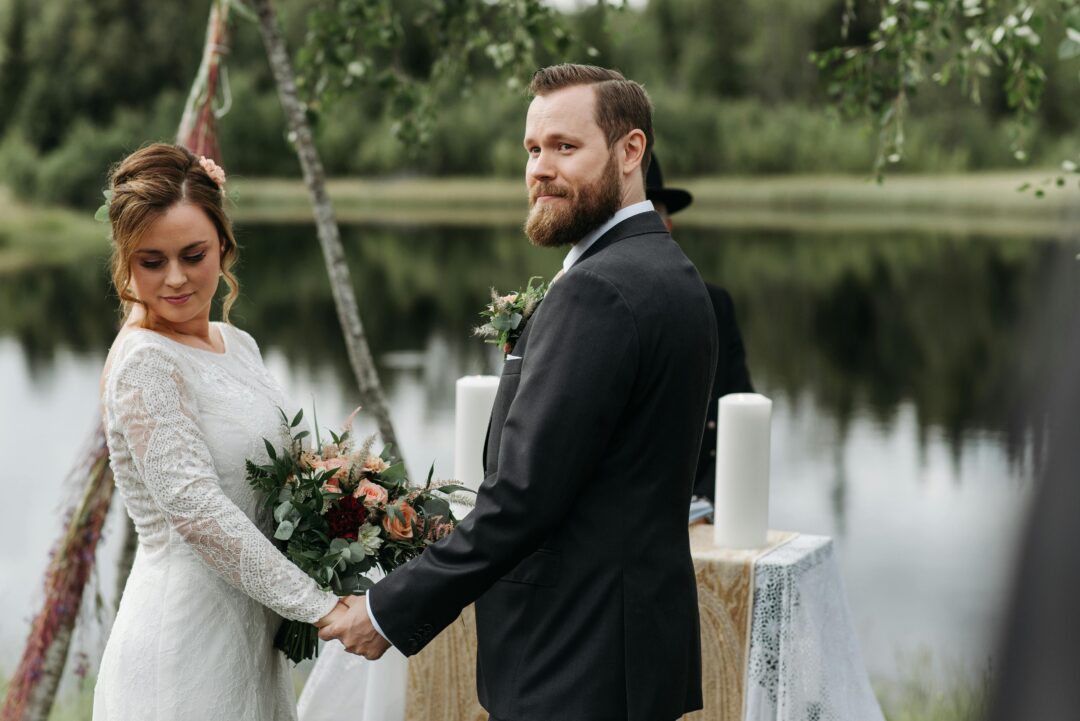
Modern vows, modern invitations
Contemporary invitation designs printed on premium stock, with a designer customizing your wording in 1-2 business days.
25 Modern Vow Snippets
These are building blocks, not finished vows. Each snippet covers one part of a vow structure – an opening observation, a specific promise, or a closing commitment. Mix, match, and rewrite in your own voice. The best result is one that sounds nothing like a guide.
Opening lines and observations
Shop minimalist invitations
Clean type, generous space, nothing decorative getting in the way of the words.
Everyday promises
Handling hard times
Joy and lightness
Closing commitments
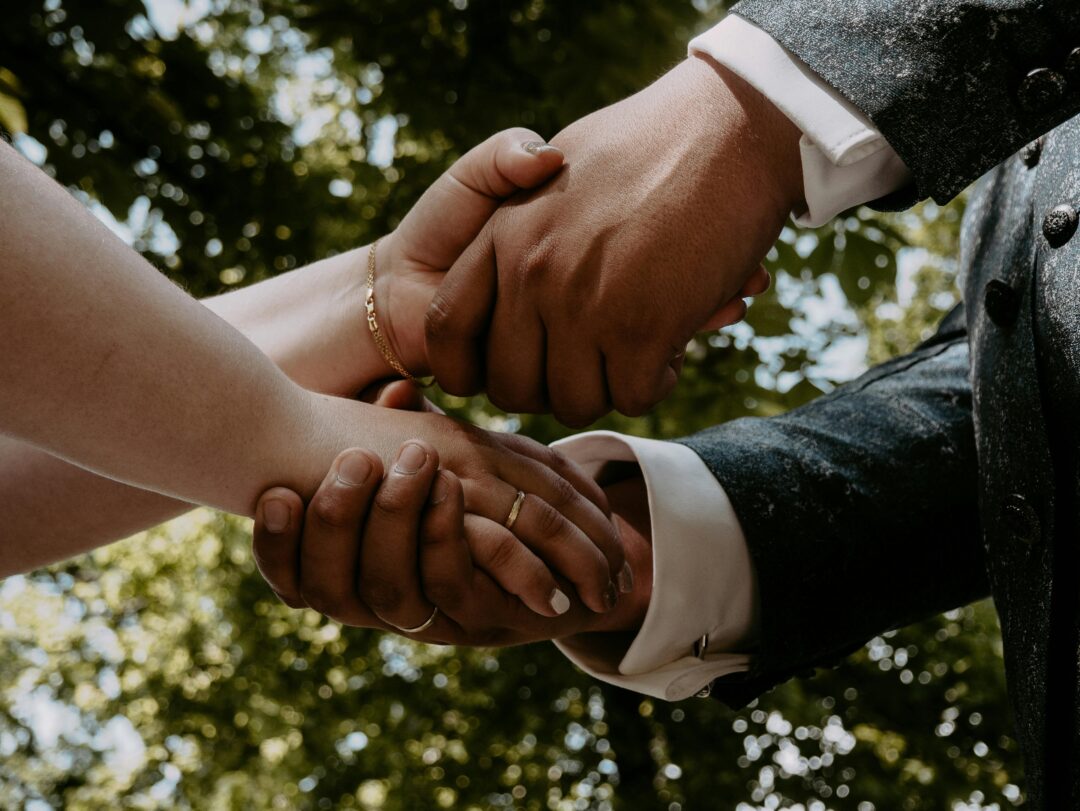
Modern Wedding Vow Templates
These three templates give you a complete structure to work from – not finished vows, but a solid framework you can fill in with your own specifics. Each one has a different tone to suit different couples.
Template 1: Clean and heartfelt (most versatile)
Best for: couples who want something sincere and clear, without leaning heavily funny or poetic. Works for outdoor weddings, civil ceremonies, and any setting where the tone is warm but not over-the-top.
From [specific moment you realized / fell in love / knew], I have known that you are the person I want to build my life with.
What I love about you is not just [big quality] – it’s [specific, everyday observation]. That’s who you really are.
Today I promise you:
– I will [specific everyday promise].
– I will [promise about hard times].
– I will [promise about your partner’s growth or dreams].
– I will [lighthearted or personal promise].
I choose you – not just today, but every ordinary day after this one. I love you.
Template 2: Reflective and grounded
Best for: couples who want their vows to feel considered and deliberate – people who have thought carefully about what marriage means and want that depth to come through.
I have been thinking about what it means to stand here and make this promise to you. Not the ceremony of it – the weight of it.
Marriage is a choice you make once in front of witnesses, and then again quietly, every single day. Today I’m making that choice out loud.
I promise to [promise 1 – about showing up].
I promise to [promise 2 – about honesty or communication].
I promise to [promise 3 – about your partner’s individuality].
I promise to [promise 4 – about the life you’re building together].
You deserve someone who means every word of their vows. I mean every one of mine. I love you. Let’s begin.
Template 3: Warm and slightly playful
Best for: couples who want their vows to get a smile or two from the room without going fully humorous. A light touch of personality, with real heart underneath.
I had a whole plan for this. [Brief, self-aware acknowledgment of how writing vows went.] What I kept coming back to was simpler than anything I tried to write: I just really like you.
I like who you are. I like who I am around you. I like the life we’re building, even the messy parts.
So here’s what I promise:
– [Specific everyday promise – grounded, real].
– [Promise about hard times].
– [One lighter, specific promise that reflects your relationship].
– And I promise to tell you I love you – out loud, not just assumed – for as long as we have.
You are my favorite person. That’s not going to change. I love you.
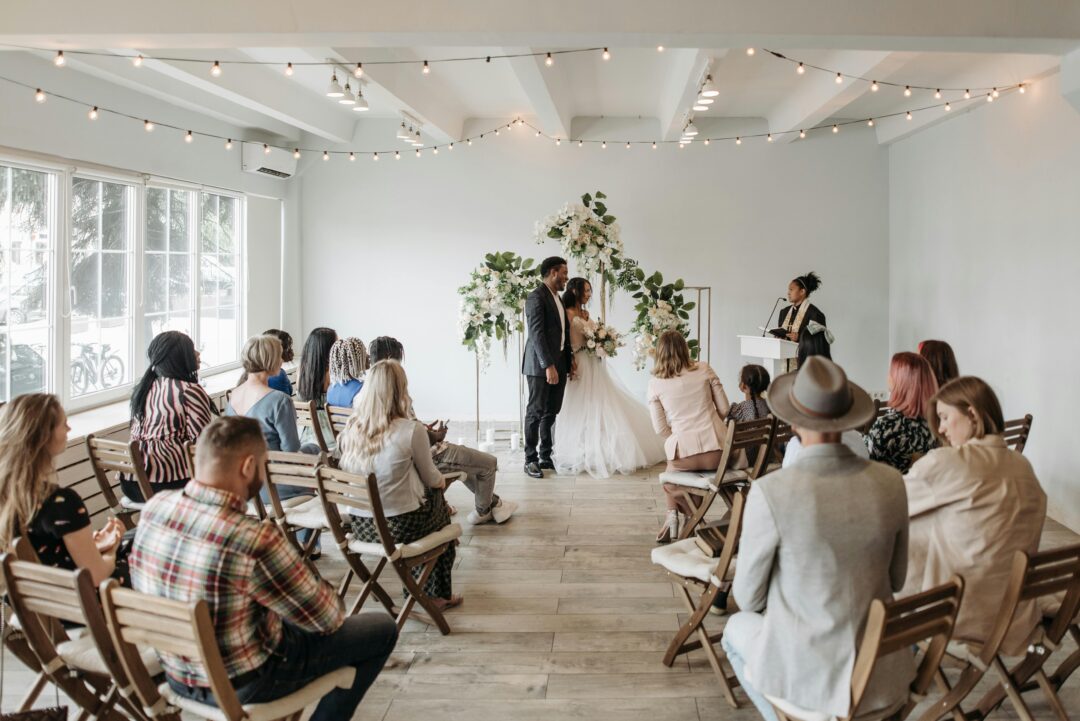
Cultural-Fusion Modern Vows
Increasingly, couples from different cultural or faith backgrounds are writing vows that honor both heritages while keeping a contemporary, personal voice. Done well, this is some of the most powerful vow writing there is. Done poorly, it reads like a checklist.
The key principle: depth over breadth. You don’t need to represent every element of two entire traditions. Pick the one or two things from each background that genuinely matter to both of you, and weave them into modern language that sounds like a person talking – not a culture essay.
When one partner has a religious background and one doesn’t
This is one of the most common scenarios. The most effective approach is usually to honor the spiritual dimension without doctrinal specificity. Language like “sacred,” “covenant,” “bless,” and “grace” carries weight for religious partners without requiring secular partners to say something that feels untrue.
Blending two different cultural traditions
If both partners have distinct cultural backgrounds, consider a brief acknowledgment up front – one sentence that names the traditions you each carry without turning the vows into a lecture – and then settle into shared, forward-looking promises.
Incorporating a word or phrase from another language
A single word or short phrase in a heritage language, explained briefly, can carry enormous meaning without overloading the vow. Keep the translation natural – not a dictionary definition, but what it means to you personally.
When families have conflicting expectations about the ceremony
This is where the framing of your vow introduction matters as much as the vows themselves. A brief sentence from the officiant – agreed in advance – that contextualizes the ceremony can relieve pressure. Your vows can then focus on what you share rather than what divides you.
The wording of your wedding invitations can also help set expectations early – signaling the tone and style of the ceremony before guests arrive, so the vows don’t come as a surprise to anyone. For guidance on how to communicate your ceremony style through your stationery, see our wedding invitation wording guide.
How to Write Your Own Modern Vows: A Practical Process
The hardest part of writing modern vows is that there is no template you have to follow – which means the blank page is entirely your problem. Here is the process that works for most couples.
Step 1: Answer these questions before you write a single vow line
- What is one specific moment when you knew this was the person?
- What is one quality your partner has that the people in this room might not know about?
- What is one genuinely specific promise – not abstract, but grounded in how you actually live?
- What is one thing you want your partner to hear in front of everyone?
Step 2: Write badly first
Get a rough draft down without editing. Write more than you need – you can always cut. The goal of the first draft is to get the real material on the page, even if it’s buried under awkward sentences.
Step 3: Read it aloud immediately
Modern vows live or die on how they sound spoken. If you wrote it and it doesn’t feel natural to say out loud, it won’t land in the ceremony. Cut anything that doesn’t feel like your voice. Rewrite anything that makes you stumble.
Step 4: Check length and coordinate with your partner
Aim for 200-300 words each. Time it: at a comfortable ceremonial pace (slightly slower than normal conversation), 300 words is about 2 minutes. You don’t need to match word-for-word, but mismatched lengths – one partner with two minutes of vows, the other with five – can feel unbalanced in the room. Agree on a rough target together.
Shop wedding stationery
Vow cards, invitations and ceremony paper from one designer, printed together so they match.
Step 5: Write them on a card
Even if you plan to memorize them, have a card. Nerves on the day are real, and having a physical backup removes one layer of anxiety. A vow card also becomes a keepsake.
Frequently Asked Questions
What exactly are modern wedding vows?
Modern wedding vows are vows written in contemporary, conversational language rather than traditional or archaic ceremonial language. They are typically written by the couple themselves and focus on specific, personal promises rather than formal declarations. They tend to be secular-leaning (though not always fully secular) and are distinguished by their plain, present-day voice.
How long should modern wedding vows be?
The ideal length is 200-300 words each, which works out to roughly 1.5-2 minutes spoken at a comfortable ceremonial pace. Shorter than 150 words can feel rushed; longer than 350 words risks losing the room. Both partners should aim for a similar length so the exchange feels balanced.
Do both partners have to write their own vows, or can one use a template?
There is no rule here. One partner may be a natural writer and the other may find it excruciating – and that’s fine. Templates, guides, and examples are completely legitimate starting points. The goal is vows that feel true when spoken, not vows that were written entirely from scratch with no outside help. If one partner wants to write freely and the other wants to use a template heavily adapted with personal details, both results can be equally moving.
Should partners share their vows with each other before the wedding?
This is a personal choice, and couples are split roughly 50/50. Sharing in advance removes the anxiety of not knowing what to expect and lets you coordinate tone and length. Not sharing preserves a genuine emotional surprise on the day. If one or both of you are prone to anxiety, sharing is usually the better call. If the surprise element matters to both of you, keep them private – but do coordinate on length and general tone so the vows don’t feel mismatched.
Can you use modern vows in a religious ceremony?
It depends on the tradition and the officiant. Many religious officiants allow personal vows as an addition to the required liturgical language, but not as a replacement for it. In Catholic ceremonies, for example, the formal exchange of consent is mandatory, but couples often add personal reflections. In many Protestant denominations and Jewish Reform ceremonies, there is more flexibility. Always check with your officiant early – and ask specifically whether you can add personal language rather than assuming the answer is no.
What are the most common mistakes people make with modern vows?
The most common mistakes are: (1) using abstract language instead of specific promises (“I will always support you” says nothing – “I will be in the front row of every hard conversation you’ve been avoiding” says something); (2) going too long and losing the room after the two-minute mark; (3) including inside jokes that only a handful of guests will understand; (4) not practicing aloud – modern vows often have more complex sentences than traditional ones, and stumbling through them live is avoidable; (5) trying to be funny when nerves make delivery unpredictable. Save the comedy for the reception speech.
How do you start modern wedding vows?
The strongest openings are either a specific memory or observation (“From the night we got lost driving home and spent two hours just talking in the parking lot, I knew…”) or a direct declaration of what you love (“What I love most about you isn’t the person everyone sees – it’s the one I get to see when it’s just the two of us”). Avoid opening with “Today…” or “We are here today…” – it sounds like a memo, not a vow.
How many promises should modern vows include?
Three to five specific promises is the right range. Fewer than three can feel thin; more than five starts to blur into a list that loses emotional impact. Each promise should be distinct – covering different dimensions of your commitment (everyday life, hard times, your partner’s individual growth, joy, etc.). Quality over quantity: one specific, grounded promise is worth more than four generic ones.
When should you start writing modern wedding vows?
Start at least four to six weeks before the wedding. The first draft usually needs at least two revisions – and reading them aloud several times over a few weeks is how you find the sentences that don’t work. Leaving vow writing until the week of the wedding is the single most common way couples end up reading something they’re not happy with. Give yourself time to let the draft sit, come back to it with fresh eyes, and arrive at something you genuinely feel good about.
Is it okay to cry while reading modern vows?
Not only is it okay – for many couples, the vows being emotional is part of the point. That said, if you know you’re a crier, build in a few natural pause points in your vow structure so you have places to breathe and collect yourself without losing your place. Having your vows on a physical card (rather than memorized) also helps, since you can find your line again even if your vision is blurry.
How do cultural-fusion couples handle modern vows?
The most effective approach is to pick one or two meaningful elements from each background and weave them into modern language, rather than trying to represent entire traditions comprehensively. A single word in a heritage language with a personal translation, a brief acknowledgment of family traditions, or a value that is central to one partner’s culture can all be incorporated without overloading the vows. The goal is vows that sound like a person – not a cultural overview. For couples whose families have conflicting expectations, the vow introduction from the officiant can do some of the framing work, leaving the vows free to focus on what both partners share.
What should you do if you freeze or lose your place during the vows?
Have your vows on a card – this is the single most important practical tip. If you freeze, look down, find your place, and keep going. Guests will not think less of you for it; they’ll likely find it more human and moving. If you lose your thread entirely, your officiant can help you by asking you to repeat after them – this is a completely normal backup that good officiants are prepared for. Practice aloud enough times that the general shape of the vows is familiar, even if you’re not word-perfect from memory.
Do modern vows work for same-sex couples?
Modern vows are especially well-suited to same-sex couples precisely because they are not tied to traditional gendered language. They can be written with any pronoun structure and any relational framing, and they carry no assumption about who takes which role in the exchange. Every example and template in this guide is written to be fully inclusive and can be adapted without any awkward rewrites.
Bring it onto the page
Modern wedding invitations
Once your vows are set, your invitation sets the same tone for guests. Conversational copy, contemporary typography, and editorial paper stocks across the Paperlust collection.
About Paperlust
Paperlust has been designing and printing wedding stationery from Melbourne since 2014. With 500+ exclusive designs from independent artists and a team of dedicated designers, every order includes a professional proof within 1-2 business days, two free rounds of edits, and a 100% happiness guarantee – free reprint or full refund if anything isn’t right.
Paperlust was named a Westpac Business of Tomorrow in 2017 and has been featured in leading wedding and lifestyle publications. We ship internationally via DHL Express on orders over $350 USD, with US delivery typically arriving within 2 to 4 business days after production.
Have questions about your vow card design or invitation suite? Our team is available on live chat – and every order includes a designer who works with you to get every detail exactly right.
Ready to design your wedding stationery?
Browse 500+ exclusive invitation designs – from classic letterpress to modern digital print. Every order includes a professional designer, a proof within 1-2 business days, and a happiness guarantee.
Image credits