
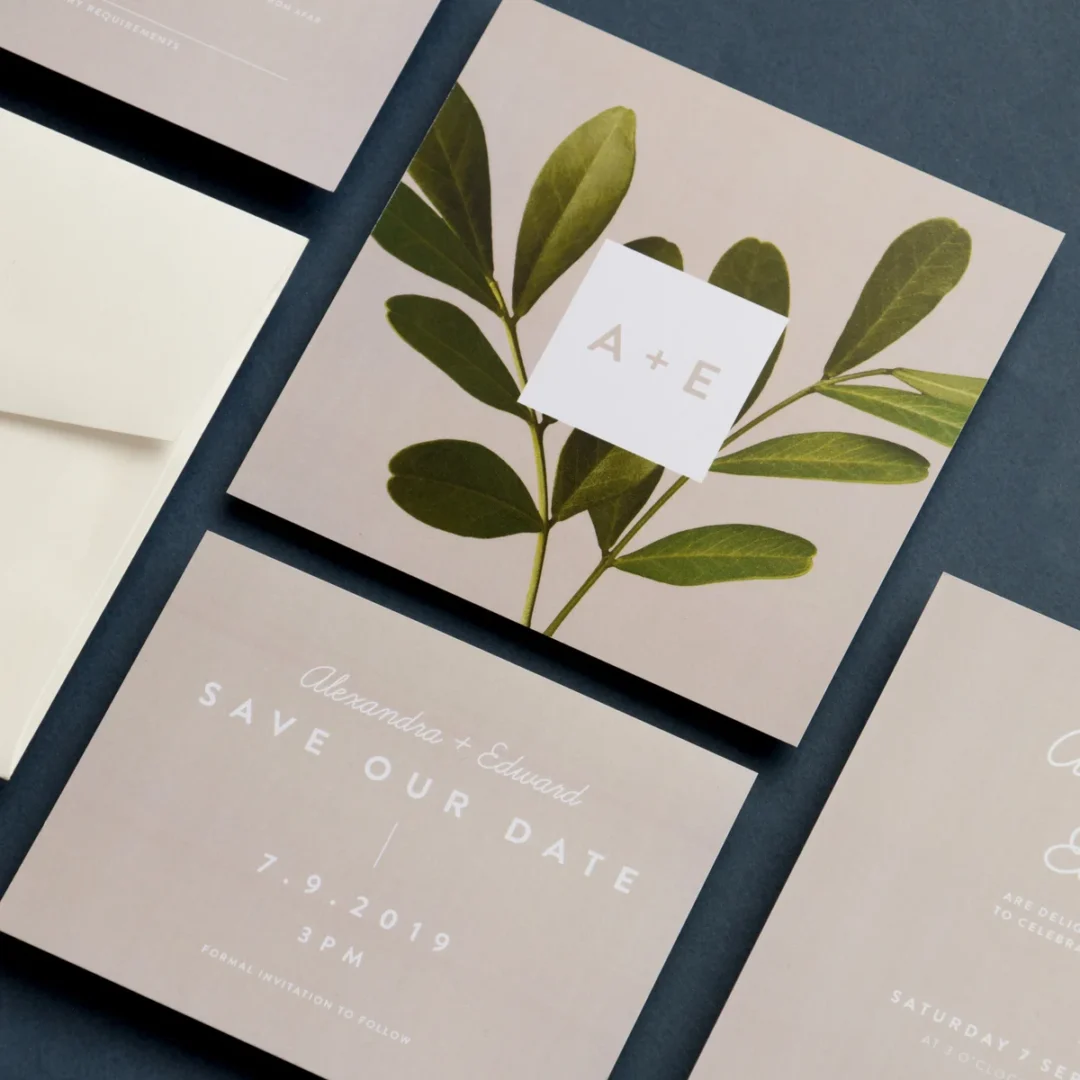
Getting remarried is a deliberate choice, and your invitation should reflect that. Second wedding invitation wording tends to cause more stress than it deserves. Modern etiquette has relaxed considerably, and the honest truth is that you have far more freedom here than couples often realize. There are no rules saying what a second wedding invitation must look or sound like; there are only guidelines that help you communicate clearly and warmly with the people you want there.
This guide walks through every practical detail: how to format your name depending on whether you are divorced or widowed, how to handle the host line, and ready-to-use wording examples across formal, semi-formal, and casual styles. You will also find guidance on what belongs on the invitation and what is better left for your wedding website.
- Host line: Couple often hosts alone; “together with their families” is a clean and flexible option
- Your name: Use whatever you currently go by, maiden, married, or hyphenated
- Divorced: Your preferred name only; never include ex-spouse’s name
- Widowed: Keep previous married name or return to maiden, both are correct
- Children: Optional; use “together with their children [names]” if including them
- Leave off: Any mention of prior marriages, registries, or gifts on the invite itself
- Tone: Warmer and more personal than first-wedding wording typically works best
What Is Different About Second Wedding Wording
Standard wedding invitation etiquette still applies to a second wedding, the differences are in tone, in who is named on the host line, and in how you handle the announcement of remarriage. Most first wedding invitations follow a familiar script: parents host, formal titles open, traditional phrasing fills the rest. Second weddings loosen that framework, and for good reason. A few things shift naturally when you are remarrying:
- The couple typically hosts the event themselves, rather than relying on parental language
- The tone leans warmer and more conversational, even at formal venues
- Parental lines are optional, include them only if parents are genuinely contributing to the event
- No mention of any previous marriage appears anywhere on the invitation
None of this is about erasing your history. It is about keeping the focus exactly where it belongs: on this celebration, this partnership, and the people you want beside you.
How to Handle Your Name
How you name yourself on the invitation should match how you plan to be addressed on the place cards, menus, and order of service. Consistency across the suite reads as deliberate; inconsistency reads as an error. One of the most practical questions for remarrying couples is which name to use on the invitation. The short answer: whatever name you currently use and feel comfortable with. There is no single correct convention, your preference is the rule.
Shop wedding invitations at Paperlust
500+ exclusive designs to suit a second wedding, intimate, elegant, or grand.
If you are divorced
You can use your married name, your maiden name, or a hyphenated version, whichever reflects how you identify right now. Never include your ex-spouse’s name or reference the previous marriage in any form. If you and your partner have already decided on a new shared surname, you can use that as well.
One practical note for envelope addressing: when you are inviting a divorced woman guest, use “Ms.” with her preferred surname. Never address a divorced woman using her ex-husband’s first name.
If you are widowed
Widowed partners have the same flexibility. You may have kept your late spouse’s surname, returned to your maiden name, or use both. All are appropriate on an invitation. The wording itself does not need to acknowledge your previous marriage, that context is personal and belongs in conversation, not on card stock.
Some couples choose to honor a late parent within the wording, for example, “daughter of Robert Hartley and the late Anne Hartley.” This is a meaningful option and entirely up to you. It appears in the line describing the bride or groom, not in the host line itself.
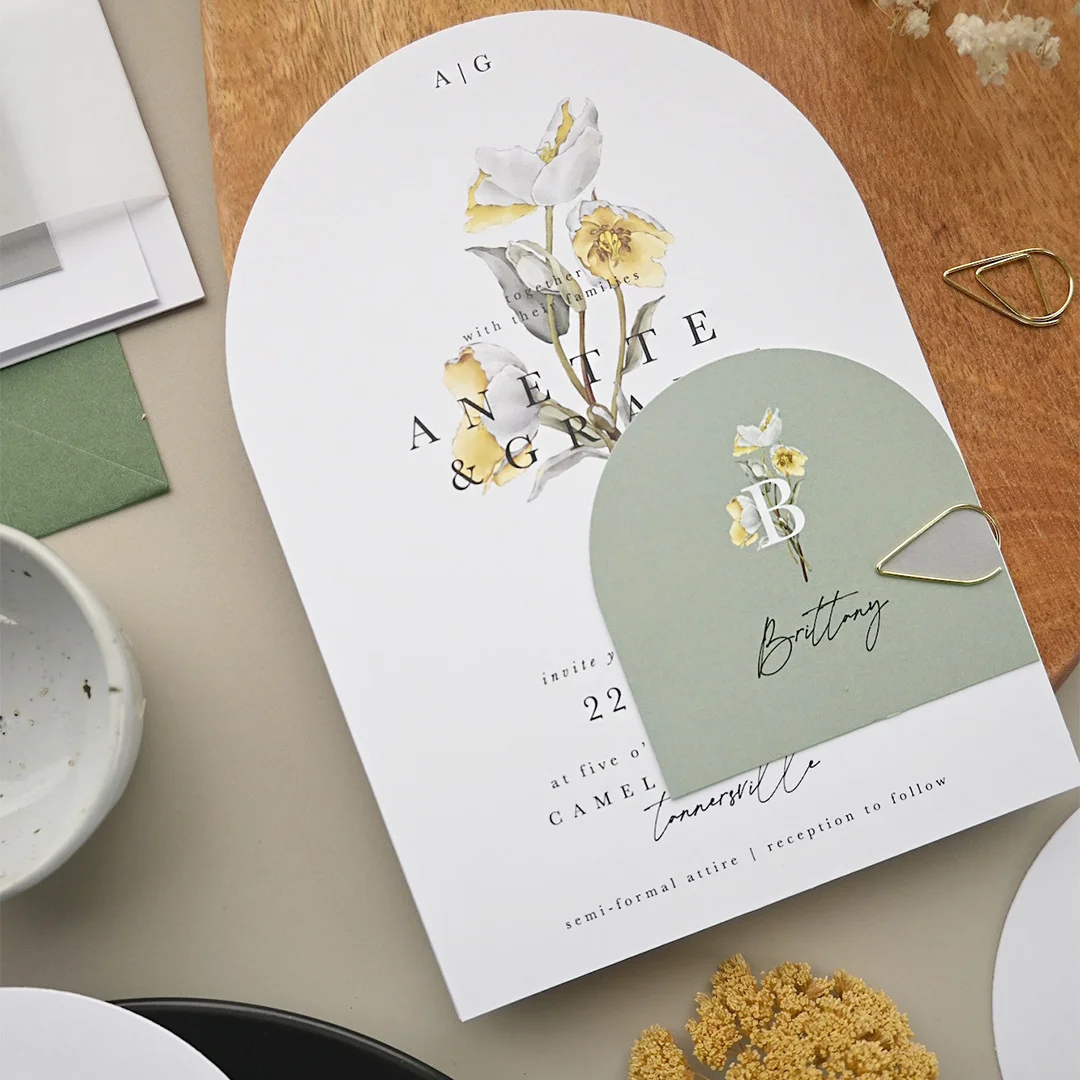

The Host Line, Who Is Inviting Guests?
Host-line phrasing draws directly from 2026 wedding invitation wording conventions, the second-wedding nuances sit on top of those baselines, not in place of them. The opening line of a formal invitation signals who is organizing and paying for the wedding. For second weddings, there are a few clean, common options:
| Hosting situation | Suggested opening |
|---|---|
| Couple hosting alone | No host line needed, lead directly with your names |
| Families contributing | Together with their families |
| Parents co-hosting (both sets) | List each parent on a separate line; divorced parents are listed separately, never joined with “and” |
| Including children | Together with their children, [names] |
Second Wedding Invitation Wording Examples
Pair the wording examples below with a print method that suits your tone. Couples often choose letterpress or foil-stamp printing for an intimate formal evening, or a minimalist flat-print design for a relaxed celebration. These templates are starting points. Swap in your own names, date, and venue, and adjust any phrasing until it sounds like you.
Formal, couple hosting
Clean and traditional. Works well for a church ceremony, black-tie venue, or any occasion where formal structure fits the tone:
and
Daniel James Forrest
request the honor of your presence
at their marriage
Saturday, the fourteenth of November
two thousand twenty-six
at four o’clock in the afternoon
St. Andrew’s Chapel
Portland, Oregon
Semi-formal, families hosting
A warm and inclusive option that works across most venues, garden, winery, boutique hotel, restored barn:
Claire Hartley
and
Daniel Forrest
invite you to share in the joy of their marriage
on Saturday, the fourteenth of November
two thousand twenty-six
at four o’clock in the afternoon
Rosewood Manor
Charleston, South Carolina
Dinner and dancing to follow
Romantic, couple hosting
A more personal tone that works especially well when your guests are close friends and long-time family:
through friendship, family, and love,
Claire Hartley
and
Daniel Forrest
joyfully invite you to witness their marriage
Saturday, November 14, 2026
at four o’clock in the afternoon
The Inn at Willow Springs
Sonoma, California
Celebration dinner to follow
Casual, couple hosting
For a relaxed backyard gathering, intimate dinner party, or any celebration where you want the tone to sound genuinely like the two of you:
are getting married
and cannot imagine the day without you.
Saturday, November 14th, 2026
4:00 PM
The Arbor Estate, Portland, Oregon
Dinner and dancing to follow
RSVP by October 3rd at claireandaniel.com
Blended family wording
If you have children joining this new family, including them can be a genuinely moving choice, but only if they are on board with it. Always ask them first. Some kids love being named; others prefer not to be in the spotlight.
Mia and Theo,
Claire Hartley and Daniel Forrest
invite you to celebrate their marriage
Saturday, November 14th, 2026
at 4:00 in the afternoon
The Arbor Estate
Portland, Oregon
Widowed parent honored
For those who want to acknowledge a late parent in the wording:
Claire Anne Hartley
daughter of Robert Hartley and the late Anne Hartley
and
Daniel James Forrest
son of Mr. and Mrs. William Forrest
request the pleasure of your company
at their wedding celebration
Saturday, November 14, 2026
at four o’clock in the afternoon
The Grand Ballroom at The Jefferson
Washington, D.C.
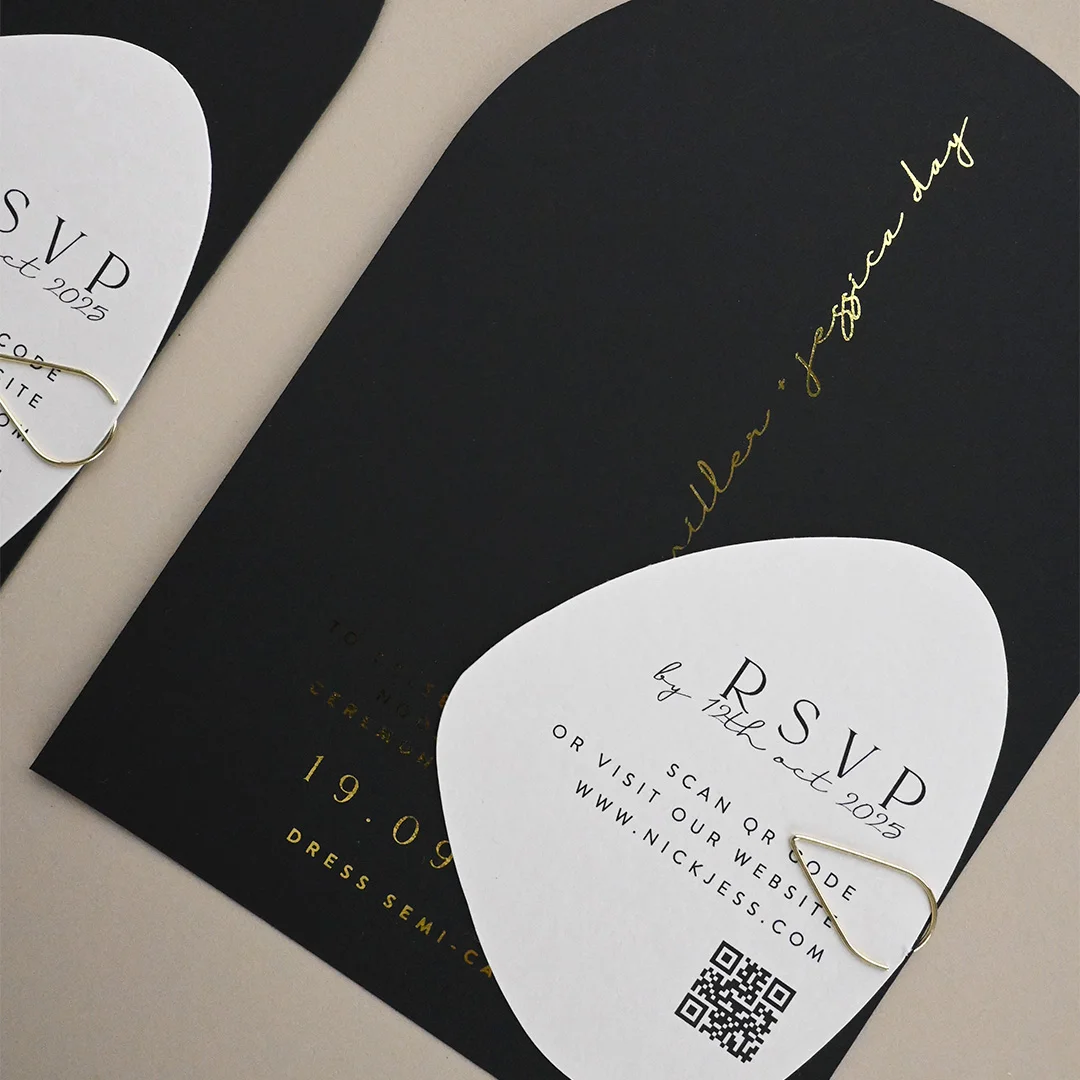
Second Wedding Wording When Children Are Involved
If either partner has children who will be part of the ceremony, the invitation can acknowledge them gracefully. The key is including them in a way that feels natural – not like a legal disclaimer.
Rachel Kim and Jonathan Mills
together with their children
Lily, age 8, and Marcus and Zoe, ages 10 and 7
joyfully invite you to celebrate
the beginning of their family
Saturday, June 21st, 2026 | 5:00 PM
The Willows at Chase Farm
100 Brown Ave., Lincoln, Rhode Island
Cocktail attire | Please reply by June 1st
Five of us are becoming a family.
Rachel, Jonathan, Lily, Marcus, and Zoe
invite you to celebrate with us.
Saturday, June 21st | 4 PM
Allegria Hotel Rooftop
Long Beach, New York
Cocktail attire | RSVP by June 7th to rachel@example.com
Rachel Kim and Jonathan Mills
invite you to their wedding and family celebration
Saturday, June 21st, 2026 | 5:30 PM
Rosecliff Terrace, Newport, RI
Please reply by June 1st
What to Include, and What to Leave Off
Match the included items to the rest of your suite, when names appear on the invitation, they should also appear on the place cards, and the formality should carry through to your welcome signage.
Shop letterpress wedding invitations
Refined letterpress designs for an intimate evening or vow-renewal wedding.
Always include
- Both partners’ full names (first names only for casual wording)
- Date, day of the week, and time, spell out formally for formal events; numerals are fine for casual
- Full venue name and address, including city and state
- RSVP method and deadline (reply card, wedding website URL, or phone number)
- Dress code, if you have one
- “Reception to follow” or equivalent when the ceremony and reception are at different locations
Leave off the invitation
- Any reference to this being a second or remarriage
- Your ex-spouse’s name in any form
- Registry or gift information, this belongs on your wedding website, not the card
- Children from a previous marriage, unless they have specifically asked to be included
- Accommodation or travel logistics, those go on an enclosure card or your wedding website
The most common mistake is over-explaining. Your guests are coming because they love you, they do not need context or background. Just tell them where to be and when.
Choosing an Invitation That Fits
A single invitation choice ripples across the entire wedding invitation suite, save-the-dates, RSVP cards, menus, and signage all read together. See companion guides on save-the-dates and the full day-of stationery suite. Second weddings tend to favor elegance over extravagance, which makes for some of the most striking stationery. Letterpress on cotton paper, flat foil in gold or copper, and clean digital print on premium stock all work beautifully. The design sets the tone before guests read a single word of your wording.
Browse Paperlust’s full wedding invitation collection, 500+ exclusive designs from minimalist and modern to lush botanical and romantic. Each is fully customizable, and a professional designer works with you on your wording within 1-2 business days of ordering.
If your celebration has a destination feel, a wine country weekend, a beach resort, a city micro-wedding, destination wedding invitations offer designs built for travel-themed suites, with layout space for all the logistical details guests need when booking flights and hotels.
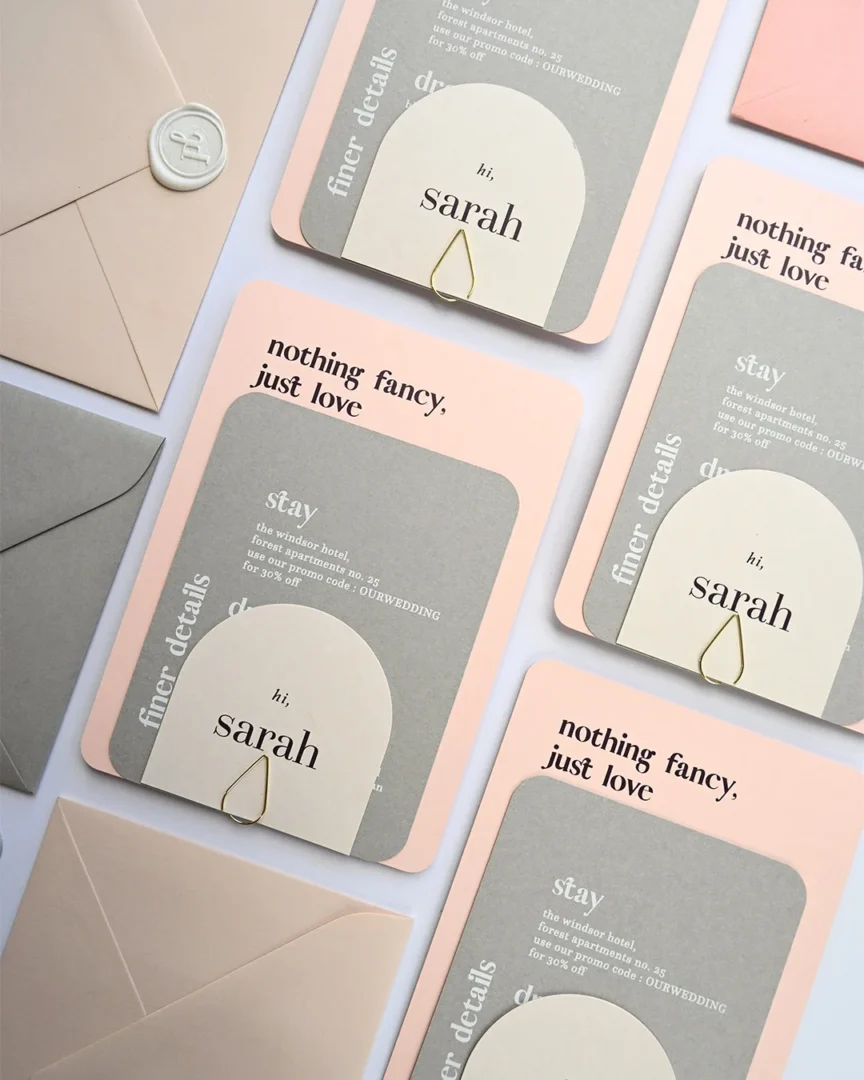
How to Choose Your Second Wedding Invitation Style
The wording sets the tone, but the design and print method tell guests what kind of celebration to expect. Use the three criteria below to narrow style choices: match the tone of your event, account for your guest list composition, and pick a format that reflects the chapter of life you are stepping into.
Match the Tone of Your Celebration
A 20-person plated dinner at a fine restaurant warrants a deliberately formal invitation, letterpress on cotton stock, classic typography, no playful copy. A casual backyard gathering with close friends and family is better served by a minimalist flat-print design or a hand-illustrated suite. Match the formality of the paper to the formality of the event, not to expectations about second weddings. The invitation is the first promise you make about the day; do not over-deliver on formality and under-deliver on the night, or vice versa.
Consider Your Guest List Composition
If your guest list spans children from previous relationships, blended-family elders, and shared friend groups, the invitation needs to feel inclusive without being apologetic. A clean, contemporary suite with neutral colors works better than something that leans heavily on traditional bridal symbolism. If your guests are mostly close friends and immediate family who already know your story, you have more freedom to choose a design that reflects your personal taste rather than wedding conventions.
Pick a Format That Reflects Your Story
For a vow renewal or a long-anticipated second marriage after a meaningful courtship, an oversized invitation suite with a custom monogram or illustrated motif (the venue, a shared place, a meaningful symbol) reads as confident and personal. For a smaller, more practical second wedding, a single-card invitation in a thoughtfully chosen paper stock can carry the same weight as a multi-piece suite without the extra ceremony. The format you choose tells guests how to read the day, so choose the one that matches the wedding you are actually having, not the one tradition assigns.
Frequently Asked Questions
Do we need to say it is a second wedding anywhere on the invitation?
No. There is no etiquette requirement to indicate a remarriage on the invitation or anywhere in your stationery. The invitation announces this wedding, that is all it needs to do.
Should I use my maiden name or my previous married name?
Use whichever name you currently use and feel most comfortable with. There is no correct answer. If you are planning to take your new partner’s name after the wedding, use your current name on the invitation and update legally afterward.
How do we word it if we already married privately and are hosting a reception?
Lead with the announcement: “Claire Hartley and Daniel Forrest are married.” Then invite guests to the celebration: “Please join us for dinner and dancing in their honor.” This is graceful and increasingly common for couples who married at a courthouse or in a small ceremony before the main event.
What if both sets of parents are divorced?
List each parent on a separate line, with their current name (and current spouse’s name if applicable). Divorced parents are never placed on the same line as a couple. If the layout starts to feel cluttered, simplifying to “together with their families” is always clean and entirely appropriate.
Can we skip the RSVP card and use a wedding website instead?
Absolutely. Many couples include “RSVP at [website URL]” directly on the invitation and skip a separate reply card. This is practical, reduces postage, and works well for most guest lists. Just make sure your RSVP form is live before invitations go out.
How formal should the invitation be for a small second wedding?
Match the formality to your event, not to any expectation about second weddings. The same principle holds for matching floral, botanical, or minimalist styles to your venue. A 20-person dinner at a fine restaurant warrants a beautifully designed, formal invitation. A backyard gathering with close friends can be casual and handwritten. Your guests will take their cue from you.